Saros is Proof that Games can Have Good Stories Told Badly
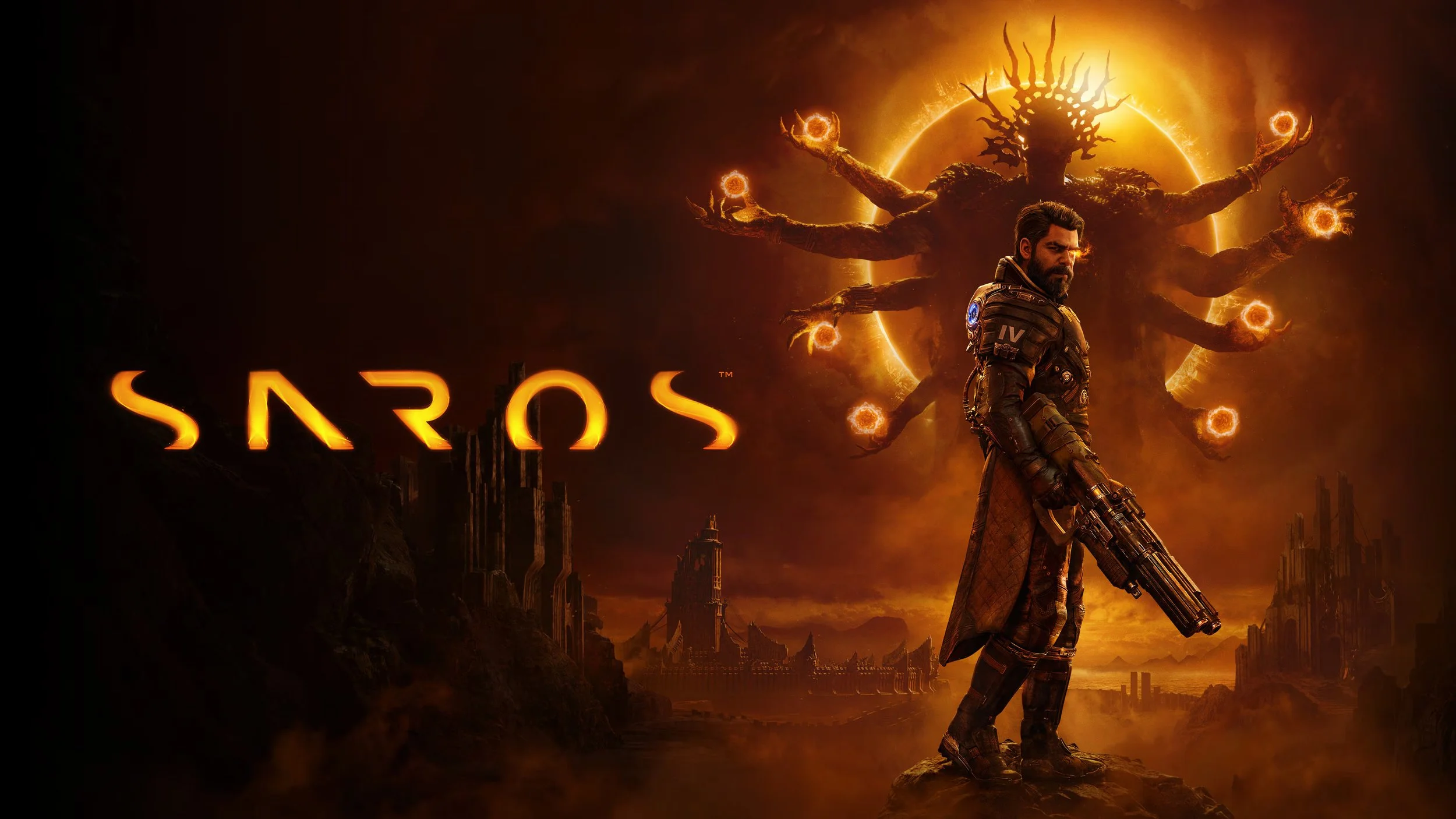
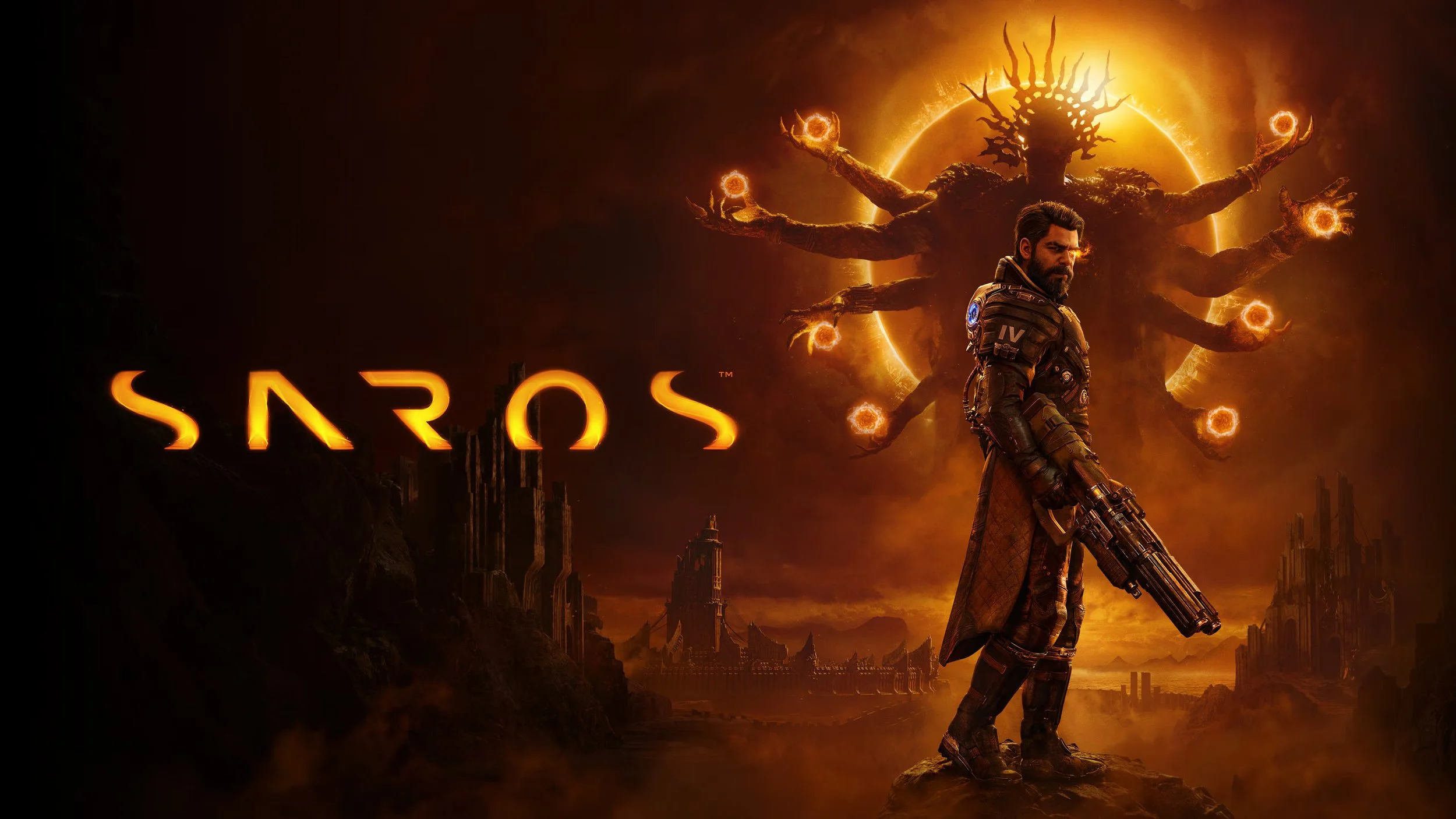
A follow-up to 2021’s Returnal, Saros tells an ambitious story about a man that seeks control of his personal narrative. At its core, Saros’ story is quite profound and intriguing, but the way in which this story is told is rather clumsy and obtuse. The confused direction of this narrative ultimately hinders its overall impact. // Image: PlayStation, Housemarque
Is it possible to write a good story but tell the story in a bad way? Is it possible to have a good story on your hands but bring the quality of the narrative down by being an awful storyteller?
One might be inclined to say that it entirely comes down to craft, but I think the true answer is more complicated than that.
When writing a book, what makes the storytelling “work” largely comes down to mastery of writing fundamentals. Things like point of view, conflict, presentation of information, use of dialogue versus action - generally things that you’ll learn in a writing class or workshop. The reason for this is quite simple. When you’re engaging with a story via a book, the words on the page are the only medium between you and narrative ideas being presented. In nearly every other form of media, there ends up being more stuff between the audience and the narrative they engage with. When you expand the scope of your storytelling and utilize other media to tell your story, complete with visuals and audio, the means of storytelling get more complicated. That complication introduces more possibilities to take a great story and tell it in a way that undermines the intention and quality of the original writing on display.
Instead of just relying on the writer’s crafting sentences and paragraphs on a page, multimedia formats invite more options and necessities when it comes to both creating a story and telling it well. In a movie, for instance, the story as written on the screenplay can be well-written, well-paced, and be overall well-crafted. Ultimately, however, a screenplay is not intended for general audiences. It is not a primary way of moviegoers to engage with a story. Rather, a screenplay is written exclusively for film directors, producers, actors, and other production members.
The craft on the screenplay page can be incredible, but the quality of the final product film is ultimately determined by how well all members of the film crew realize the story written on the page. A screenplay can feature a great story that’s masterfully written, but all this can be for naught if the directing, acting, and so many other components of filmmaking don’t come together and present that narrative well.
A great screenplay can feature a great story, but a film’s narrative quality is only as good as its creators’ storytelling capability. If a well-written movie has poor performances, bad direction, sloppy cinematography, distracting audio editing, and other issues, it will doubtlessly feature bad storytelling. If a movie has a good story that’s told badly, audiences will still walk away from it being disappointed, feeling that the story itself was bad. Even if the original craft is good, the audience’s final determination of the narrative quality largely hinges on how the storytelling is pulled off.
Therein lies the value of good storytelling, especially in multimedia formats. Great stories can be written in any medium with a good enough writer, but storytelling is something that requires greatness from many parties across multiple specialties and concentrations.
Video games put themselves in a unique storytelling position. Unlike other forms of media, video games can offer completely distinct stories that can align with the player’s in-game decisions. Likewise, video games can craft linear stories that function similarly to other media. A visual novel can offer a straightforward reading experience like that of a book, only adding additional visual elements like character portraits and often minimal UI. Many story-driven games use cutscenes as their primary form of communicating story information in order to emulate the storytelling style of movies.
Other aspects of games can introduce more possibilities. Many games, such as Souls games, rely a lot on environmental storytelling that subtly communicate lore and worldbuilding while keeping the player immersed in the game’s world. My personal favorite storytelling tool in video games is that of the lore compendium - an in-game glossary and datalog that keeps track of and summarizes in-universe terminology, lore, character biographies, and additional story beats. Games like Deus Ex: Human Revolution and Cyberpunk 2077 make collectibles like emails or text conversations serve as extra nuggets of storytelling that flesh out the in-game world and smaller-scale conflicts that inform the main focus of the narrative.
All this is to say that there are so many more storytelling tools that video games uniquely provide. Like with a tool of any kind, these storytelling tools are only as effective as the creativity of the developers that wield them. Even if used correctly, some tools are a mismatch for what is actually needed to elevate a story and help it reach its full potential. When there’s a mismatch in the correct storytelling tool to use, or a certain narrative technique that is clumsily utilized, a video game’s capability to pull off telling its well-written story can significantly degrade.
Like with a movie’s audience, players that finish a video game judge a game’s story not necessarily on the craft of the writing, but rather on the means in which the narrative was presented to them. In other words, the means of storytelling is just as, if not, more essential in informing players’ opinions of and resonance with a story than the quality of the writing itself.
Even if the core story is good on paper, even if the craft at the foundation of the narrative is strong, misusing the narrative tools uniquely available to the video game medium can make a great story hit nowhere near as strongly as it should. Such was the case during my playthrough of the recent first-party PlayStation title, Saros - so much so that I feel that serves as a good conversation piece on this subject.
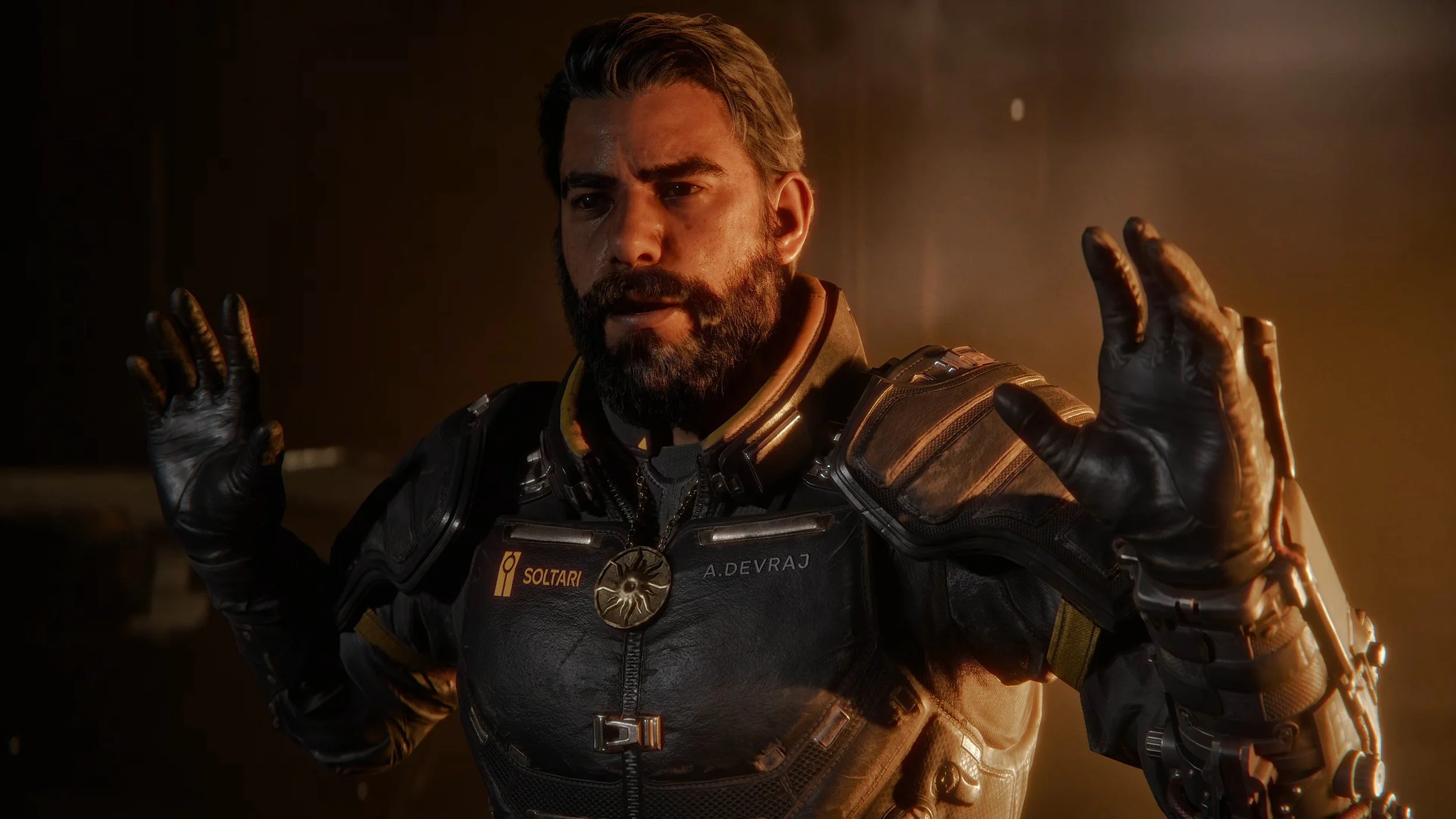
Saros’ craft isn’t perfect. Its characters are bland and underdeveloped, and it fails to make protagonist Arjun’s conflict clear to understand until well into the adventure. However, the bones are here to tell a subversive, mind-bending story about emotional acceptance. Unfortunately, clumsy use of game-specific tools of storytelling holds Saros’ narrative back. // Image: PlayStation, Housemarque
As a video game, Saros is awesome. The rogue-like is a genre nearly exclusively explored by the indie sector of the games industry, so seeing a game of this style with a high budget and production value is a refreshing novelty in its own right. Of course, the core of Saros’ gameplay is consistently fun thanks to fantastic gunplay, nail-biting encounter design, and flexible mechanics that allow players to experiment with different builds and difficulty parameters.
I have criticisms with Saros on a gameplay front, particularly through how the game’s build diversity isn’t nearly as vast as its genre contemporaries and the fact that players are regularly forced to return to their base of operations between biomes. However, all in all, Saros is a consistently exciting and fun game to play, much like its predecessor, Returnal. In many ways, Saros is truly an overall improvement on Returnal. Its gameplay is more accessible, its combat feel is incredibly polished, and its visual-audio presentation is top-tier. But what held back Saros from being a game that I loved more than Housemarque’s previous outing was how it tells its story.
Returnal’s story was one of sci-fi surrealism and isolation becoming an outlet for processing trauma, grief, and self-loathing. Returnal told a solid story well, but it was undeniably one that sci-fi enthusiasts have doubtlessly seen explored elsewhere. Saros, by comparison, tells a far more ambitious story with more moving parts and even more mystery surrounding the nature of the planet that makes trusting the direction of the plot at face-value difficult to do. It’s immediately established that Carcosa, Saros’ otherworldly setting, twists people’s minds. This is established as quickly as the game’s first cutscene after assuming control of Arjun. One of Arjun’s colleagues attacks the team working for the clearly soulless Soltari corporation, leading to the team’s leader killing them.
The planet’s effect on characters’ minds is a fun narrative twist on the rogue-like nature of the in-game levels within the world of the game changing every run. Arjun dying at the end of a run and respawning at Soltari’s base of operations on Carcosa can be narratively interpreted as yet another of the planet’s instilled delusions on its people. Using the genre-standard rogue-like mechanic of dying multiple times to inform a narrative where characters’ sanity can’t be relied upon is a genuinely smart approach to telling a story unique to this specific type of game.
Additionally, the core conflict between Arjun and his relationship with Nitya becomes a narrative hook that naturally behooves the player to see this story through to its end. The core writing here is fascinating, but the means through which it is delivered to the player creates a story that’s far too jumbled, vague, and off-center to make it land as well as it should.
Why is this? If the core writing is good, shouldn’t that be enough to say this game has a good story?
As we’ve discussed, the writing can be well-crafted, but I ultimately have to judge the game on the means through which I experienced the narrative, and that means I have to take into consideration the game’s presentation, visuals, audio, editing, and narrative pace when determining how I feel about the game’s overall story. With those additional factors in mind, I can’t help but feel that the storytelling on display in Saros does a disservice to the fascinating narrative at the game’s core.
Saros’ storytelling can primarily be derived into three buckets. The first is the traditional cutscenes and conversations that occur between characters. These typically occur while the player is at their base of operations between runs, with a new cutscene advancing the main plot typically occurring after completing each biome. The second bucket is the various audio and text logs that the player discovers throughout their journey. While some of these can be found at the base of operations, many of them are discoverable throughout the various biomes that the player will adventure through across multiple runs. The last bucket is the Databank, Saros’ in-game glossary that typically gives information about characters, biomes, weapons, and more as the player makes narrative and gameplay progress throughout the game.
None of these buckets are new ground for video game storytelling. They’re typical storytelling tools that we’re used to seeing in video games, so what causes issues? How do these narrative tools cause Saros’ well-written story to be told badly?
For me, a lot of it comes down to the vagueness inherent to the story’s direction and how the many tools Saros uses don’t elevate nor subvert that vagueness. This storytelling philosophy informs how cutscenes are directed and performed. It informs how characters speak in the audio and text logs. And it even informs the Databank’s information, given how much information it redacts from the player’s eyes, even when completely filled out. This commitment to vagueness in all buckets of the game’s storytelling mechanisms causes a good story to lose its grip on players.
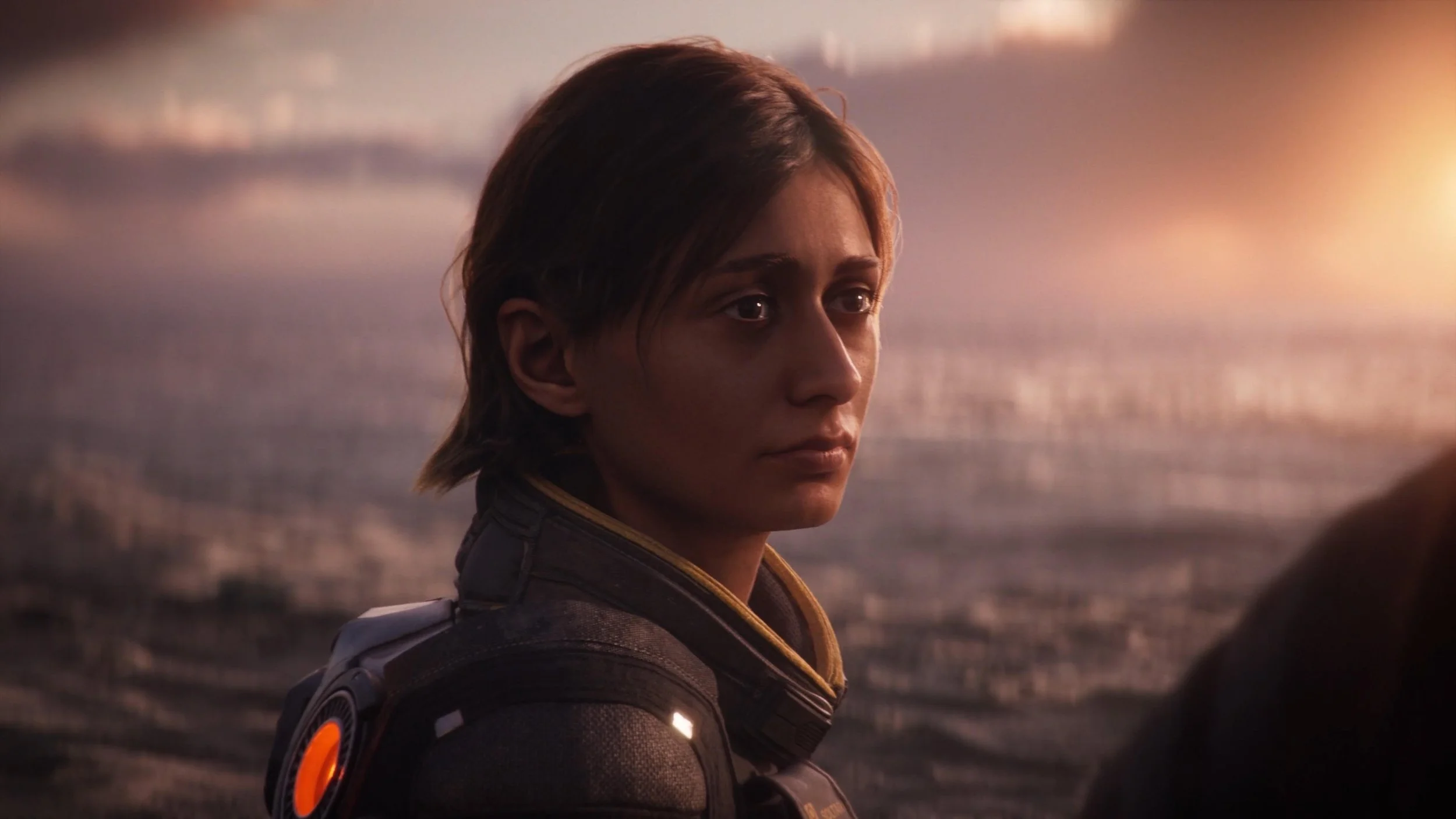
Too much is implied in Saros’ narrative, to the point where a valid reading of the game’s narrative can be interpreting the entire game’s narrative and journey on Carcosa as a metaphor that never actually happens. By telling its story in a vague, implication-heavy way, Saros’ narrative lacks meaningful punch. // Image: PlayStation, Housemarque
The most common, cookie-cutter, basic bitch piece of writing advice is show, don’t tell. I fundamentally disagree with this advice. I think every story is naturally destined to have both showing and telling within it. The true challenge in writing is deciphering and discovering what balance of showing versus telling is necessary to truly realize a narrative vision. How well a story is told is largely defined by how well it combines showing and telling narrative ideas to its audience.
This is where I feel Saros comes up short. Saros does show a lot, but it tells very little - and that comes at the cost of making substantive characters and worldbuilding. Text and audio logs can be useful supplementary tools for developing a world and revealing more about characters and their relationships with one another. Unfortunately, many of Saros’ logs are doing the heavy lifting of revealing the characters and backstories of members of other Echelon expeditions. When used as the exclusive means of learning about certain characters - some of which we never see onscreen, discoverable logs fail to ground the player in feeling like they’re meaningfully learning more about the different pieces of the narrative puzzle before them.
Some of the most significant story beats come from the scenes in the tree that Sebastian grows throughout the game as the player progresses through each of the game’s biomes. During these tree sections, the player gets to walk around as Arjun on Earth in scenes that are half-flashbacks, half-nightmares. Gameplay-wise, these story sequences are dull exercises in interacting with certain parts of a linear environment to progress. Clearly, the narrative is supposed to be the main hook of these sections. And so, it’s during these sections that it’s strongly implied what Saros is actually about.
The player is able to deduce from these flashback sequences that Arjun’s backstory leading up to the events of the game reveal his troubled relationship with Nitya, Sebastian, and the true quality of Arjun’s character. The game presents the pieces of Arjun’s backstory and trusts in the player to place these pieces together and come to their own conclusion and interpretation of the events that take place thereafter.
While I admire Saros’ respect and trust that it puts in the player in allowing them to come to their own conclusions about how literal or allegorical the game’s sci-fi setting is supposed to be, it nevertheless doesn’t address the fact that the rest of the game’s vague storytelling doesn’t feel nearly as justified.
As the game progresses, time begins to move faster and faster. Many of the members of Echelon IV, Arjun’s crew, die off-screen and their deaths feel negligent. In fact, many of the characters that Arjun interacts with throughout the game feel largely unimportant. Even after the revelations of Arjun’s backstory and true character come to light, the pacing of the story doesn’t necessarily shift. The game’s storytelling style remains vague and is edited in a way that denies finality to the game.
All this leads to a conclusion where Arjun is confronted with a decision: becoming absorbed by his obsession with being in control of those around him or accepting that the state of his life is a consequence of his past decisions. It’s a fantastic conclusion that involves player agency in a thoughtful way.
My issue with this conclusion, though, is that it nevertheless feels too vague and subdued to really hit a meaningful message home to the player. I couldn’t help but feel like the game’s commitment to vagueness, surreal imagery, and frantic, sometimes horror-like editing undercuts the finality of the game’s conclusion. As I watched the game’s credits after seeing both endings, I couldn’t quite decide if I liked the story. I enjoyed the core of the story but was truthfully frustrated by the means through which it was delivered to me.
Put another way, I like Saros’ story but hated the way in which it was told - so much so that I truly think the game’s storytelling makes its story worse as a narrative experience.
What would have been a fix to this? Would having clearer cutscene direction have made me more satisfied? Would being told exactly what happened give me the finality that I would want from a story like this? For me, it comes down to details.
I think Saros shows a lot of its story, but doesn’t tell enough of it - and that’s what leads to so few reliable details that ground the player in the narrative. There’s a lot about Carcosa we never truly learn about - leading many to interpret Carcosa - and indeed the events of the entire game - as being a construct of Arjun’s mind. Likewise, there are so many details about characters and the broader world that Saros takes place in that the player never becomes privy to, and I think the absence of those details creates a story where what is shown has more weight placed upon it than what isn’t. Unfortunately, combining this with a vague style of storytelling makes this weight crumble upon itself.
It’s hard to become grounded and familiar with Saros’ plot because so much is left up to interpretation that there isn’t much to value about the game’s story beyond its allegorical suggestions about its protagonist and his conflict. Outside of this core conflict centered around Arjun, there truthfully isn’t too much of interest in Saros’ storytelling, despite the writing of the game’s world and characters are clearly there to an extent. These aspects simply aren’t a priority in the game’s primary form of storytelling throughout its runtime - and that causes aspects of the game’s narrative, such as the believability of the world, to fall apart.
In my mind, Saros is proof that a well-written story can be told badly. Moreover, it’s proof that games, although having unique storytelling tools at their disposal, are just as prone to having their storytelling undermined by poor storytelling prowess. The fault of Saros’ underwhelming storytelling quality isn’t due to the game’s writers, or director, or any particular developer. Rather, the quality of Saros’ storytelling is a byproduct of the many developers, systems, and layers of presentation that come together to create the package that is Saros. On a gameplay front, the many authors and features of this package come together to make for a fun video game. On a narrative front, however, they fail to align and elevate the core narrative that I see quality in at the very heart of this game.
I look forward to seeing what Housemarque does in the future, particularly how they combine showing versus telling in their next narrative-driven title. With further refinement and thought put into how they present the ideas of their story, I think they truly have what it takes to make a great story land with players. Today, though, they just have a great story and a road they need to walk down in order to make sure their well-crafted stories stick with players long after they put the controller down.
Writing a great story and telling a story greatly are two different skillsets, yet they need to come together to become story engagements that change peoples’ lives. Combining these two skillsets isn’t an inherently easy thing to do - and it only becomes a more challenging thing to do for media like movies, theater, video games, and more. By discussing examples of stories like Saros - stories that master one skillset but not the other - we’re all reminded of how truly difficult it is to tell a great story. But through working towards and refining our skills at both, we all become one step closer to crafting something truly special.
Thank you very much for reading! Do you think a story can be good even if its method of storytelling is bad? What are other examples of a good story being told badly? As always, join the conversation and let me know what you think in the comments or on Bluesky @DerekExMachina.com!