Ghost of Yōtei: An Easy Game to Love but a Hard Game to Praise (Review)
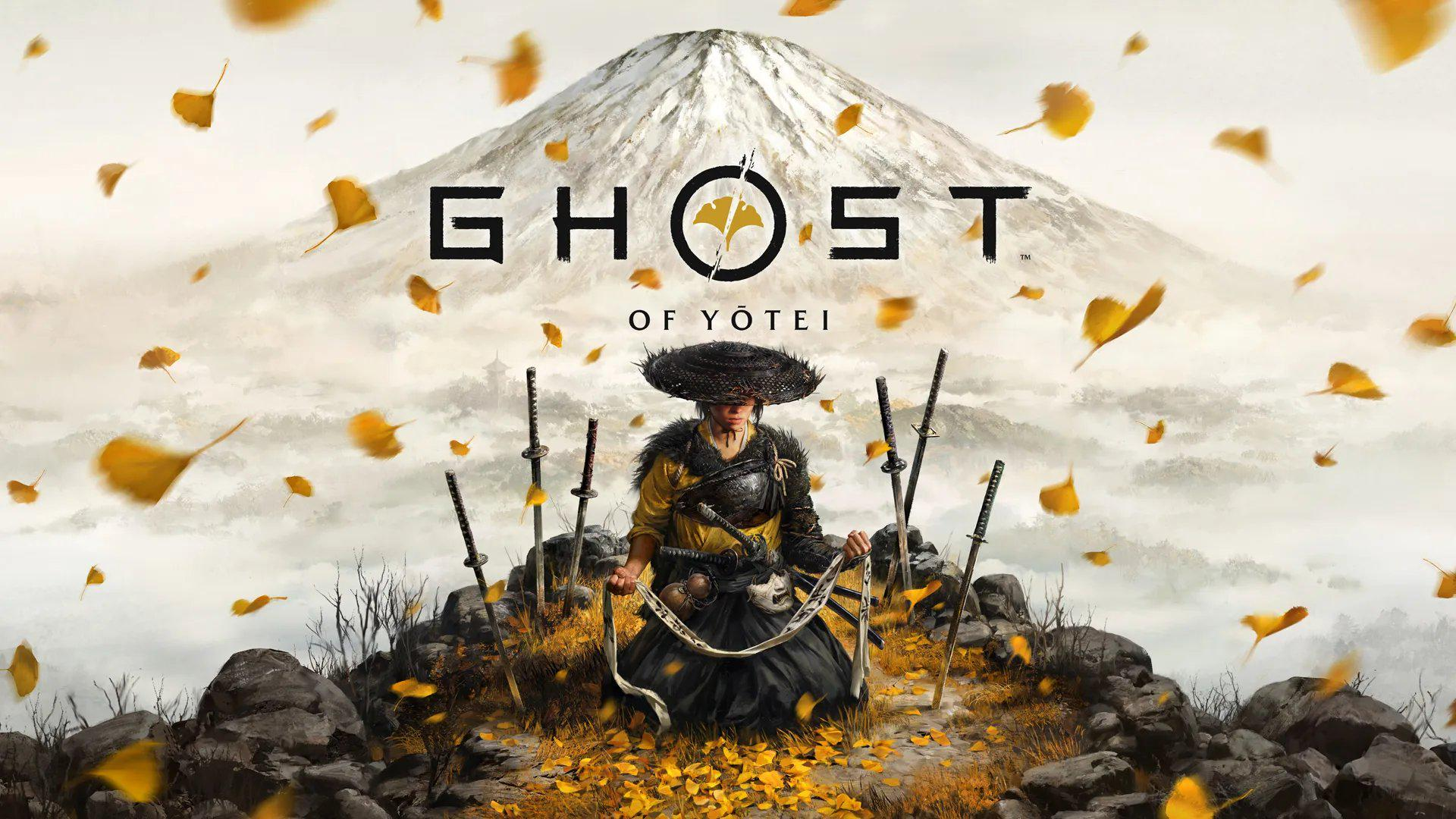
Ghost of Yōtei is the epitome of a safe sequel. It takes everything that worked well in Ghost of Tsushima and refines it and delivers more of what players fell in love with with Sucker Punch’s approach to this style of open world action-adventure game design. It greatly succeeds in doing so, but it makes for a game that’s not particularly interesting to talk about. // Image: Sony, Sucker Punch Productions
Ghost of Yōtei is a deceptively difficult game to write about. On its surface, Yōtei is a remarkably iterative game that refines and polishes the already great framework established by 2020’s excellent Ghost of Tsushima. To put it reductively, Yōtei is more Ghost of Tsushima. And that’s far from a bad thing, as Ghost of Tsushima is easily among my favorite first-party PlayStation games of the last decade. The reason why the 2020 game struck such a chord with me was how it took a style of game that’s typically riddled with checklist-style progression and open world bloat, and manages to make the entire experience immersive, dense, yet compact enough to prevent itself from overstaying its welcome.
Tsushima’s immersion, I feel, was largely an achievement of smart interface and world design. Players are rarely ever trained to dig through menus or maps to find things to do. Rather, the world in Tsushima is constructed in such a way that naturally invites player curiosity to drive exploration. Whether it’s riding to a source of smoke that can be seen in the distance, or following wildlife that guide Jin towards activities to complete, the player is incentivized to meaningfully observe and interact with the world they inhabit. The reward for this incentive typically comes in the form of health upgrades, new armor sets, and learning new skills that gradually power up Jin’s combat, stealth, and traversal options. Meanwhile, the density of gameplay activities create a remarkable flow to Tsushima’s gameplay, preventing players from spending too much time between meaningful activities and side quests. This lack of down time and flow to Tsushima’s pacing are rare in open world games, and that’s what made the game so refreshing.
This is an especially remarkable accomplishment considering open world action-adventure games are notorious for often causing player fatigue in time. Many open world games cave in to the temptation to put in a lot of stuff to justify making such a large game world, but the act of doing so ironically makes large maps feel bigger than they should be. By inserting hundreds of needless side activities that add more things to the experience without any real substance, open world games can regularly become tiring to play after a few dozen hours, prompting the player to abandon doing side content for the sake of having a more enjoyable experience.
While I wouldn’t say that all of Tsushima’s side content is engaging and memorable, they ultimately come together to create a cohesive and immersive whole. I think the key ingredients for Tsushima accomplishing this are restraint and groundedness. Tsushima is as great as it is because it finds the perfect balance of world size and activity density, regularly making the player feel like the world is vast yet is also full of meaningful sections of gameplay strung together at the player’s discretion and curiosity. Of course, the primary story, gameplay, and setting are also executed to perfectly craft the unique power fantasy of being a samurai that can either fight honorably or dishonorably sleuth in the shadows.
Ghost of Tsushima doubtlessly made an impact on everyone that played it because of this very refined, tactful approach to its open world design. Its impact makes it stand alongside some of my favorite open world games, including Xenoblade Chronicles X and Breath of the Wild. When Ghost of Yōtei was announced and it became clear that the game was going to offer more of the same experience, who was I to complain about it? A sequel offering more Ghost of Tsushima gameplay is still going to make for a great video game.
And indeed, Ghost of Yōtei is a great video game - one that shares many of the noble traits that made the first Ghost game such an instant gold standard for this type of game. Ghost of Yōtei is polished, it’s gorgeous to look at, it features a well-told story, has a great density of meaningful content, and feels like it’s the perfect length for the type of experience that it wants to provide.
I really like Ghost of Yōtei…and yet it’s a remarkably bland game to talk about. Why is that?
I think the answer is in iteration - something that has become the standard for Sony’s first-party portfolio this console generation. Let’s discuss why Ghost of Yōtei is a fantastic game, why I’m glad to have played it, but also why I think its existence as a sequel holds it back from leaving the impact its predecessor did despite this arguably being the better game overall.
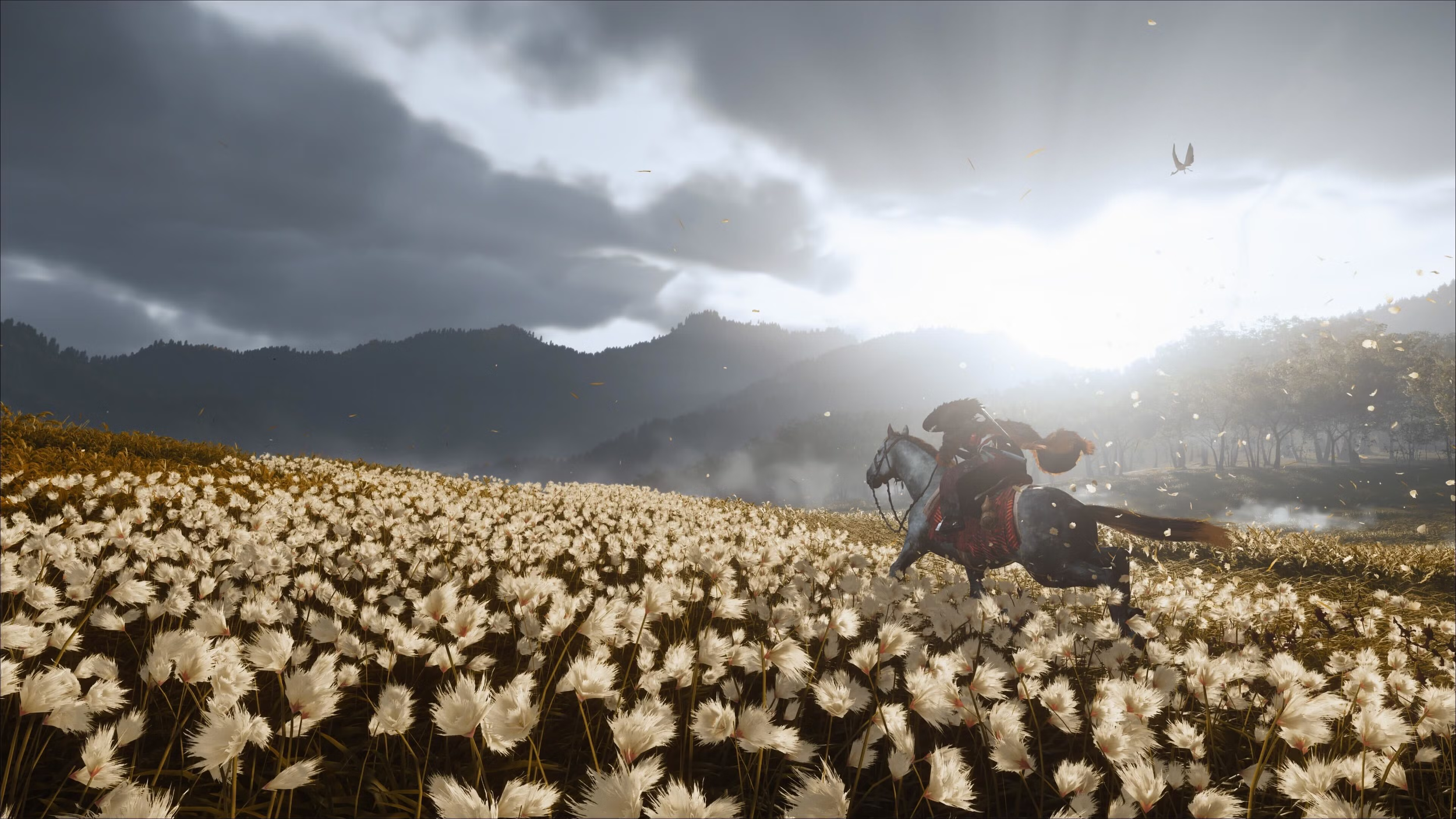
Ghost of Yōtei is arguably one of the best-looking video games ever made thanks to phenomenal art direction, style, and fidelity. It’s hard to imagine games going for a realistic art style ever looking much better than this. // Image: Sony, Sucker Productions
Long before Ghost of Tsushima released, there was a long-running demand for the Assassin’s Creed franchise to set a game in Japan in order to capture the power fantasy of being a samurai or shinobi at various points in Japan’s fascinating, diverse history. While there’s no particular shortage of games that offer a certain flavor of that, such as Nioh, Sekiro: Shadows Die Twice, and even Ninja Gaiden, there was an ostensible reason why there was a demand for an Assassin’s Creed in Japan. There is a certain aesthetic to different eras of Japanese history, each of which invite stories that involve certain types of conflicts that naturally make them great stomping grounds for historical fiction. Assassin’s Creed, a series known for injecting a sci-fi, sort-of-time-traveling-via-ancestral-memories lens to different eras of history and culture seemed like a perfect fit.
But of course, Ghost of Tsushima beat Ubisoft to the punch before they were able to make Assassin’s Creed Shadows, and perhaps this was for the best. Assassin’s Creed has become synonymous with “Ubisoft open world game design”, especially as time has gone on. Ghost of Tsushima being the first historically grounded open-world action-adventure game set in Japan no doubt gave it an edge over Shadows. But most crucially, it did so without the previously mentioned “Ubisoft open world game design”, and thus was able to make it an incredible impression on players. Even when Shadows released, it was still riddled with the typical caveats of a modern Ubisoft release, and invited comparisons to Ghost of Tsushima, a similar game that did far more with less.
That philosophy of doing more with less, creating a stronger overall experience by not creating a bloated world with menial tasks, is the special sauce that separates Sucker Punch’s approach to this style of game from other developers. The real test of this formula, however, is whether it can work more than once. Was Ghost of Tsushima as successful and fun to play as it was because it was the first game to capture a specifically Japanese power fantasy? Or is there more merit to Sucker Punch’s approach to this style of game?
Ghost of Yōtei’s mission clearly wasn’t to be another ambitious departure for Sucker Punch. Rather, it’s to prove that the magic afforded by Ghost of Tsushima wasn’t lightning in a bottle. In many ways, Ghost of Yōtei is a mechanical retread of Ghost of Tsushima with small refinements here and there to improve the overall playability. This inevitably makes the game less interesting to talk about than its predecessor, because there’s simply no universe where Ghost of Yōtei can have the same impact as Tsushima. This team has successfully pulled off this style of game before. Moreover, Yōtei clearly isn’t interested in transforming the formula and creating a substantially different gameplay experience. So…what is it interested in doing? What does Ghost of Yōtei aim to accomplish as a video game?
The answer to this is twofold. One is to simply provide more of the experience afforded by Tsushima. By having the same structural skeleton and mechanical makeup, Yōtei offers players another power fantasy uniquely affording by its historical Japanese setting. Yōtei doubles down on the unique style of world design first seen in Tsushima and trusts that it’s enough to meaningfully present another full game’s worth of content and gameplay opportunities.
The other answer is in its narrative framing. Perhaps Ghost of Yōtei’s greatest difference from its predecessor is the framing through which the player experiences much of the game. Like Tsushima before it, Ghost of Yōtei tells a story centered around revenge - hardly new ground for the storytelling in this genre. Especially given the many samurai movie inspirations that the Ghost series wears on its sleeve, there’s a clear understanding from Sucker Punch that revenge isn’t enough to make a story in this genre compelling. In lieu of a new narrative premise, Ghost of Yōtei opts to have the entire story revolve around protagonist Atsu swear revenge against the Yōtei Six - the six outlaws responsible for the destruction of her home and the death of her family.
Ghost of Yōtei hits the ground running by having the game’s cold open be the first step of Atsu’s revenge against the Yōtei Six. She paints over the first name on her sash with the blood of the Snake. The rest of the Yōtei Six awaits her vengeance.
This narrative framing does more than set up an effective story - it inherently frames and contextualizes all of the actions that the player takes over the course of their adventure. Even going on seemingly insignificant side quests or interacting with NPCs off the beaten path are framed by Atsu following potential leads that will lead her to the next member of the Yōtei Six. It adds additional narrative weight to the many activities that the player can partake in. For example, clearing out Yōtei Six camps often end in Atsu interrogating her opponents about the Yōtei Six and finding notes left behind by their leader, Lord Saito.
Of course, there’s a limit to this. As great of a job Sucker Punch does at making smaller, optional activities in Ghost of Yōtei feel like narrative steppingstones towards significant beats in the main story, there are still various aspects of Ghost of Yōtei’s gameplay that aren’t touched by this framing. Activities like climbing shrines to find charms or following foxes in Fox Dens serve no connection to the broader plot, because…well, how could they? Still, Ghost of Yōtei largely serves as a phenomenal example of how smart framing of when to start a story can create compelling drama and intrigue.
Indeed, the player never fully gets to see the events where Atsu’s world crumbled onto itself. Rather, Atsu’s past, an integral part of her character, is communicated to the player gradually throughout the game’s story and side content, sometimes even in interactive segments. Understanding how the past has informed the present (and sometimes, how the present contradicts what we thought happened in the past) is a key narrative hook in Ghost of Yōtei - one that is pulled off impressively well.
That said, one of the most impressive aspects of Ghost of Yōtei is what it accomplishes on a visual level. This is one of the best-looking video games ever crafted, and any screenshot or video of this game will make that self-evident. Whether it’s the fidelity of the character models and environments to the instances of stylized art direction (such as how fallen leaves soar through the air near trees), the world of Ghost of Yōtei feels alive in ways that few video game worlds truly do. Much like its predecessor, Yōtei takes advantage of how good it looks by refusing to clutter up the screen with UI elements that take away from the world’s sheer beauty. Instead of compasses, minimaps, and on-screen indicators, Yōtei features a minimalist UI that usually disappears during world traversal, entrusting the player to navigate the world not out of following video game-y UI elements, but rather through genuinely examining the world.
Whether it’s looking for nearby smoke, noticing an abandoned building in the distance, or galloping through a shrine gate the player can see across the map thanks to the game’s impressive draw distance, the player can easily roam this world by simply paying attention to their surroundings. This led to immersive, seamless exploration in Ghost of Tsushima, and that remains the case here. Art direction, fidelity, and style come together to create a beautiful whole that makes it genuinely difficult to figure how much better games can or need to look from here on out.
A new effect added to Ghost of Yōtei is letterboxing when navigating on horseback in certain areas. This visual feature is inconsistent by nature, as some areas don’t do letterboxing at all. While this inconsistency does bother me to some extent, I can’t lie that it leads to when Ghost of Yōtei manages to look its very best.
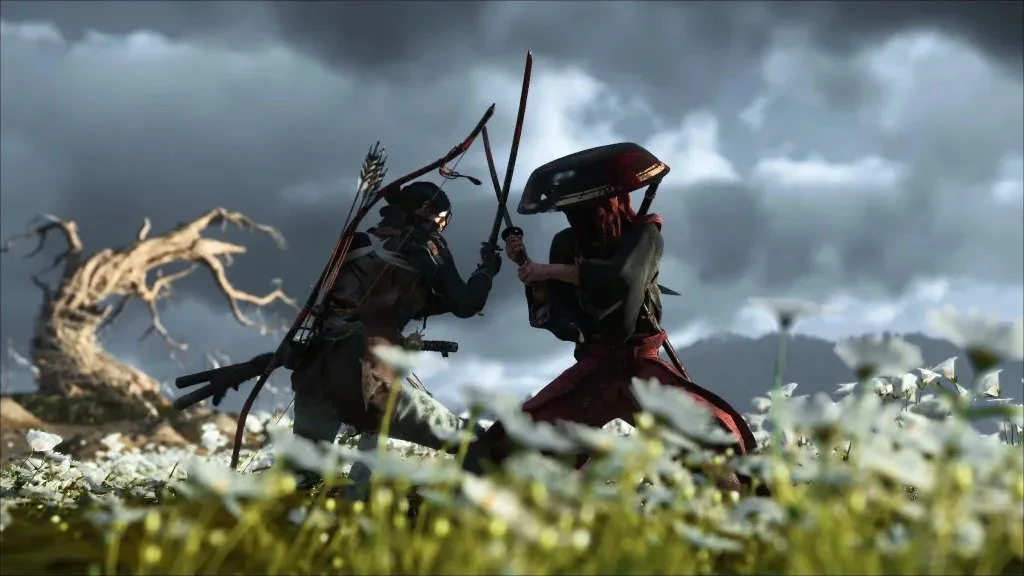
Where Ghost of Yōtei becomes less interesting to talk about is in its iterative gameplay. Combat, stealth, and world navigation are great here, but they hardly ever attempt things that weren’t in Tsushima. After two games of similar gameplay, I struggle to think of a third Ghost installment getting away without innovating and significantly changing the formula. // Image: Sony, Sucker Punch Productions
Outside of its strong visuals and narrative framing, there’s shockingly little to say about Ghost of Yōtei that can’t be said about its predecessor. Like Tsushima, Ghost of Yōtei features solid combat that tasks players with swapping weapons in a rock-paper-scissors-like chain of weaknesses for different enemies. Like Tsushima, there are solid stealth and navigation sequences that test players’ knowledge of the different mechanics that the game provides. And like Tsushima, there’s a beautiful sense of flow that carries players from one gameplay activity to the next.
Ghost of Yōtei features exciting duels, enemy encampments to take down, shrines that serve as tests of stringing navigation abilities together, and various side quests that test any combination of combat, stealth, and movement through narrative set pieces. This is fun and all well executed, but that was also the case in Ghost of Tsushima. This makes finding any words to say about Ghost of Yōtei from this point on to be remarkably tricky. Dozens of hours passed me by as I became immersed in the many activities that Ghost of Yōtei is filled to the brim with - and for the most part, it’s all meaningfully engaging.
The most significant break comes in the form of the puzzle-oriented Teshio Ridge - the area associated with the Kitsune’s sequence of the game’s main story. This area features various sequences where the player has to use the area’s Shinobi’s created language to decipher how to navigate through the puzzles in the regions. Tragically, the novelty of this section is undercut by the complexity of these puzzles. In fact, using the word “puzzle” seems overly generous - these “puzzles” are shockingly simple to the point where it begets questioning what the point is in the first place.
This steps into something of a problem that I’ve particularly noticed in many of PlayStation’s other first party Western AAA games. Like the few Horizon and God of War games before it, Ghost of Yōtei aims to be a widely accessible, easily digestible experience. Featuring complex, challenging puzzles poses the potential risk of making players get stumped on such puzzles and thus making the overall experience no longer as accessible or digestible. Games like Horizon and God of War have gone about this by effectively having characters verbalize hints or outright solutions on how to solve the puzzle fairly quickly, while Ghost of Yōtei opts to make the puzzles effortlessly easy.
The Kitsune puzzles aren’t the only instance of puzzles in the game - the Reliquary Statues offering additional Charms are also incredibly simple puzzles that seem too afraid to put up any kind of meaningful mental challenge to the player. So why, then, does Ghost of Yōtei even bother with making puzzles at all? While the rest of the experience is so polished and refined, this aspect of the game really calls into question what it adds to the experience. In theory, puzzles add to more gameplay diversity, but since they’re so simple and can often be brute forced through a la process of elimination, their inclusion largely feels like bloat - only existing to say that the game has even more gameplay diversity.
The greatest issue that Ghost of Yōtei has is one of identity. The game is doubtlessly well crafted and fun to play, but it is genuinely difficult to praise because so much of what it does has been accomplished before, either by Ghost of Tsushima or other games of this ilk. That doesn’t take away from what this game accomplishes, but it also prevents this game from being something that leaves an unforgettable impact on its players.
As great as it is, Ghost of Yōtei is symptomatic of the broader strategy that has stagnated Sony’s first party output throughout the 2020s. Most of Sony’s first party portfolio throughout the PlayStation 5 generation have either been live-service gambles like Helldivers II, Concord, Marathon, and the canceled Last of Us project (most of which have struggled or outright failed to capture an audience) or iterative follow-ups to older games. God of War: Ragnarök was an iterative follow-up to the 2018 game. Horizon: Forbidden West was an iterative follow-up to Zero Dawn. Even Astro Bot, which I would argue is the best game Sony has put out since the PS5 released, is still iterative of both 2020’s Astro’s Playroom and 2018’s Astro Bot: Rescue Mission. The only significant instance of Sony’s first party output trying something new and different during this generation has been with Returnal and Saros. And I think we’re all worse off for that.
Maybe it’s a bit unfair of me to criticize Ghost of Yōtei for falling into this trend, though. It’s not Sucker Punch’s fault that Sony has chosen to only greenlight safe, iterative sequels and incredibly risky live-service bets. It’s not the fault of this game for being one of many safe, iterative sequels that don’t push for or try anything new alongside its other first-party peers. But it is nevertheless a remarkably safe game, and such a thing prevents it from being an interesting game to write about, to talk about, to think about.
To its credit, I think Ghost of Yōtei does a lot right, particularly with the polish and fun inherent to its combat, stealth, navigation, and storytelling. This is enough to make for an experience that’s greatly enjoyable in the moment, and it leaves a solid impact in the time. But that impact is one that fades - one that doesn’t last in the way that I think a generational, truly incredible game is capable of.
I think it’s absolutely worth calling out the fact that, by its nature, Ghost of Yōtei isn’t capable of leaving a deep impact on its players. Although I had a lot of fun playing through it, there’s nothing about Ghost of Yōtei that’s new, different, or weird. It’s a remarkably normal game. A good, high-quality, incredibly polished normal game, but a normal game, nonetheless.
And normal doesn’t leave an impact. Normal doesn’t make you think about the game long after you’ve put the controller down. I don’t want to imply that Ghost of Yōtei is akin to a “popcorn flick” in that it’s entertaining while you engage with it but never think about ever again. There’s definitely enough to appreciate about this game’s achievement in accessibility options, aforementioned narrative framing, and strong gameplay all around to make it a game that makes it an easy game to recommend. However, this is a game that I genuinely can’t imagine being anyone’s favorite game of all time, because there’s absolutely nothing in this game that I could see pushing it over the edge for any of its players. There’s nothing about this game that I could see making it an all-timer that changes the lives and perspectives of anyone that plays it.
For most games that I play and review, there’s almost always something that I can see giving it the special edge that could absolutely resonate with someone. Games like Octopath Traveler 0, Xenogears, Dragon Quest I & II, just to name a few recent games that I’ve looked at, all have strange aspects to them that may perhaps offput some players, but those same oddities and risks may very well be exactly what make those games achieve a kind of strangeness and profoundness that make them stick with people.
Ghost of Yōtei’s fatal flaw is that it is averse to strangeness. It doesn’t dare to do anything new mechanically, and leans heavily on its visuals and narrative framing to pull players in, rather than bringing anything particularly new and exciting to the forefront. That doesn’t prevent it from being a great game, but it certainly prevents it from being one that I look back upon and wish I could experience it for the first time all over again.
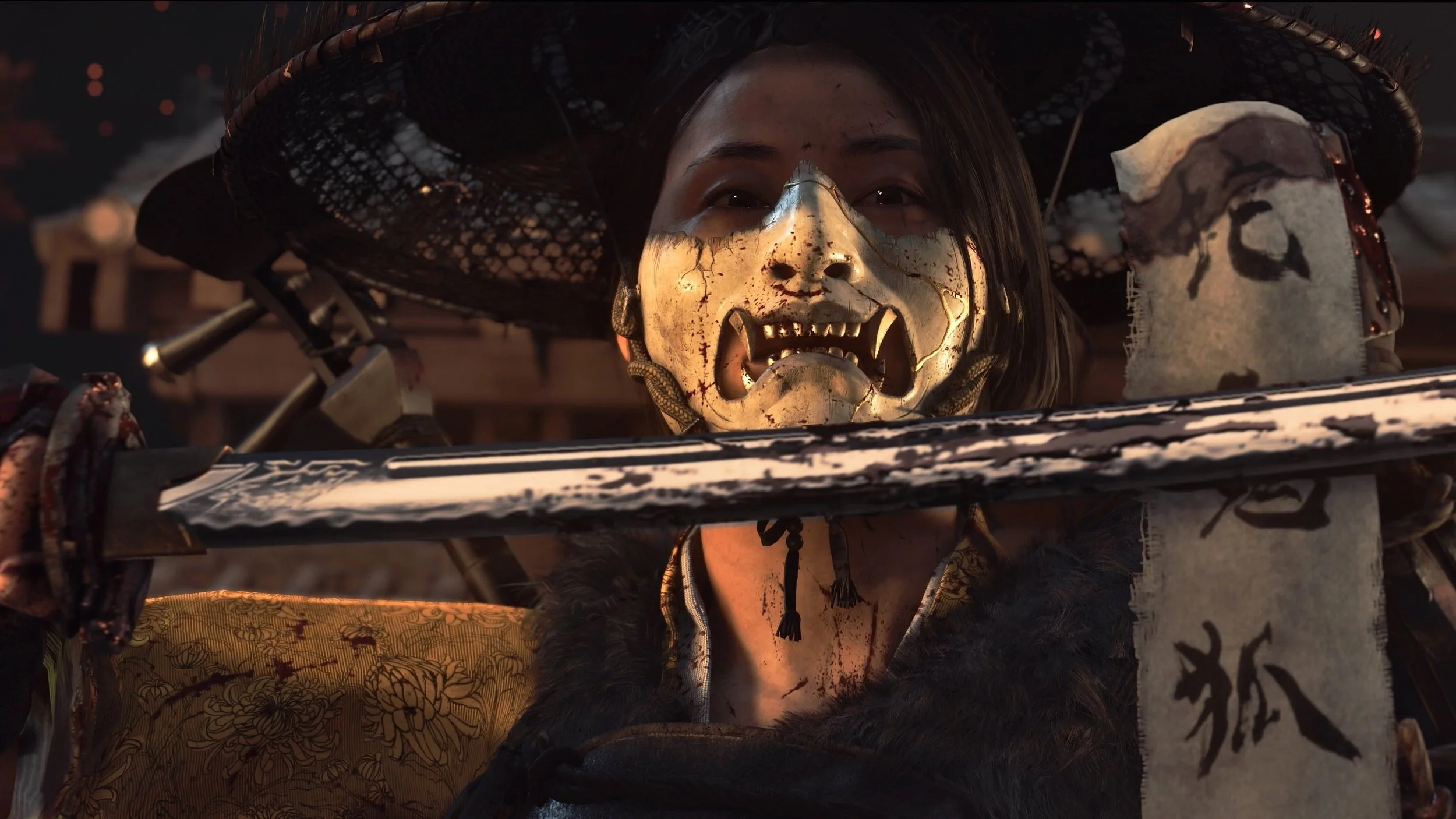
Ghost of Yōtei lands strong narrative beats that smartly twist a seemingly simple revenge narrative into being a story about found family. The unique narrative framing pays off to remind us that the stories we tell ourselves may not be as straightforward as they seem. // Image: Sony, Sucker Punch Productions
That’s okay, though. Despite failing to have any aspects that really push it beyond to be an incredibly memorable, special game, Ghost of Yōtei greatly succeeds at making an incredibly enjoyable video game experience overall. And a lot of the success comes down to how enjoyable the story told here is. I’ve talked already about how the narrative framing makes this revenge plot immediately feel different from Sucker Punch’s previous effort, but what this plot morphs into makes it especially effective at creating a unique, subversive narrative in a genre wrought with revenge premises. Let’s briefly pivot to spoiler to discuss how that comes to be.
The following section contains spoilers for Ghost of Yōtei. Proceed to the next section to avoid spoilers.
We convince ourselves of narratives to justify the road we take throughout life. For Atsu, that narrative was painted the night that the Yōtei Six burned the ginkgo tree in front of her childhood home, and killed her family that very night. Atsu herself barely survives after being punctured through the shoulder. As we switch to the main events of the narrative, Atsu makes it clear that she wishes to join her family in death once she’s brought honor and vengeance to their name. Atsu returns to Mt. Yōtei with nothing to live for beyond her revenge for what was taken from her as a child.
But such is a narrative that she has convinced herself of. One of Ghost of Yōtei’s greatest narrative tricks is that it never lets us see the entire events of the Yōtei Six’s attack on Atsu’s home unfold uninterrupted. Atsu has shattered memories of the event, likely due to the trauma and devastation that came out of it. In her mind, the Yōtei Six are an unforgivable group that took everything away from her in mere seconds.
But such a fractured memory creates an unclear, incomplete picture of what actually unfolded. In time, Atsu reunites with her brother, Jubei, now living his childhood aspiration of being a samurai defending his homeland. Atsu, once committed to seeing this journey by herself followed by a quiet, uncelebrated death, now has something that complicates her once simple revenge quest. Atsu didn’t actually lose her entire family in the way that her own narrative convinced her had been the case. This becomes increasingly complex in later sections of the game, namely during the Teshio Ridge, where the Kitsune, one of the Yōtei Six, is revealed to be replacement of the original Kitsune that Atsu remembers from her childhood.
That Kitsune is eventually revealed to be Oyuki, an ally that assists Atsu through Teshio Ridge’s main story sequences. This revelation completely twists the narrative that Atsu has believed for so much of her life. Oyuki, the original Kitsune, showed mercy to Atsu when she was a child against the wishes of Saito, doubtlessly saving Atsu’s life. Once convinced that revenge was the only way, Atsu now has to grapple with the fact that one of her nemeses isn’t the irredeemable monster that made her revenge quest so justifiable. Now, Atsu has to confront newfound context that reframes the tragedy that has motivated Atsu’s quest. The once incomplete memory has its gaps gradually filled in. In doing so, Atsu’s vengeance to defeat the killers of her family doesn’t make as much sense as it once did.
This comes to a head in Oshima Coast, the game’s final area and prelude to the endgame. Jubei is revealed to have a daughter, Kiku, making Atsu an aunt - another revelation that reframes Atsu’s resolve. Atsu began this journey convinced that she had nothing to live for beyond reclaiming her family’s stolen honor. Now, as Atsu has found a family and allies that are close to her, the fixation on revenge is no longer so obvious, so easily justifiable. Still, Atsu holds on to claiming revenge against the Yōtei Six as she takes advantage of a chaotic siege to battle the Spider - a decision that puts Jubei, Oyuki, and Kiku at grave risk.
Atsu’s decision to put her revenge over the well-being of her loved ones is a quickly regretted one, as her decision risks making Kiku an orphaned girl that may take the very same path of revenge as Atsu once did. Atsu is ultimately a victim of a narrative taking control of her life - and the crux of Ghost of Yōtei’s storytelling is realizing that narratives only have as much control of our lives as we allow them to. Atsu abandons her quest for revenge for the sake of saving her loved ones and ensuring that the cycle of death and revenge isn’t perpetuated onto Kiku. This decision perhaps comes too late for Atsu to see a reunion without loss, but it nevertheless shows beautiful character movement.
Ghost of Yōtei deceives the player as much as Atsu deceives herself. Like Atsu herself is led to believe, the player is framed into this story to believe that this will be little more than a revenge plot. But like Atsu herself, more information, more context, and more characters reveal the entire picture that makes the game’s violence and bloodshed seem all the more unnecessary. In the game’s conclusion, Atsu lives life with Oyuki and Kiku, having newfound value in a life that she had once saw no reason to continue after her revenge had been satiated. Ghost of Yōtei is a simple but nevertheless effective illustration of how the narratives that inform how we live our lives are inherently fluid - they can change and reveal a worldview that’s more complex than what we once were convinced of. That, in turn, informs the future path that our life takes, even if it challenges and perhaps abandons older narratives that had once defined who we used to be.
This is the end of the spoiler section of this review.
Ghost of Yōtei is a cool, immersive, and deeply satisfying game to play. Like its predecessor, there are no hard weak points as each aspect of the game is fleshed out and entertaining to come together to build an incredibly cohesive whole. However, the amount of iteration on display here makes me feel like I’ve entirely gotten my fill for this type of experience. Tsushima and Yōtei stand as an excellent pairing of video games, but I don’t think I’d want a third game in this series if another installment takes as few opportunities to advance the series as Yōtei does. I truly think Sucker Punch have provided as good of an experience as this style of game could possibly be with Ghost of Yōtei - the only way I can see a future installment of this series being justified is if something weird is done with the formula.
Save for a complete reimagination or subversion of the series in the future, I think Ghost of Yōtei serves as a more-than-serviceable endpoint for this series. There’s a lot to like in Ghost of Yōtei that makes it an easy game to recommend. Even for players that haven’t played Ghost of Tsushima, I think Ghost of Yōtei offers an immensely solid value, as its refinements make it an even more polished, enjoyable offering than its already-impressive predecessor.
I’ve had difficulty praising Ghost of Yōtei ever since completing it, mostly because its positive qualities are clearly self-evident to anyone that’s already gotten a taste of this series with Tsushima. Ghost of Yōtei doesn’t add many new reasons to like this style of game nor does it create new positive qualities about it that were completely absent in what came before. That, for me, is what prevents this game from being easy to praise, easy to get lost in while talking about, easy to remember long after I’ve put the controller down. Even while writing this review, I’ve had to Google certain details of the game, not because a large amount of time has passed since my playthrough, but because certain aspects of the game didn’t stick out in my mind.
I think that’s telling as a sign that this game isn’t an absolute all-timer. But maybe it doesn’t need to be. Maybe all Ghost of Yōtei needs to be is an easy game to love - and I think it very much accomplishes that. Ghost of Yōtei managed to immerse me for over 45 hours in a capacity that most games of this style wish they could. I think that does enough to make Ghost of Yōtei a game easy to fondly look back on, even if it doesn’t have the sauce to make it a game unlike any other.
Final Grade: A-
Thank you very much for reading! What are your thoughts on Ghost of Yōtei? How do you think iterative sequels fare when it comes to legacy and impact? As always, join the conversation and let me know what you think in the comments or on Bluesky @DerekExMachina.com!