The Pleasures and Pitfalls of Fan Service (and How We're the Problem and the Solution)
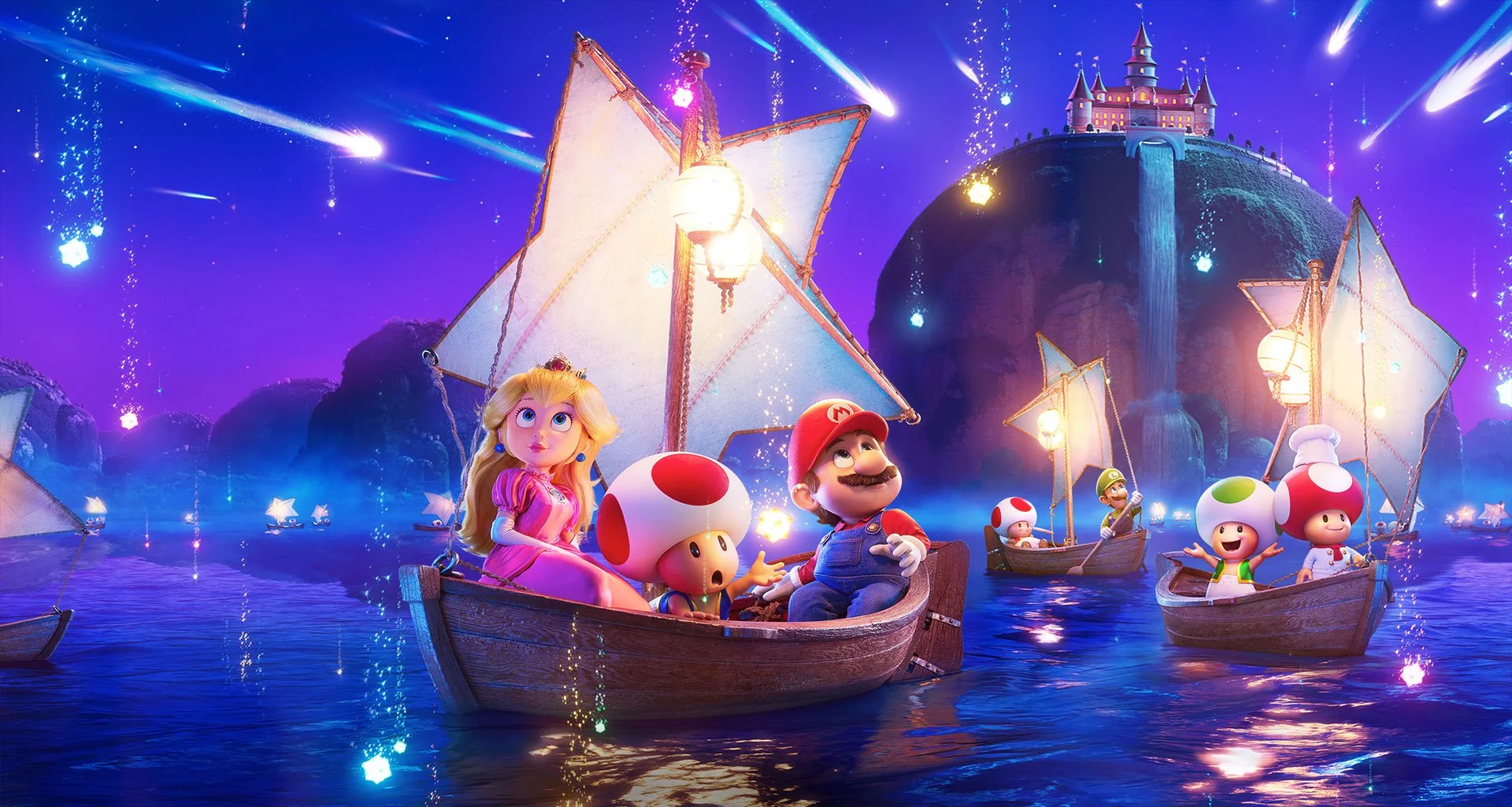
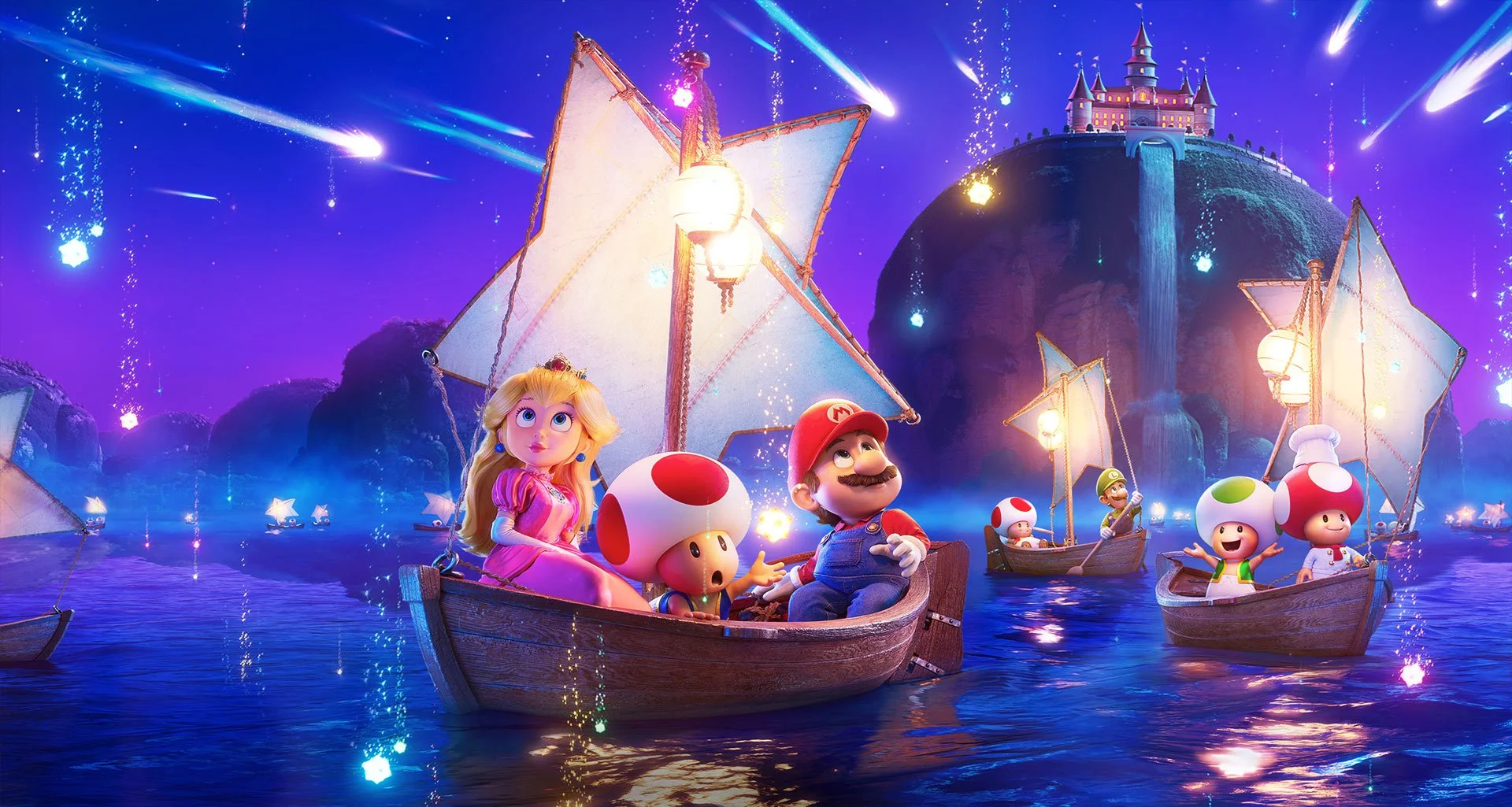
Like its predecessor, The Super Mario Galaxy Movie has a divided response between critics and audiences. This movie is clearly made for Mario and Nintendo fans first and foremost, but does such a focus prevent it from being anything more than that? Will Mario Galaxy be remembered for anything more than its fan service? // Image: Nintendo, Universal Pictures, Illumination Entertainment
The following blog post discusses spoilers for The Super Mario Galaxy Movie, Life is Strange, and Final Fantasy VII.
I’m a lifelong Nintendo fan and autistic adult - so of course I saw The Super Mario Galaxy Movie on opening weekend! I won’t pretend that 2023’s Super Mario Bros. Movie was anything incredible - after all, it falls victim to a lot of Illumination Entertainment’s notorious style of chaotic action akin to dangling keys in front of its audience. But, it was fun and was clearly crafted with respect to fans of the source material. More than anything, The Super Mario Bros. Movie was clearly made for Nintendo and Mario fans to have a great time at the movies.
And indeed, The Super Mario Galaxy Movie is a repeat of that. Like its predecessor, Mario Galaxy is filled to the brim with celebrity actors voicing beloved characters, it’s chock full of references to Mario and Nintendo lore no matter how obscure, and it features a soundtrack lovingly recreating a lot of the iconic songs that have made so many Mario games feel so special. The Super Mario Galaxy Movie is a film that I would argue understands its mission - that is, it knows what it wants to be and delivers on it. It seeks to be a film that families and Nintendo fans can watch and smile while watching, but perhaps not think too hardly about it after the credits roll. To that end: mission accomplished. However, there has been an audibly louder discourse surrounding this film compared to its predecessor. There are harsher, more frequent critiques of The Super Mario Galaxy Movie, many of which claim that the film is essentially a fan service montage with little else to offer.
This is in contrast to the many great animated movies that have pushed the animation medium forward. From The Land Before Time to Toy Story to Spirited Away, there have been various animated films that, even while targeting a family-friendly audience, aren’t afraid to have darker moments and tell more ambitious stories filled with morals, lessons, and often powerful character arcs and stories. The Mario films, much like the rest of Illumination’s output, is completely devoid of that, instead focusing on being test-tube movies bioengineered to be as profitable as possible. That means celebrity voices, that means hard 90-minute runtimes, that means low-hanging fruit writing and humor, and that can even mean cut corners on animation and polish.
I have no issue with critiquing Illumination’s other movies for the lacking works of animation that they are because they simply don’t offer me anything I find to be of value. I don’t find films like Despicable Me or The Secret Life of Pets to be interesting or admirable feats of animation because they clearly don’t try to be. And yet, I find myself struggling to feel the same way about both Mario movies made in collaboration with Nintendo. Why is that?
The truth is, I’m perhaps willing to give the Mario movies more leeway for enjoying them because they offer me something that all other Illumination movies don’t: fan service. I think there’s a part of all of us that love noticing details that reference things we recognize. There were multiple moments throughout The Super Mario Galaxy Movie where I, like many others, reenacted that one Leonardo DiCaprio meme from Once Upon a Time in Hollywood where he’s pointing at the TV because there was something obscure that I recognized. I loved seeing Wart from Super Mario Bros. 2 / USA depicted as a mob boss. I loved noticing the N64 logo being used as a Blade Runner-style hologram advertisement. I loved seeing Mr. Game & Watch make a surprise appearance during the film’s third act. I loved seeing all these things and more because they respected and rewarded my knowledge and appreciation of Nintendo and Mario’s history. But is that enough to turn a narratively messy, bizarrely-paced film into a great one?
For me…maybe. I can’t deny that I had a fun time watching The Super Mario Galaxy Movie, and a lot of that fun came from the fan service on display throughout much of the film. Is it fair, though, to let fan service override our assessment of quality for anything? Does fan service actually make something better, or is it just a cheap way to please long-time fans and get easy brownie points?
The answer is complicated and unclean. It’s easy to say that fan service is a crutch that makes something weak become easier to like - but truthfully, I think there’s a reason that fan service is so prevalent in so much of the modern media landscape. And that reason largely comes down to the fact that, as much as we love to criticize fan service, we, as consumers, are also very much the reason that fan service exists and works in the first place.
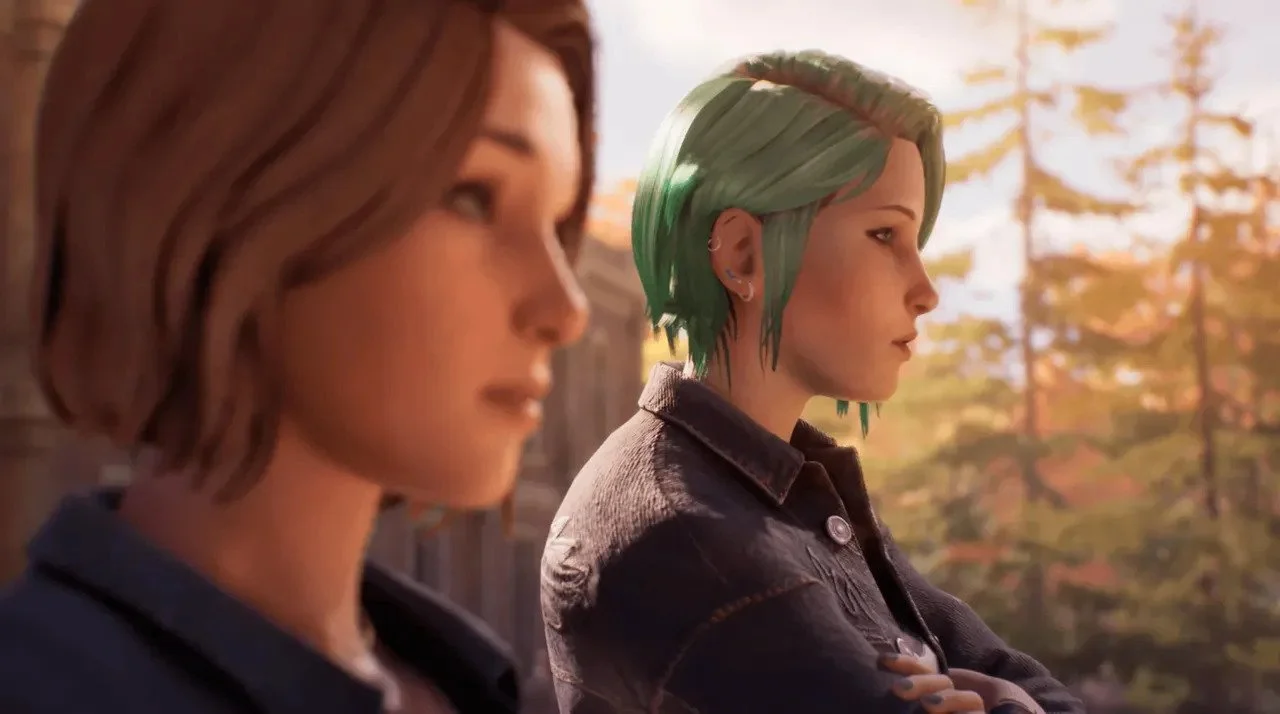
Life is Strange: Reunion is marketed as the finale of the “Max and Chloe” arc that began with the original 2015 game. The tagline of this game being the “ending that Max & Chloe deserve” drew immediate criticism. // Image: Square Enix, Deck Nine Games
The impetus for this conversation was the recent announcement and release of Life is Strange: Reunion. The original Life is Strange, released in 2015, is a beloved narrative-driven adventure game where players assume the role of Max, a quirky photography student whose ability to turn back time ends up altering the fate between she and Chloe, her long-time friend and gal pal possible partner depending on the decisions made by the player.
Much of Life is Strange is spent building the troubled, often messy relationship between Max and Chloe. The melodramatic, angsty, and sometimes cringey exchanges between Max and Chloe ultimately form the player’s assessment of the morality of Max and Chloe’s relationship. Chloe is only alive throughout Life is Strange’s story because of Max’s ability to rewind time, and such a thing creates a moral question that the player slowly has to grapple with throughout the course of the five-episode-long game.
The crux of Life is Strange is in its fifth and final chapter, when the game asks the player to make one final decision: allow Chloe to die as she was originally destined to and allow the city of Arcadia Bay to return to normal, or keep Chloe live in exchange for allowing the consequences of the changed timeline permanently destroy Arcadia Bay (and who knows what else) in the process. Depending on how they navigate through their journey, different players will form different judgements for Chloe’s character and come to this final decision from different approaches.
For me, I often found Chloe to be annoying and consistently toxic. Conversations between her and Max would quickly turn sour if Max said something wrong, instilling the feeling that Max is walking on eggshells in any interaction with Chloe. Although she is a sympathetic character given her troubled life and upbringing, Chloe’s tragic death during Life is Strange’s inciting incident is something that I found to be a necessity for the game to realize its themes of fate, grief, and acceptance. Does the life of one matter more than the lives of the many living in Arcadia Bay? In my eyes, the answer was easy: Chloe didn’t deserve to live any more than the residents of Arcadia Bay.
That said, other players can come to a different conclusion. Although I’m not terribly fond of the character, Chloe Price is a widely beloved character in the game’s broader fandom, making the decision understandably difficult for many playing the game. By way of the game’s story-driven nature, each player is going to have their own attachments that they ascribe onto Max and Chloe - and that’s ultimately what makes the game’s final decision so meaningful. The player is given agency as to what they feel is the optimal end point for these characters. There is no perfect or ideal “happy ending” that these characters get to have - merely a conclusion that different players will have different interpretations about born out of each player’s different perspective.
Life is Strange is remembered as fondly as it is because it trusts the player to make such an impossible decision and live with it. Life is Strange is willing to make its characters suffer and reach a point where there is no ideal outcome - but that’s life, right?
To be powerful and meaningful in their application to our lives, fiction needs to be willing to depict hardships that characters go through. The hardships we face in life and the ways in which we navigate them are what shape us into the people we are. This same principle applies to fictional characters - seeing the ways in which characters face and overcome challenges inform us and to themselves who they are as characters and as people. The power of Life is Strange comes from how the game’s final decision informs the player’s interpretation of Max as a character.
Life is Strange’s story ended where it needed to. While the Life is Strange series continued, it would respect the player’s final decision. Before the Storm was a prequel that largely served as a companion piece to the original game, and Life is Strange 2 and True Colors were stories that existed mostly independently from the events of the original game. It wasn’t until 2024’s Life is Strange: Double Exposure where the series picked up Max’s story once again. This culminates in a finale where both timelines created at the end of Life is Strange merge into one, setting up the return of Chloe in the 2026 follow-up, Life is Strange: Reunion.
Yes - Chloe Price returns in Life is Strange: Reunion regardless of the player’s decision made in the original 2015 game. What exactly is the purpose of this? On one hand, this opens the door to further explore the consequences of Max’s decisions made throughout Life is Strange and Double Exposure. At the same time, this decision reeks of fan service; creating something that will appeal to longtime series fans as much as possible, even if it undermines the narrative weight of previous moments in the Life is Strange series.
What didn’t help is how this was framed in the game’s pre-release marketing cycle. In a post on Xbox Wire, Square Enix and Deck Nine Games marketed this title as “giving Max and Chloe the ending they deserve”. What does this mean? What does a “deserved” ending entail and can such a thing even exist?
I would argue no. Harper Jay MacIntyre addresses this excellently in her piece on the matter:
“Characters don’t deserve anything, and I don’t think fans do either. The goal of a story cannot simply be to satiate the hunger of fanatics or to smooth out the ripples of a world. Even the most indulgent self-insert fan fiction arguably operates on higher goals than this; the writer crafts the silly tale in order to address something in their soul. You don’t write to fix a story; it ideally addresses something inside us. You don’t write because fictional characters need it. You write because you need it. You do it because there’s something in you that needs to be said.”
Indeed, this entire Max and Chloe reunion after multiple games just feels like a way to cash in on bringing back fan-favorite characters to capitalize on peoples’ attachment to them from previous titles. By nature, Reunion is a game incapable of standing on its own like True Colors, Life is Strange 2, or the original do because it is directly banking on the fan service of providing an excuse to bring two torn apart characters back together to justify the entire experience.
On the surface level, seeing Max and Chloe together on screen again over a decade after their original story together concluded is a neat concept. However, it begets asking: was this a story we needed? Even if it’s cool to see these characters together again, is there a really a greater point to it all? Does this novelty make this game worth playing, this story worth seeing through? Or does it undermine the weight of the original game’s climactic final decision?
As I said earlier, the answer is complicated and unclean. I could be cynical and say that Life is Strange: Reunion is a cashgrab that offers little value beyond offering fan service through creating more moments between two characters that players fell in love with over ten years ago. Likewise, I could also easily say that seeing Max and Chloe together again is cool because I can now get to see them interact with each other in more ways and get to see brand new sides of their respective personalities.
The raw fan service of seeing these character together again leads to immediate pleasure, but it’s hard to argue that it isn’t a pitfall. Bringing characters back in order to give them an “ending they deserve” feels like an impossible task, given that there is no such thing as a deserved ending. There are only correct endings and incorrect endings.
Both decisions that the player can make at the end of Life is Strange are correct endings, in that they both embody reasonable and believable conclusions that Max could come to given the situation she faces by the end of the game’s events. Even if a certain decision and ending doesn’t align with a player’s particular perspective or moral opinion, the point where Life is Strange’s story ends feels logical and right for the story it’s trying to tell. Given that Life is Strange has correct endings, it feels unnecessary to bring characters back to just to potentially create another correct ending. I don’t think it’s inherently impossible to have Reunion deliver its characters to another “correct” ending, but it certainly faces an uphill battle from the start by nature of having to justify its narrative decision to potentially undermine the way the original story ended.
Some players will be willing to accept and move past that for the sake of getting to see these two characters interact with each other again. Other players won’t and feel like these characters are just being brought back to capitalize on nostalgia and sentimentality. That’s the pitfall of fan service - even if it’s cool, it brings with it a dangerous assumption that it’s enough to carry an experience.
Such an assumption is dangerous because it very rarely is enough to carry an experience towards greatness. I can comfortably say that the fan service in The Super Mario Galaxy Movie made me enjoy the movie, but do I consider it among the great animated classics like The Land Before Time, Toy Story, and Spirited Away? Of course not - the movie has great fan service, but that doesn’t change the fact that it inherits a lot of Illumination’s core shortcomings as an animation studio. Mario Galaxy offers a lot of immediate pleasure through its fan service. The pitfall, though, is that, no matter how great the fan service is and how much you acknowledge, respect, and reward your audience of fans, it will never replace sheer quality.
Great writing, great animation, great heart supersedes all quality that could possibly achieved by fan service and then some.
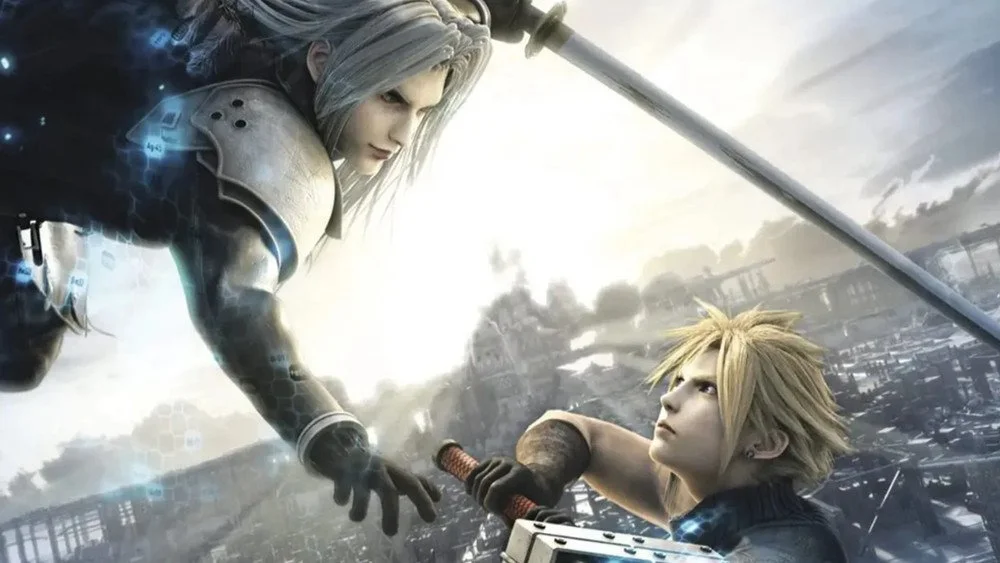
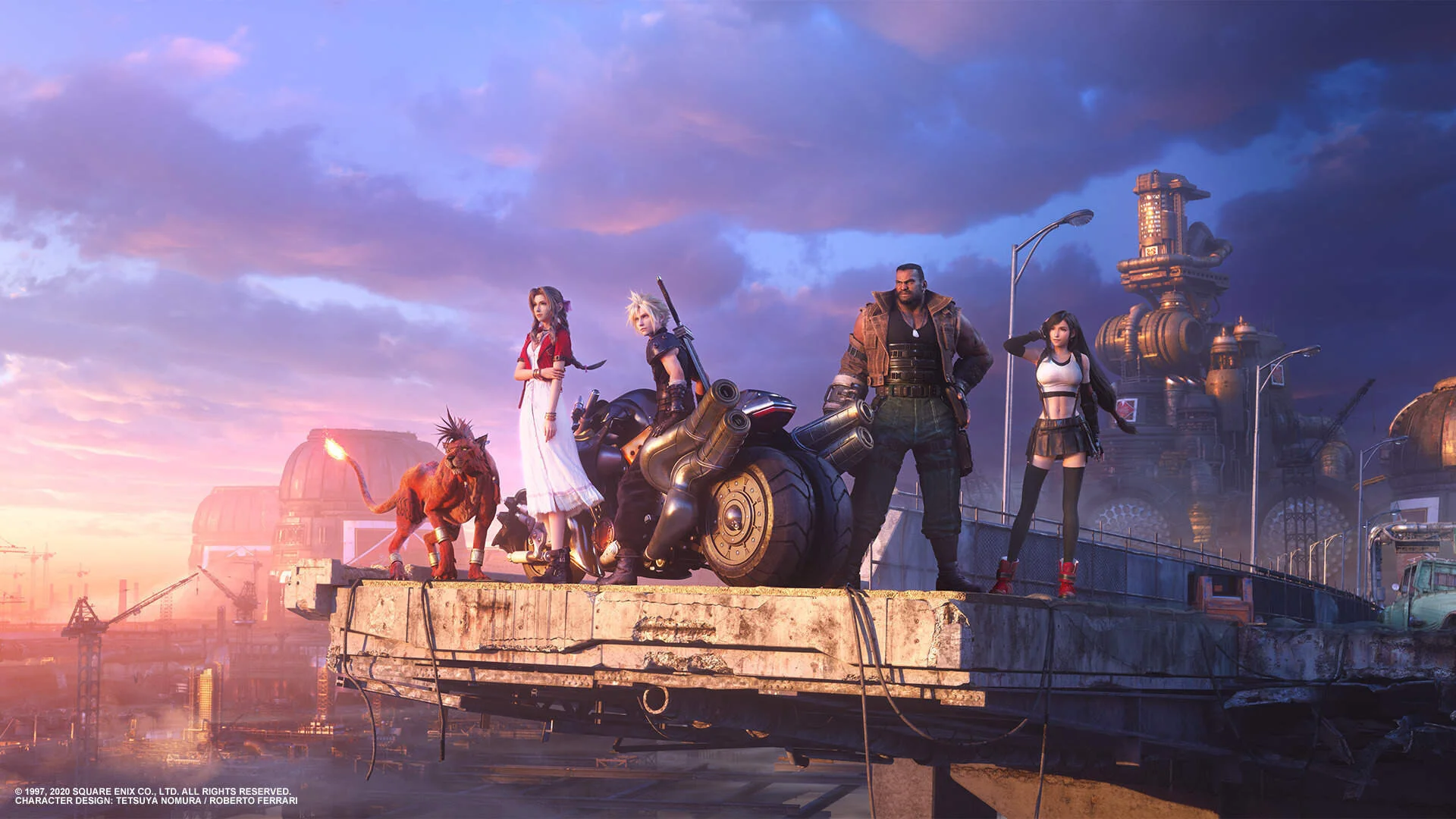
The compilation of Final Fantasy VII is a poster child for fan service gone wrong, in my opinion. Advent Children is a cool action flick, but its existence undermines the brilliant ambiguity of Final Fantasy VII’s ending. // Image: Square Enix
But Derek, I hear you scream at your monitor, I like fan service! I don’t care if it can be a cheap way to make me smile. I just like how fan service makes me feel. I hear you. And I agree with you! I like fan service. I love a good Warriors crossover spin-off where I get to play as a bunch of characters that would normally never get to interact with each other at all. I love a good cheeky reference to another franchise made by the same company. All of that’s super fun - but I realize that this culture and environment of fan service exists largely because we like such things. We are the very coal that fuels this perpetual cycle of fan service being injected into so much media.
This piece isn’t intended to be anti-fan service, nor advocate for it. Truthfully, I don’t think fan service will realistically go anywhere, and I don’t think it’s necessarily unhealthy by nature. However, I do think we need to seriously reflect on what moderation of fan service truly looks like. There is definitely such a thing as too much fan service - not just in the form of how many references there is in something, but also in the form of the extent to which a piece of fan service exists.
I can think of no better example of this than Final Fantasy VII: Advent Children and the rest of the somewhat infamous compilation games of Final Fantasy VII. It’s no secret that Final Fantasy VII has always been Square Enix’s cash cow - the 1997 JRPG catapulted the popularity of not only Final Fantasy, but its publisher as a whole throughout the world. After the anti-direct-sequel Hironobu Sakaguchi departed Square Enix in 2003, the company greenlit various sequels, prequels, and other media to expand upon various games. Final Fantasy X-2 reused assets and provided a follow-up that, while incredibly fun to play, serves as a significant downgrade from X’s excellent storytelling. More substantially, Square Enix opted to capitalize on the ever popular Final Fantasy VII by developing a movie and multiple games that would expand the story, timeline, and lore of Final Fantasy VII - much to the original game’s detriment.
Part of what makes Final Fantasy VII leave such a phenomenal impact on its players is its ambition and boldness. Final Fantasy VII takes a lot of swings in its narrative, and a lot of the game’s narrative ambition comes to a head in its finale. The world of Gaia has become bleak and hopeless in the face of the looming apocalypse of Sephiroth’s summoning of Meteor via the Black Materia. Even if the party defeats Sephiroth, there’s no guarantee that it’ll be enough to save the planet from its fate. In spite of that, the party moseys through the Northern Cave in their attempt to prevent the destruction of the planet.
Even though Cloud and co. defeat Sephiroth, Meteor is still barreling towards Gaia. All hope appears to be lost, until the Lifestream emerges from the planet and congregates to the contact point between Gaia and the Meteor. A flash of white envelops the screen as the party is blinded, before we see Aerith in a shot reminiscent of her first appearance in the game’s iconic opening. Aerith supports the party in spirit by communicating with the Lifestream to protect the planet from Meteor. And then…credits.
There’s no clear answer for what happens once the Meteor makes contact. In a post-credits scene, we flash-forward to 500 years in the future where descendants of Red XIII run towards Midgar. This futuristic city, once an effective power plant sucking up the planet’s very lifeblood, has now been entirely claimed by nature. The planet now overpowers the city that once overpowered it. As birds fly in the distance, we see the game’s logo for a final time.
Did the cast of Final Fantasy VII survive? Did the Lifestream destroy Meteor entirely or reduce its impact on Gaia? Did Meteor wipe out everyone on the planet, but the planet itself managed to survive? No clear answers are given - and they don’t need to be. The game’s ambiguous ending is a strength to the overall narrative because it allows different players to walk away from the game with different interpretations and different conclusions for what the game is ultimately saying by where it chooses to end its story. Choosing to end this story here is brilliantly intentional, and the entire game is better for it.
But then…the compilation happened and undid all of that.
Suddenly, there was only a single correct interpretation to have regarding the game’s ending, and that interpretation was the game’s sequel in the form of the 2005 film, Final Fantasy VII: Advent Children. This sequel movie picks up two years after the events of the 1997 game and tells a story with a dramatically different and far less interesting tone than the original Final Fantasy VII. This includes but is not limited to turning protagonist Cloud into a caricature of the character he became by the end of the original game. What was once a stoic yet often aloof and increasingly vulnerable character became a shell of his former self in this movie’s interpretation of Cloud. Advent Children transformed Cloud into the stereotypical mid-2000s angsty edgelord that no one really understands. By my estimation, this is only done to make the character appear cool for an aging intended audience in a new medium in a new era where coolness was prioritized above all else.
To be fair, Advent Children does have a lot of cool moments. Its many fight scenes have a clear Matrix inspiration to them, and getting to see characters like Cloud, Tifa, Sephiroth, Reno, Rude, and the entire party of the original game rendered in such high detail for the first time is a cool novelty. And indeed, turning your brain off and watching Cloud and Sephiroth have a cool-as-hell duel at the climax of the film is satisfying to watch, but the coolness crumbles when you begin asking an essential question: what is the point of this? What does this add to the greater story of Final Fantasy VII?
After the dust of its coolness and novelty settles, it become transparent that Advent Children doesn’t justify its existence. It’s effectively an excuse for fan-favorite characters (rendered in admittedly impressive CG for a relatively low budget film) to interact with and fight each other. Beyond that, there’s little reason to watch this film. And tragically, it doesn’t really add anything of value to the greater story being told. In fact, by its existence as a direct sequel to the original game, Advent Children undermines the brilliant ambiguity at the end of Final Fantasy VII. This shuts down any interesting conversations to be had about what players thought happened after Meteor collided with Gaia. There is now only one way to interpret the end of the Final Fantasy VII in order for a mediocre-at-best action movie to take place.
Advent Children is seemingly cool from a fan service perspective, but it ultimately undermines and potentially even degrades the quality of the storytelling of its predecessor. Other compilation installments also failed to justify expanding this world’s lore and characters. Even Crisis Core, the most well-liked installment in this expansion of FF VII’s world, still has severe issues and makes Zack’s story taking place before the events of the original game feel rushed and sloppy.
Square Enix became so obsessed with providing what players appeared to want - getting to spend more time in this world with this cast of characters - that they failed to make interesting pieces of media that stood on their own and meaningfully told new stories that enriched what came before. Put another way, the compilation of Final Fantasy VII was one experiment of providing as much fan service to the many, often vocal fans of Final Fantasy VII as possible, and the result was a collection of mediocre or even bad games that failed to provide the strong, special storytelling that made people fall in love with Final Fantasy VII in the first place.
Fan service is not enough to make something good or a meaningful expansion of an already established story. Advent Children, Crisis Core, and Dirge of Cerberus are all cool on their surface because of appearing to give fans what they want, but they’re truthfully hollow experiences that fail to be compelling in and of themselves. This project is effectively fan service slop, making the overall legacy of Final Fantasy VII’s world and presence in the broader Final Fantasy series feel a lot messier. I truly think the legacy of Final Fantasy VII would be a lot more polished and clean if these spin-off games and movies didn’t muddy the waters of what the original game’s story sought to accomplish.
Does fan service actually make something better? It can in some ways and it can’t in other ways. It’s clear that fan service can be cool if used in moderation, but history has shown that fan service is simply not enough to make something worth existing. A game like Hyrule Warriors can offer cool fan service to series fans, but if the core gameplay and content aren’t compelling to play, then that fan service will only carry the game so far. And yet, fan service-filled games like these exist for a reason - because we buy and play them. We, as consumers, like fan service because it’s fun to be the Leonardo DiCaprio pointing meme in the moment. But we need to be mindful, perhaps now more than ever, about how much fan service ought to be in the media we consume.
How much fan service is too much? At what point does fan service cause the broader experience to deteriorate? Does having fan service necessarily make something worse, and how so? These are the questions I find myself asking more often as fan service continues to pervade into the games we play and the movies we watch. We’re certainly part of the reason why fan service exists in the modern media landscape to the degree that it does. But we are also the reason that it can be kept in check.
We can and should vocalize our disdain when something feels like it’s more interested in being a hub for fan service instead of being something capable of standing on its own. We can’t allow things that make us smile in the moment override our desire to want something more meaningful, more independent, and less capable of undermining the quality of other stories that have already been told.
Fan service offers many short-term pleasures for audiences and long-term pitfalls for developers and creatives. We simply need to acknowledge and begin intentionally moderating the amount of fan service we’re willing to tolerate. We, as consumers, have complete power over advocacy for how much fan service should be prioritized when making any piece of media. And we ought to use that power with intention and responsibility.
While I admittedly admire The Super Mario Galaxy Movie’s recognition and rewarding of audience fandom, I truly feel that an ideal future will contain movies that don’t need to depend on that to bring smiles to audience’s faces.
Thank you very much for reading! What are your thoughts on the presence of fan service in the modern media landscape? Should fan service be embraced or does it limit new, creative ideas? As always, join the conversation and let me know what you think in the comments or on Bluesky @DerekExMachina.com!