Signposting, Yellow Paint, and Why We Actually Like Being Directed Where to Go in Games
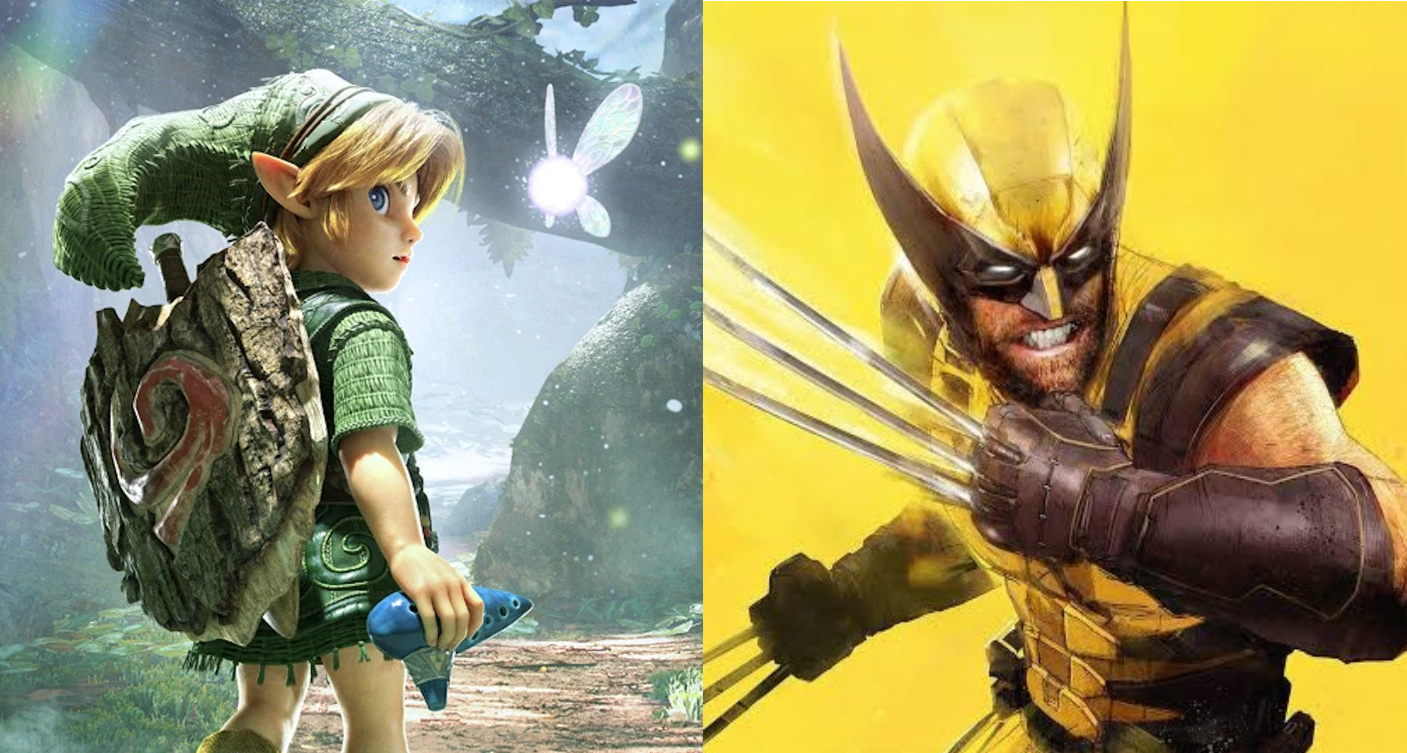
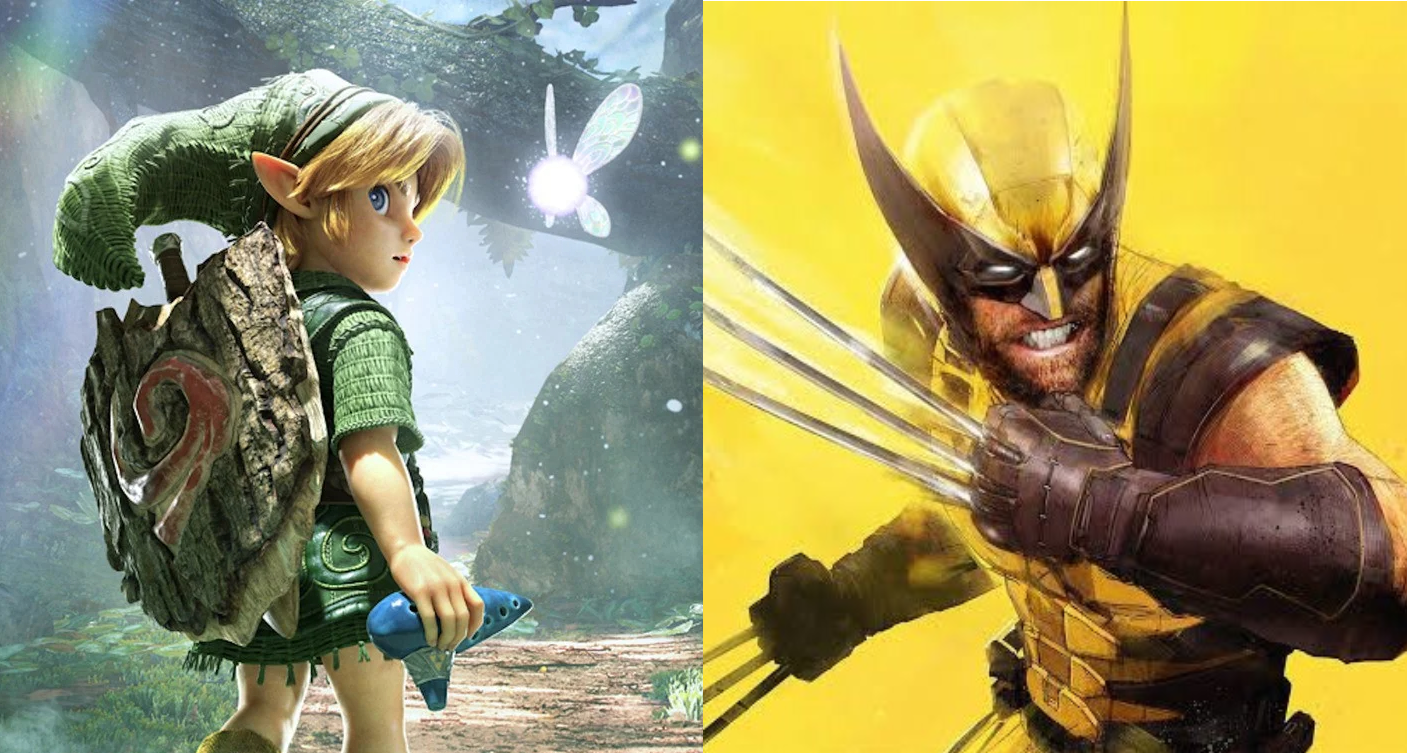
The Legend of Zelda: Ocarina of Time (2026) and Marvel’s Wolverine highlight two contrasting examples of how to use game design to guide players. Wolverine handholds its players to the point of patronizing them whereas Ocarina of Time’s remake adds more signposting than the original game while still retaining the magic of discovery. // Image: Nintendo, PlayStation
Good signposting in video games is like good CG visual effects in movies or good graphic design in print media - when it’s done right, you don’t think about it. Whether we’re conscious of it or not while we play them, every video game has signposting, and the quality of said signposting is largely determined by how much the player is made aware of it during gameplay. When the player is directed by the game on where to go and what to do to proceed in an intuitive, natural way, finding the way forward becomes part of a game’s fun.
At the other end of the spectrum, though, is when games fail to signpost intuitively. These games either make progression feel cryptic to the point where players become confused on what to do and how to proceed the story or get to the next section of gameplay. Likewise, poor signposting can also exhibit the opposite extreme, where a game’s progression is made too obvious to the point that the player doesn’t need to apply any level of thought as to how they move to the next part of the game. With too little signposting, a game can feel cryptic, confusing, and frustrating. With too much signposting, a game can feel too handholdy and conveys a lack of confidence over the game’s natural ability to direct the player’s actions. So how exactly do you find the right balance? How much signposting is too much and how much is too little?
These are some of the most critical questions in game design. And like any question concerning design, there isn’t a one-size-fits-all answer. Determining what the right level of signposting a game needs is dependent on what kind of game is being built, who the intended audience is, how difficult or accessible the game is intended to be, and so much more. Upon taking these aspects into consideration, you must tailor how you signpost progression in your game in a way that’s intuitive and thoughtfully crafted.
Video games have struggled with this concept throughout the industry’s entire history. From the cryptic games of ‘80s and ‘90s that practically necessitated a guide to understand what to do, to the modern epidemic of games feeling pressured to give players guidance on how to proceed at all times to ensure players don’t get lost and give up, there have been various problems regarding how to indicate how the player is supposed to make progress.
This year’s Marvel’s Wolverine has become the boiling point for an ongoing conversation about signposting in modern AAA games. Now more than ever, people claim that they don’t want games to be so handholdy. People claim that they want games that trust the players’ intelligence and intuition and that the way games guardrail progression needs to be upended. And yet, the recent release of the remake of The Legend of Zelda: Ocarina of Time suggests something different. The 1998 game, brilliant as it is for its time, has instances that reveal its age - one of which is the game’s inconsistent clarity on what the player needs to do to progress. The 2026 remake has already revealed itself to be a great preservation of the original game, yet one that adds more context and clarity over what the player needs to do to progress. The result: a game that’s even more intuitive and addictive to players than the N64 classic.
The Ocarina of Time remake doesn’t retain the original game’s signposting, nor does it overcorrect and make a game that leaves the player entirely to their own devices to figure out how to progress. The remake strikes a balance unique to its mission on what it seeks to accomplish as a game. The result is a game that has good signposting. Ocarina of Time directs players with enough visual and audio clarity and feedback to make progression satisfying while never overextending that direction to make playing the game feel tactless. Meanwhile, Wolverine was as criticized upon its launch as it was because its signposting was so obvious and excessive that players could not help but be made aware of its signposting.
Some people would make you believe that the solution to the extreme signposting of Wolverine is to make games that have next to no signposting. Some people may want to convince others that games should simply trust in players’ intelligence and let them figure everything out on their own. But Ocarina of Time’s success informs us what the most effective solution truly is: finding the right level of signposting that works best for what a game is aiming to accomplish.
So, let’s discuss signposting, what makes it so important to tune, and why people may appreciate good signposting more than they realize.
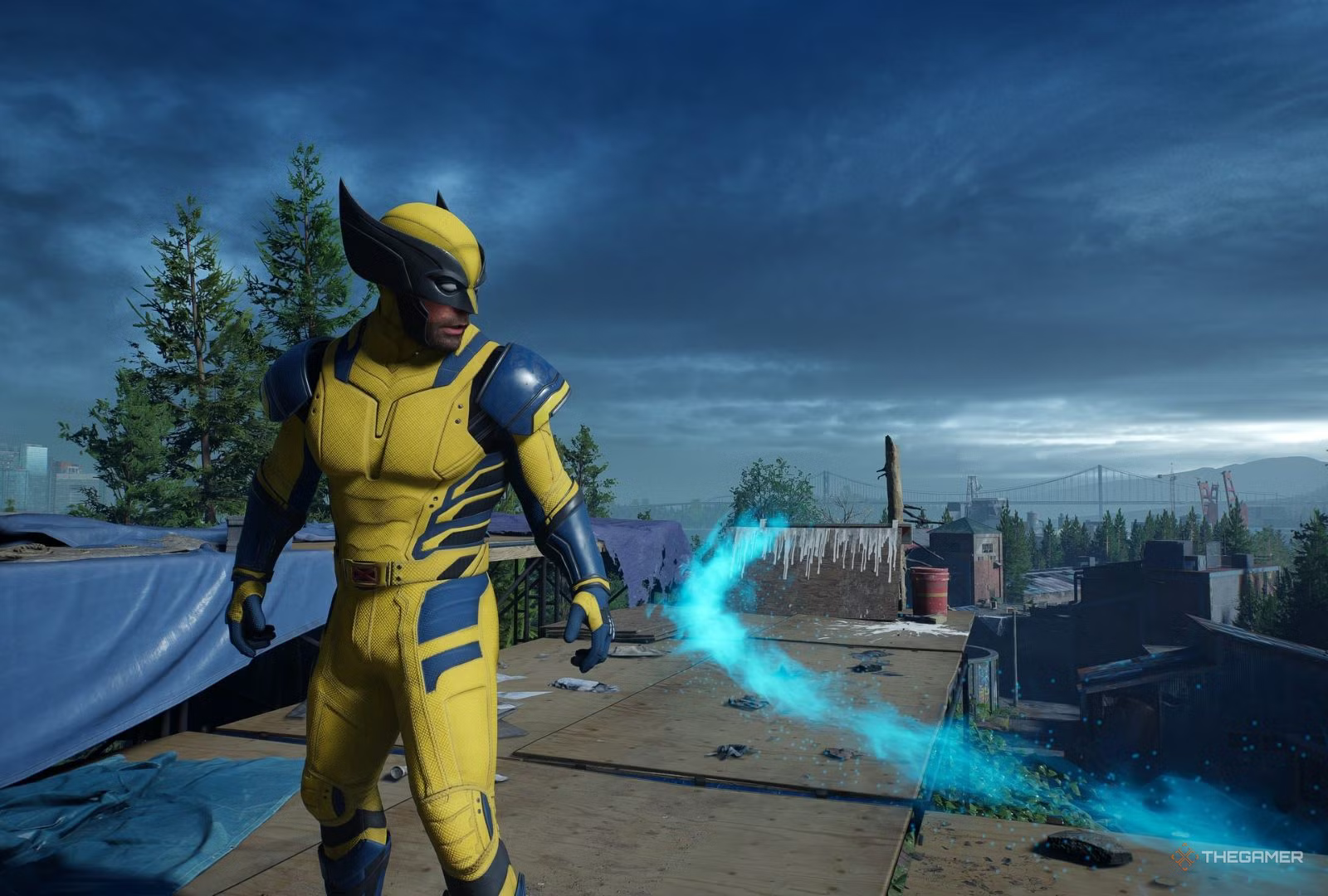
Marvel’s Wolverine represents a tipping point for the “yellow paint” trend in games. As a linear action game that offers very few chances to go off the golden path, Wolverine has multiple waypoint markers and scent lines that constantly indicate where the player must go. It is an unnecessary addition to the game and one that opened the floodgates on discourse about signposting’s utility in games. // Image: PlayStation, TheGamer
Signposting is inherent to game design. It has been present since the birth of the medium, and it will remain present for as long as video games exist. The only thing that has changed about signposting is how immediately obvious it needs to be. In the era of arcade games, the object of a game must be communicated incredibly quickly.
The object of Pong is to get the ball past your opponent’s paddle. The object of Pac-Man is to eat all the pellets before you get eaten. This information is relayed to the player in such a way that it takes the player only an instant to intuit what they need to do. No reading necessary, no need to reference a manual or guide - just the simple visual and audio conveyance of a game’s win condition was enough to communicate how to succeed in a game.
Things changed when games graduated to offering more types of experiences than just what was on offer in arcades. Early console and PC games widened what players could accomplish in games. In turn, this meant that the way games communicated what players needed to do had to change. As games became more complicated, there needed to be more time put into how to signpost to the player what they needed to do to succeed at the game without making the player acutely aware that they’re being communicated to by the developers.
Super Mario Bros. offers far more complex platforming than what was ever on offer for the genre before, but it intuitively communicates what players need to do but making it clear what they can’t do: move left. The screen in Super Mario Bros. never scrolls to the left, meaning that the objective of every level in the game is the rightmost point in the stage. That intuitively communicates to the player that they need to travel through each level from left-to-right. This is simple - rudimentary, even - and yet it makes the player understand what they need to do to succeed without them even needing to put much thought into it. Anyone can understand how to complete a level in Super Mario Bros. because of how the game puts limitations on itself. And that’s enough to make for good signposting.
The NES era is infamous for its library of games that are cryptic and unclear about what players need to do. The cynical onlooker can conjecture that its games were made so cryptic to incentivize multiple rentals for players to beat a game or to get players to subscribe to magazines or call phone hotlines to figure out what to do. However, the most likely reality is that there simply wasn’t a universal understanding on what games needed to do to make players have fun. Some games basked in being cryptic to create mystery and assumed that mystery would create word-of-mouth, which would then form a kind of community around a game.
This worked in the favor of games like The Legend of Zelda. In this game, reading the manual and the game’s opening crawl makes it clear that the win condition of the game is to collect all pieces of the Triforce and defeat the final boss. But the actual game gives players practically no guidance, giving them the freedom to explore the world at their leisure. The design philosophy of the original Zelda was to incentivize exploration and wonder. In practice, a playthrough of The Legend of Zelda without a guide of any kind often devolves into trying to burn every bush and bomb every wall until the player stumbles upon something. While there’s some content that the player can naturally run into, such as a dungeon on the overworld map, Zelda is inundated with so many secrets that have no visual or audio cues that it regularly feels directionless.
The game does have some attempts at guiding the player. Whether it is due to poor translation or a limited capacity of memory to work with, a lot of Zelda’s advice given from NPCs read as nonsense without proper context. “Dodongo dislikes smoke” and “Eastmost peninsula is the secret” are hardly helpful to most players when they’re so divorced from context. And yet, other games on the platform would be far more cryptic than Zelda.
No other game illustrates this most infamously than Castlevania II: Simon’s Quest. A game filled to the brim with cryptic NPC dialogue hints that suggest what the player needs to do. Some objectives that are bafflingly specific and obscure, Simon’s Quest is considered a mess of a game for a reason. It crumbles under the weight of trying to make a bigger game so much that it ends up causing player confusion and testing the players’ patience more than anything else.
These examples are products of their time; remnants of an industry still trying to figure out how to communicate to players. Nevertheless, games continued to get more and more complicated. As that happened, games had to equally put more effort into how they talk to players.
Games properly signposting what players need to do was something that took decades to become standardized for most genres. Yet, the process of figuring out what to do has the capability to become something of a memory for people. Does a game like Super Mario 64 illustrate how to grab certain Power Stars very clearly? Not at all, but figuring how to get some of the game’s more obscure Stars without a guide becomes a reward in and of itself. Figuring out what to do despite a game’s poor signposting can make for a great memory that sticks with the player.
But times have changed, and it’s not considered so acceptable for games to leave players completely in the dark over what to do now. Given that adults with busy schedules and finite free time make up a large portion of the game-playing community, there has come a far greater appreciation for games that respect the player’s time. Games show that respect through clearly illustrating what is expected of players. That looks different for certain types of games. Signposting what’s expected of the player can come in the form of waypoints and quest markers, while certain games show how many collectibles are hidden in a level before the player enters it.
As games continued to expand their audience, there came a greater responsibility for games to offer more assistance to players. This could come in the form of games becoming more linear, such as Final Fantasy XIII offering nearly no opportunity for players to get lost in the game’s world. This could also come in the form of games offering to play themselves if players got stuck on a part, such as with Super Mario Galaxy 2’s Cosmic Spirit feature.
The most prevalent form of signposting for larger games, especially in the post-World of Warcraft era of RPGs, is the quest marker. Games that emphasize questing now often show criteria that need to be fulfilled to complete a quest. Collecting a certain number of items, defeating a certain kind of enemy, performing certain actions - these give players effective checklists to survey in order to complete an objective. If a quest involves going to a certain location on the map, then a marker or arrow indicates where the quest-involved item is.
This is a formula that has become more and more integral to larger games, specifically those with open-world designs. The larger a game is, the more information there is to communicate to the player, including how to complete objectives. This balloons to the point where open-world games start to feel like checklist simulators where the player is nearly constantly told where to go and how to get to where they need to go in order to complete certain objectives. Suddenly, the lots of information needed to convey what to do in larger games becomes too much information. Players suddenly have to put next to no thought into what they needed to do to progress, because the game primarily does the thinking for them.
Is this inherently a bad thing? Not universally, I’d say. Some games work well with having lots of objectives to complete. Giving the player information on how to complete those objectives is far from a bad thing. But it’s when the information given to the player trivializes any potential challenge to be had in the sequence of events in a quest, for example, that a problem gets introduced. What fun is there in completing a side quest where you simply follow quest markers the entire time and are never tested on any of the game’s mechanics along the way? At that point, you’re just following directions.
This is why I think Elden Ring was so refreshing for so many players. This is a game that features various side quests in a huge world that often ask the player to go to specific locations and talk to specific NPCs. However, nothing in the game’s UI precisely tells the player where to go. Rather, the expectation is on the player to remember NPC dialogue and be able to piece together what’s needed of them based on that information. Information is still given to players this way - it’s just not permanently accessible to them. Players must remember information that’s relayed to them (or even write it down) to understand where they need to go to complete certain objectives.
This approach is cool, but its appeal isn’t universal. Some players don’t like having to piece together what to do entirely on their own. Elden Ring’s hands-off approach to telling its players what to do can feel liberating and rewarding to some, but it can still nevertheless feel cryptic and clunky to others. When information is given to the player, it can be as nebulous or direct as the developer wants it to be. And yet, determining how much information players have is as essential an aspect of signposting as determining the density and clarity of that information. While I suspect that some players may prefer a lack of clarity in order to figure things out, I’ve observed that most players look for a certain kind of feeling when they play games.
Players want to feel smart and satisfied when they succeed at a game and make progress. They don’t necessarily have to be smart to figure out how to do something in a game, but if the player can take information given to them and apply it in a way to make them feel smart and therefore satisfied in the moment, that can be enough to determine how much information a game truly needs to give to its audience.
What is signposting if not a sequence of arrows that leads players down a path that eventually offers them a release? A good instance of signposting will make the player feel satisfaction in applying their gained knowledge to overcome a trial. If a player feels neither smart nor satisfied when they overcome an obstacle in a game, the signposting has failed them.
Let’s return to Marvel’s Wolverine, the game that served as the impetus for me thinking about this concept lately. Wolverine is the latest in a long line of Sony’s AAA blockbuster lineup of games that have become too unsustainably large for their own good. Much of Sony’s first party lineup in the 2020s have been composed of massive games touting nine-figure budgets. When a game costs that much to make, there inevitably comes a pressure for developers to make a game that gets a return on investment. And in a situation where you’re pressured to make something that can safely make as much money as possible, you’re most likely going to make something that’s as widely digestible to as large an audience as possible.
Put another way, Wolverine is a game that’s so big that it became a game designed to appeal to the lowest common denominator. That is a recipe for a game that is technically correct, but cowardly. Wolverine is a game that takes no risks to ensure that it doesn’t risk losing any potential sales because it seems too weird or too different. Ironically, committing to that mentality may have been the reason the game seems to have underperformed.
The largest critique given to Wolverine is that it’s a game that’s afraid to allow the player to think for themselves. At no point in the game is the player empowered to decide how they want to accomplish tasks. Players are always told what to do, how to do it, and where they need to go at all times. All this is done in a decidedly linear action game rife with hallways and linear set pieces that rarely give the player any possibility of going far off the beaten path.
On their own, none of these issues would be enough to make the game feel dissatisfying to play. If Wolverine were just a linear game, I don’t think the game would have found itself at the center of discourse as much as it did. Rather, Wolverine became such a talking point on release because of all the ways it gives information to the player add on top of each other in an excessive way. If Wolverine were an open world game, perhaps the game’s copious amount of waypoints, scent trails, and visual cues to secrets would be justified. But in a linear game, the vast amount of information is in excess. The quantity and density of information wildly contrast with the smaller size of the game.
Good signposting makes players attain moments of release when they’ve applied the information given to them. Wolverine provides an excessive and constant amount of information to the player, which undercuts any kind of release that could come from the game’s challenges. In its place, the excessive information given to the player ends up making them feel patronized and overly catered to.
Wolverine justifiably turned people off from games signposting information to the player. So, the solution is clearly to make games that don’t provide so much information, right?
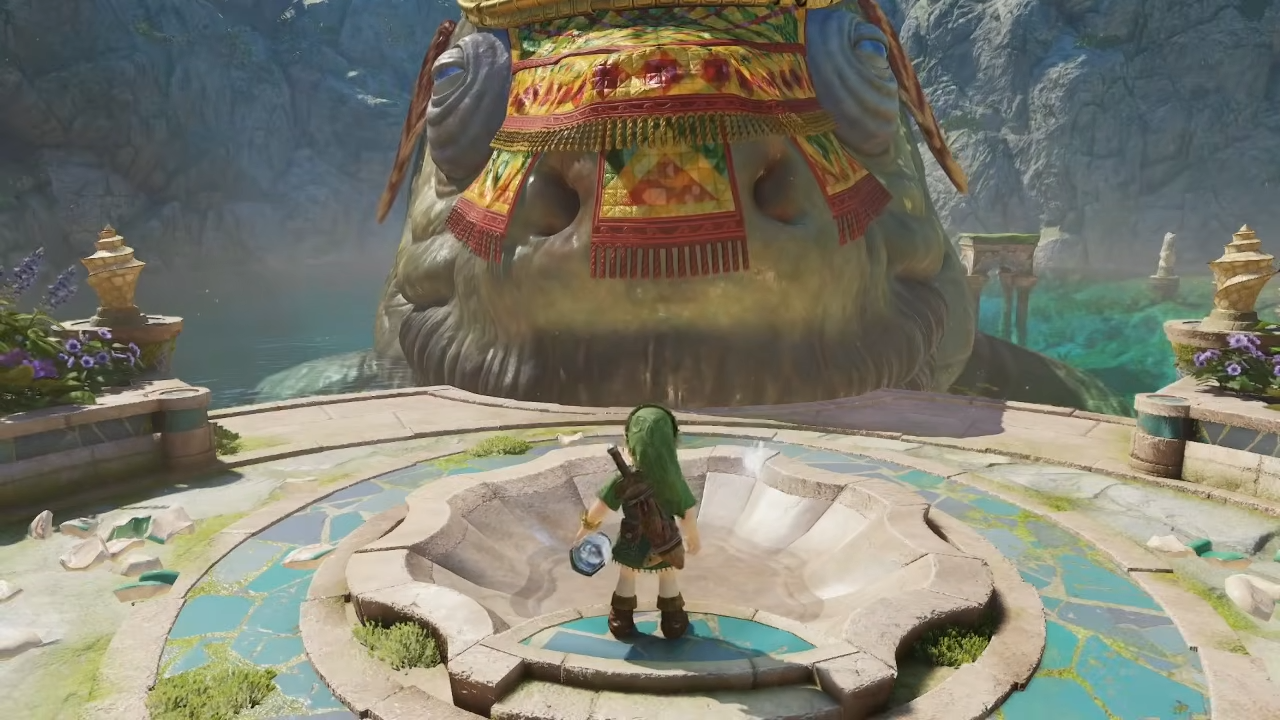
The Ocarina of Time remake takes the more cryptic parts of the original game and makes them clearer to understand while still leaving enough room for players to intuitively figure out what to do. Feeding a fish to Lord Jabu-Jabu to access the game’s third dungeon is illustrated far more clearly in the remake versus the original game. // Image: Nintendo
Well, no.
It’s undeniable that a video game can give so much information to the player that it takes away any sense of satisfaction and release that a player can get from overcoming challenges. But I think overcorrecting and making games that don’t give enough information to the player would be just as harmful.
It’s important to take a step back and think about all the different ways that a video game can signpost progression. It can be as simple as an open world game where the player character is in a field by a mountain. If there is a dirt path that goes through the field and up the mountain, that is a form of signposting. While the player may have freedom over where to go and how to navigate through the field and up the mountain if they choose to do so, the signposting communicates to the player that there is, in fact, a path that connects the field and the mountain. The path’s existence inherently implies a reward at its end.
A path can invite players to wonder where it leads. Maybe that path goes through the mountains. Maybe it leads to secret cave or hidden village that the player wouldn’t have found otherwise. Maybe the path leads to the next major area that the player needs to progress to. Whether they are conscious of it or not, the existence of the dirt path instructs the player on how to make progression, even if they do not choose to walk directly along it.
This is but one of various ways that games signpost their content. While it’s easy to finger-point at the more obvious and sometimes egregious ways of signposting, it’s important to keep in mind that there is a near limitless number of ways that a game can communicate how to make progression or succeed at the game. This can be done through dialogue given to the player by NPCs. It can be done through constructing provocative parts of environment art that naturally invite the player’s curiosity.
For many games, the satisfaction of making progression or succeeding at a game often comes from the very process of figuring things out. Walking down the dirt path to find out where it leads becomes a satisfying form of progression because the player made the decision to walk upon it. Getting to the game’s next story milestone because they walked towards a provocative part of the game’s environment retroactively makes the process of paying attention to and being curious of the environment become satisfying to the player.
People like being told what to do in games. People like to be told where to go and what to do in order to succeed in a game - they just don’t like being made aware of it.
I have become enamored by the recently released remake for The Legend of Zelda: Ocarina of Time. Among the many small improvements that the game makes to the 1998 original, I think the most substantial one that helps make the game easily accessible and satisfying to a modern audience is its updated signposting.
Earlier this year, I watched a streamer play through the original Ocarina of Time for the first time. They had never played a Zelda game before and thus needed to learn the logic to Zelda’s specific flavor of puzzles. From this lens, it became clear to me just how cryptic a few things about the original game are. After visiting Princess Zelda at Hyrule Castle, the game points the player towards Kakariko Village and Death Mountain. Most players will naturally take this path, only to eventually reach Goron City where they need to be able to play Saria’s Song to Darunia in order to proceed to the game’s second dungeon. This requires going to the Sacred Forest Meadow (renamed to the Sacred Grove in the remake) to learn the song, then head back to Goron City either via Hyrule Field or through a shortcut in the Lost Woods.
The signposting for a player to know how to do this can be unintuitive. Aside from an eventual notice from Navi that tells the player to go talk to Saria to learn Saria’s Song, most players may find themselves scratching their heads over what to do. Most players will scramble to any NPC they can talk to and may not even realize that there is a shortcut connecting Goron City and the Lost Woods, which also connects to the Sacred Forest Meadow.
The remake still generally points players towards Kakariko Village and Death Mountain. However, this time, it’s farther hinted at in Goron City when on the golden path of the game that Gorons like the song that comes from the woods. Ocarina of Time highlights text when giving explicit hints to the player, meaning that players can intuit that they need to go to the Lost Woods and talk to Saria. The fact that these hints are given to the player on the main path through the story means that the game’s signposting is more direct to the player. The player doesn’t need to talk to NPCs or get a hint from Navi to know that they need to go to learn a song in a different location to progress to the game’s second dungeon.
While the remake puts hints on what to do more directly in the player’s face, it still leaves room for players to connect the dots on what to do. The game doesn’t hand the player the correct path or solution to the problem presented to them - it merely gives the player more pushes towards figuring out the solution on their own. This retains the original game’s sense of discovery. These discoveries trigger releases from the player when they figure out how to proceed while also making it clearer for players to understand what is being asked of them.
Another example is with gaining access to the game’s third dungeon, Inside Lord Jabu-Jabu’s Belly. In the original game, the player needs to figure out that they can either buy or catch a fish and then present it to the large fish in Zora’s Fountain. When I watched the aforementioned streamer play through this section of the game, I was awestruck over how rough the signposting for this sequence was. The game regularly mentions making an offering to Lord Jabu-Jabu. One can possibly put together that a big fish will want to eat smaller fish but even doing that can feel unclear. In front of Lord Jabu-Jabu is a platform where the player needs to release a fish from a bottle to get swallowed by Lord Jabu-Jabu and proceed to the dungeon.
The issue is that where the player needs to release this fish is janky and unclear. I watched the streamer figure out that they needed to place a fish in front of Jabu-Jabu, but it didn’t trigger the cutscene that it was supposed to. This made the streamer assume that releasing a fish wasn’t the correct thing to do, making them scramble around the area, thinking they needed to get a specific fish somewhere or find a different solution altogether.
In truth, they had just released the fish just outside of the area to trigger a cutscene. Since there is no clear indication on where to release the fish on the platform in front of Jabu-Jabu, it’s not unreasonable for players to get confused on how to proceed if they can’t discern where the correct spot to release a fish is located.
In the remake, the platform in front of Jabu-Jabu has a clear indentation where fish offerings are meant to be. It is now far more intuitive to the player to figure out how to proceed, thanks to the greater clarity in the environment’s signposting as well as the dialogue given to the player by NPCs on and off of the narrative’s golden path.
I recognize that my experience with seeing a streamer get confused while playing a 28-year-old game is purely anecdotal, but it illustrates the power of signposting and clarity of information presented therein. Ocarina of Time’s remake doesn’t remove the original game’s capability to provide the release of figuring out how to proceed - it merely makes those moments less prone to misunderstanding. Ocarina of Time’s remake takes a game that is at its best when players have “a-ha” moments and merely makes those “a-ha” moments more intuitive and natural for players to arrive at. A lesser remake would have trivialized the “a-ha” moments or taken them away outright.
Put another way, the remake of Ocarina of Time directs players more efficiently yet still leaves room for players to figure out what to do on their own. Even nearly three decades after its original release, Ocarina of Time is still making new players become addicted to its gameplay loop - and I think a lot of that has to do with how good it feels to make progress in the game. Whether it’s completing a puzzle and hearing the iconic Zelda jingle or simply figuring out where the game’s next plot beat is located, moving forward in Ocarina of Time never feels cumbersome. And the additional signposting that offers more clarity than the original doesn’t diminish that. In fact, the additional clarity adds to the game’s quality.
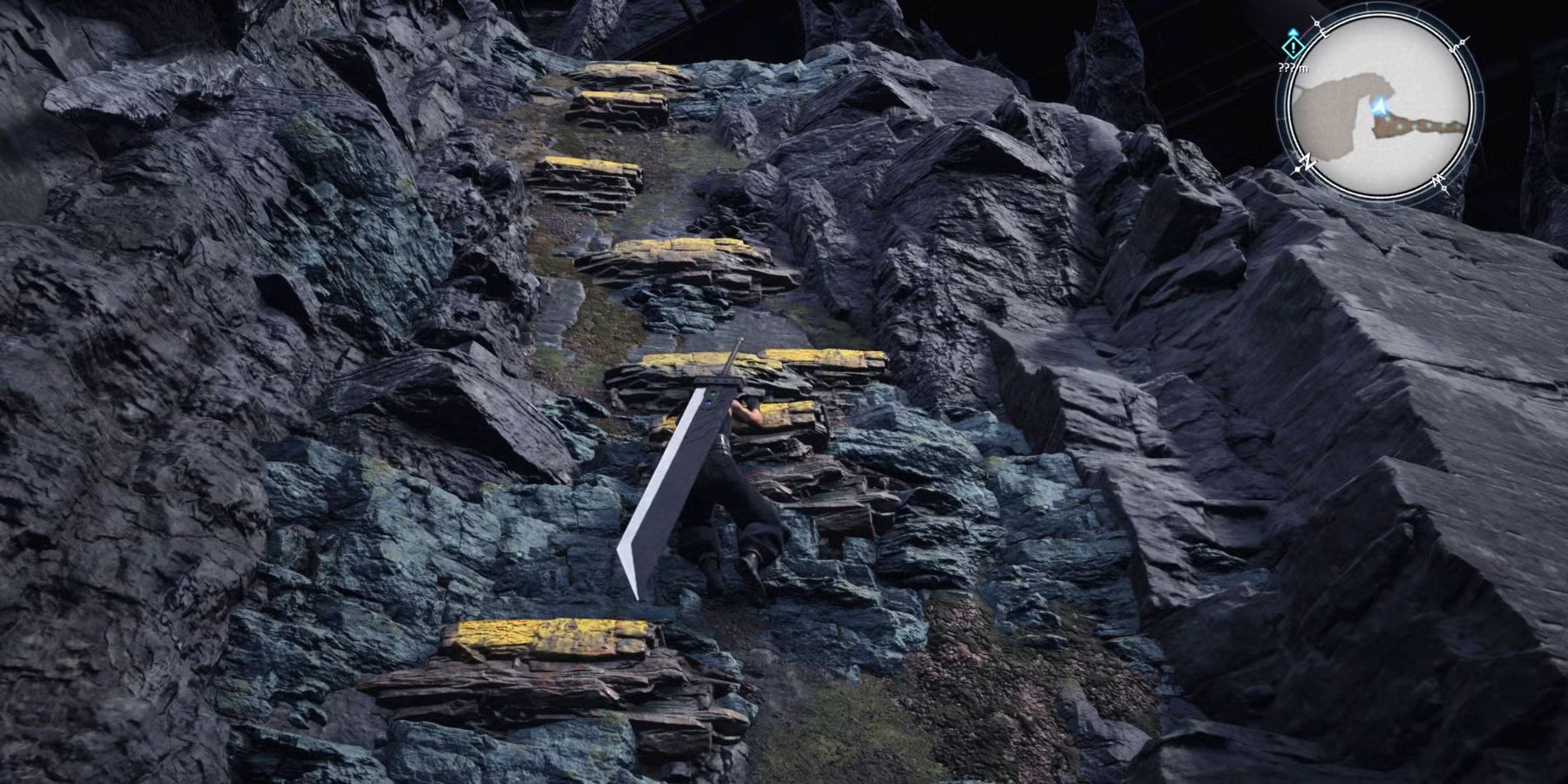
Just by looking at this image, you can tell what parts of the environment are interactive and what parts are not. Does that necessarily mean Final Fantasy VII Rebirth handholds its audience? I would argue that signposting merely helps the player recognize what parts of games are worthy of their attention. // Image: Square Enix
A game like Ocarina of Time can employ signposting to make progression consistently feel satisfying but never outright handed out to the player. However, is that still offering too much credit to signposting? Why do games feel so pressured to tell players what they need to do?
This question has turned into a debate within the broader games community, regularly taking the form of “Yellow Paint Discourse™“. The topic of yellow paint is in reference to the prevalence of yellow paint in AAA games, typically of the open world variety, in which interactive parts of the environment are highlighted in yellow. A game like Horizon: Zero Dawn marks climbable ledges in yellow in order differentiate what is interactable and non-interactable to the player.
The optimist in me wants to believe that people engage in this discourse in good faith. The core argument for Yellow Paint Discourse™ concerns whether games should have to rely on something like yellow paint in the environment to communicate how to make progression to the player. Arguments against yellow paint insist that it is immersion-breaking and uninspired. Arguments in favor of yellow paint, meanwhile, suggest that it’s a clunky but nevertheless effective tool at directing the player’s attention to where to go.
I personally lean towards the latter argument. Let me explain why that is.
Consider the types of games that we typically see this type of signposting in. My mind immediately goes to a game like Final Fantasy VII Rebirth. This game features various mechanics and systems, many of which support the game’s primary hooks: its combat and storytelling. Nearly all parts of Final Fantasy VII Rebirth’s design are constructed to facilitate either the game’s combat or its storytelling. Exploration is one such mechanic.
Final Fantasy VII Rebirth does, in fact, feature yellow paint for parts of its environment that players can interact with, either through climbing or hopping along certain parts of the environment. I don’t see the use of color and markings as immersion-breaking - rather, I see them as necessary tools to inform the player about what is and isn’t important.
While exploring the game’s vast areas is a major part of Final Fantasy VII Rebirth, it is by no means the point of the game. Climbing surfaces via ledges the player can interact with is not a major part of the game’s design. As such, the use of signposting here is a means of telling the player the information they need to get through this minor part of the game as seamlessly as possible. Without this signposting, climbing would become a more significant and potentially frustrating part of the game. This JRPG centered around action combat would suddenly be testing players to figure out finding footholds on climbable parts of environments. That isn’t what players come to the game for, nor is it what the game should be specializing in.
The objective of a larger game with multiple systems is to effectively funnel the player towards interacting with the most substantial systems on offer in the game. The point of climbing walls and mountains in Final Fantasy VII Rebirth isn’t to make the process of climbing feel fun and highly detailed. It’s to direct the player towards the next combat encounter or the next cutscene while facilitating a climbing sequence that makes the game’s world feel larger than it would without climbable sections.
Whether or not those climbing sequences should be in the game at all can be a separate conversation, but my point in bringing all this up is that the yellow paint is here in order to direct the player in a sequence that is not interfacing with a major pillar of the game’s design. If players want to engage with a game that treats climbing as a more major mechanic, they’ll go play something like Jusant - a game that relies on different forms of signposting to inform players on where to go and what to do.
What separates Final Fantasy VII Rebirth and Jusant is intention. These games are intent on offering different experiences through focusing on different mechanics and systems. They are then signposted accordingly. How a game chooses to signpost its progression and the amount to which content is signposted is dependent on what a game aims to deliver to its players. One of the greatest challenges that a developer needs to overcome is determining what that right amount of signposting is for the game they’re building.
In the case of the Ocarina of Time remake, Nintendo hit a perfect balance of directing players while still keeping the core experience of solving puzzles and completing dungeons feel satisfying to players. In the case of Marvel’s Wolverine, Insomniac misaligned the degree to which they needed to direct players with the kind of game they chose to build.
Linear action games such as Wolverine can still signpost content - they just need to do so in a way that makes sense for that style of game. The Bayonetta games serve as strong examples of how to do this, where levels are decidedly linear. Levels use lighting and alternative paths to point the player towards additional, optional combat challenges and collectibles that make them stronger.
The primary issue with Wolverine’s signposting isn’t necessarily that it’s extreme - it’s that it doesn’t understand how to signpost in a way that sets its players up for satisfaction. The game features bad signposting, making the communication from the developers be far too visible to the player.
Signposting gets a bad reputation, but it’s truthfully one of the most effective tools to help developers ensure that players get to do cool shit. Good signposting can help make complicated games feel effortlessly simple and intuitive to players while never taking away from the fact that what the player actually accomplishes is, in fact, quite complex.
That’s why I think it’s essential to reframe the way we talk about signposting in games. Discussing what makes signposting work for what a game aims to accomplish deserves more than calling yellow paint a “lazy workaround”. Rather, it’s essential to look at how signposting helps realize how good a game feels to play. That isn’t to say that there isn’t room for improvement in the way games direct us, but it’s important that we acknowledge the necessity and power of that direction.
To talk about signposting is to talk about the visibility of communication. Signposting is at its best when its invisible yet sets up the player for success and satisfaction. This feeling of success and satisfaction is precisely what brings people to video games in the first place. And so, it’s the responsibility of signposting to create the conditions for that feeling to accumulate.
When signposting does this and does so invisibly, the unique magic of video games comes to light. If satisfaction is the spell that video games put people under, signposting is the spellcaster’s staff - the effect of the spell owes its efficacy to the craft of its facilitator. Yet when someone gets hit by a spell, they don’t think about the spellcaster’s staff.
Such is the mentality we ought to have about signposting in games.
Thank you very much for reading! What are your thoughts on how games are signposted? What is the best potential solution to this ongoing problem? As always, join the conversation and let me know in the comments or on Bluesky @DerekExMachina.com!