Does Game Length Really Matter That Much?
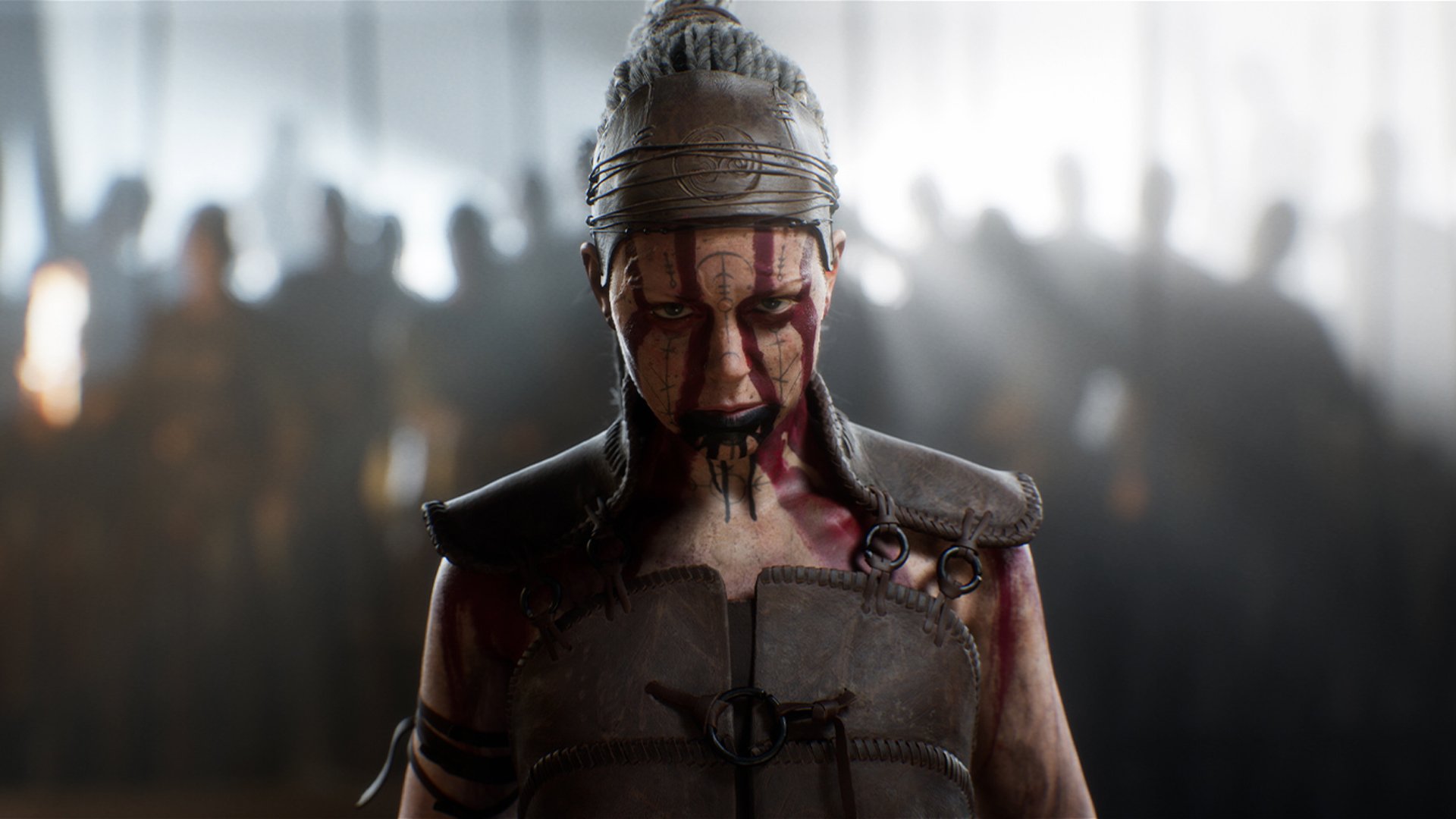
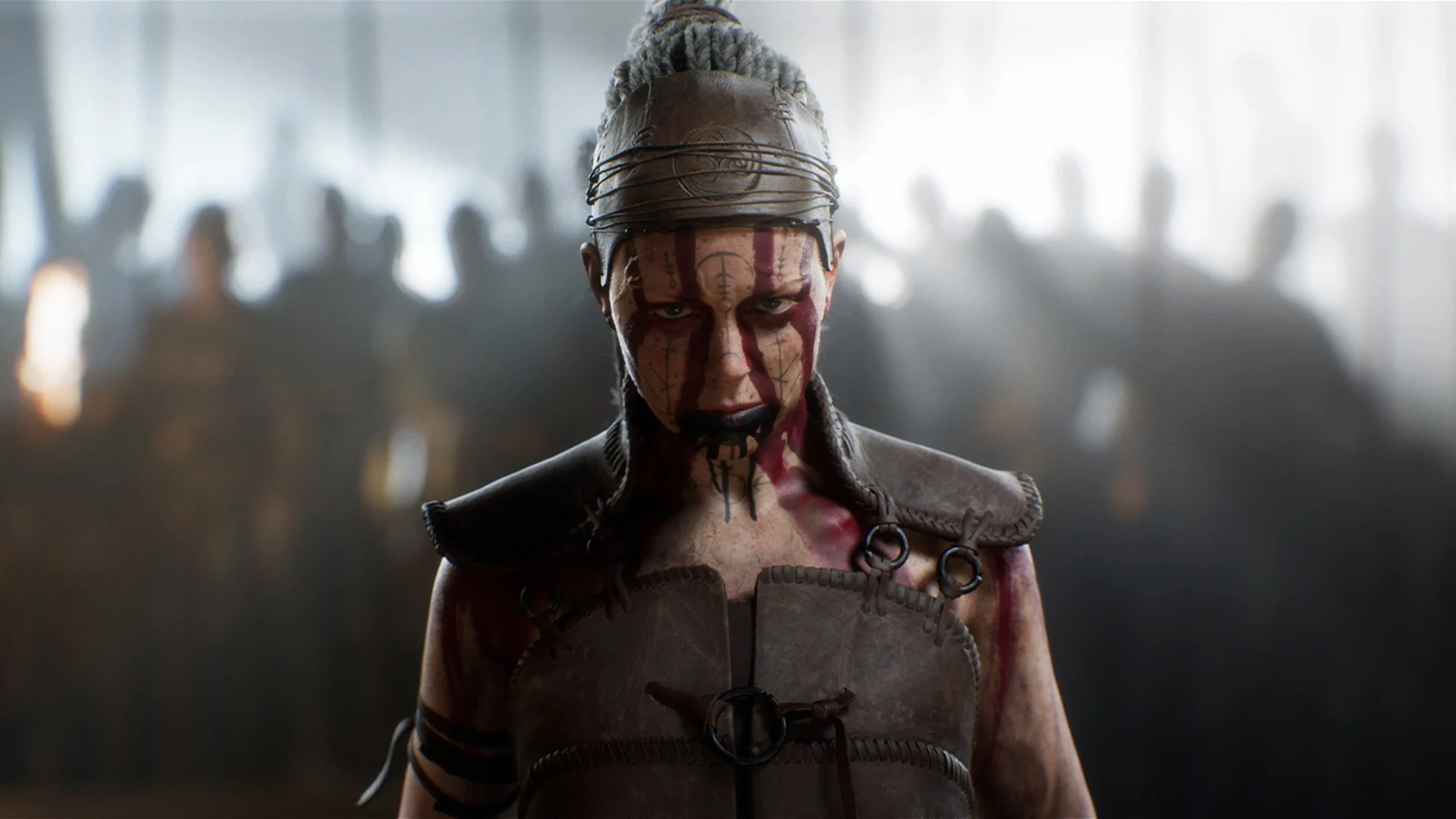
2024’s Hellblade II: Senua’s Saga was received worse than its predecessor, with its length of 7-9 hours of content being one of the game’s most prevalent criticisms. Does criticizing a game for its length open a sort of Pandora’s Box with encouraging games to be longer than they need to be? // Image: Ninja Theory, XBOX
We are all unified by our boundedness. Every one of us only has so much time throughout our entire lives to devote to consuming art. As great as it would be to read every single book, watch every movie, and play every video game, that just isn’t a possibility so long as we’re bound to our mortal coil. And so, we are forced to be selective about what we do and do not choose to spend our lives doing. If I want to play as many video games as possible, that may mean that I don’t get to go to as many art museums or read as many books as I would otherwise.
That’s just the nature of life and the nature of art – its greatest limit is the finiteness of it all. But that’s also exactly what gives meaning to what we do choose to engage with. We form a deep bond with the finite number of pieces of art that we interface. Some we may love, others we may hate, and many we may feel ambivalent towards. In any case, the art that we decide to invite into our lives naturally commands the direction of our soul, no matter how seemingly minor. That’s a big responsibility, and not one handed out easily.
Indeed, every person naturally brings with them a screening process regarding the art they choose to partake in. No one wants to spend the finite time and resources they have in their life spending it with something that just sucks and offers nothing of value to their life. People want to support art that makes some kind of impact on them, however significant.
And so, people look towards additional factors to take into consideration when deciding whether to invite a piece of art into their lives. These factors are numerous and vary heavily depending on the medium of the art itself. Factors can include genre, intended audience, price, and the opinions of either critics or simply any other person that has formed an opinion on the art. These help anyone muster an informed opinion that determines whether they purchase a book, sit down to watch a movie, go to an art exhibit, or buy a video game.
These different factors are, of course, subjective and unique to every person. People naturally develop their own preferences over what genres they like, what kinds of authors they admire, the general style of art they tend to look for. A type of preference that I find intrinsically interesting to discuss is that of length.
How long something takes to fully complete is a buying factor primarily born out of value. People naturally want to get their money’s worth when plopping down however much a piece of art’s entry fee is. For as long as there has been consumable art, there has equally been a conversation over whether a person gets their money’s worth from their purchase. Is a $2000 USD painting worth buying if you look at it enough times to justify the purchase? Is a $500 USD concert ticket worth the price of admission if it unlocks a really good two hours of your life?
The answers to these questions are different for everyone. And yet, it’s a conversation that has particularly affected the video game audience in a way that doesn’t quite mirror that of the audience for that of any other medium.
People especially want to feel as though they are getting their money’s worth when deciding to play a game. This has remained true ever since the arcade era of video games. If people spent a quarter to play PAC-MAN, they naturally wanted to play as well as possible so that they can play as much of the game as possible on that single quarter.
As the business model of making one-time purchases for video games normalized as console and PC gaming became more affordable and accessible, the value of getting one’s money’s worth was thrown out the window for the sake of novelty.
Let’s take a game like 1980’s Adventure on Atari 2600, for example. This is a game that, according to HowLongToBeat, takes anywhere from 15-90 minutes to beat. This comes at the price of $29.99 USD at launch. After inflation, this comes out to approximately $130 USD. Clearly, getting one’s money’s worth wasn’t a heavy factor during this era of video games, since the sheer idea of having a game that you could play in the comfort of your own home, however short or long it may be, made the price of admission worth it in peoples’ eyes.
But as the games industry evolved, games naturally became bigger and more complicated, and the novelty of playing games in the comfort of your own home faded. In the era of rentals, games were made especially difficult (sometimes fairly and other times artificially) to incentivize players to rent games multiple times or to buy them outright. Games became even more complicated as 3D visuals, CD-quality audio, and grander storytelling possibilities entered the picture.
The games market became less about translating the arcade experience to work in an at-home setting. Instead, the market for video games was becoming more about offering something that arcades couldn’t. This meant that console and PC games circa the late ‘80s and ‘90s looked to offer new experiences unlike anything on offer in arcades – and this often took the form of games taking on design philosophies that didn’t fit into the typical arcade-y gameplay loop. Adventure games and role-playing games emerged during this time as being some of the biggest types of games on offer during this time, and they were priced accordingly. 1993’s Myst launched at $49.99 USD, coming out to $118 USD after inflation. 1994’s Final Fantasy VI cost 11,400 yen when it first launched, converting to about $166 USD in 2026 money.
Despite their cost relative to inflation at the time, these games performed incredibly well, given the fact that games feeling larger-than-life was still a novel concept that justified the price to consumers at the time. Moreover, the industry was smaller – and with it, fewer customers existed. Additional factors such as the higher cost of production for cartridges over discs, the need for some games to ship on multiple discs and more come together to justify why video games were as pricey as they were during this period. The length of a game wasn’t a major consideration for what a game was worth during this time.
The 2000s saw pricing for games mostly stabilize. Each platform had a widely understood full price ceiling, with smaller, budget titles falling well under that. The seventh-generation consoles saw prices uptick to $60 USD as being full price, with the ninth-generation consoles bumping it up to $70 USD. Since then, some games have flirted with the $80 USD price point - namely games like Mario Kart World and Grand Theft Auto VI (whose content isn’t fully available unless purchasing the $100 USD SKU of the game).
Video game prices have become such a widely adopted topic of conversation due to the unprecedented number of price hikes we’re seeing throughout the industry. Due to circumstances not exclusive to the games industry, the price of hardware has ballooned in price throughout the 2020s. The chip shortage at the start of the decade was in large thanks to COVID lockdowns significantly increasing demand for chips given that people were at home and depended on technology to work and entertain themselves. A couple of years later, we’re seeing yet another price increase to hardware due to AI companies mass purchasing a lot of the world’s memory supply.
Take into consideration other geopolitical and economic situations happening throughout the decade, and it’s no wonder why people are becoming far more prudent with their purchasing decisions. Most of the world’s population is effectively living in a recession, and the buying behavior of consumers largely reflects that - certainly in the technology and gaming spheres.
All this contextualizes why people care about the length of games now more than ever. In an era where innovation in design and technology has stagnated, more scrutiny is put on the games themselves to justify the value of a game’s admission price. In the eyes of many, the length of a game is now one of the most important factors to consider when determining to buy a game.
This isn’t inherently a bad thing. It’s natural to want to make sure that you’re getting a good value on a purchase - so if a game is priced at $70 USD or more, people want to feel that they’re getting their $70 USD’s worth. If a game is only a few hours long, are they getting their money’s worth? If a game is bloated with hundreds of hours of mediocre content, does that nevertheless make peoples’ purchases feel justified? Now being in the age of free-to-play games and the proliferation of indies releasing games on budgeted price points only further complicates this conversation.
Game length has steadily been put under a magnifying glass, so much so that I truly think that it has diluted what conversations about games ought to be. We have collectively become obsessed with conflating length with quality, and the consequence of that is an industry where games are made to be longer than they need to be. Larger publishers and developers have become averse to releasing smaller-scale and thus shorter games out of fear of a short game being equivocated to being an underwhelming, bad game.
I’m no stranger to fixating on how long a game is. I will likely continue to factor length into my conversations about games on this blog and beyond, so by no means am I suggesting that we should stop talking about length altogether. But I think it’s essential that we reframe how we discuss length in video games, lest we risk seeing the industry continue to spiral to a point where shorter games are looked over far more than they already are.
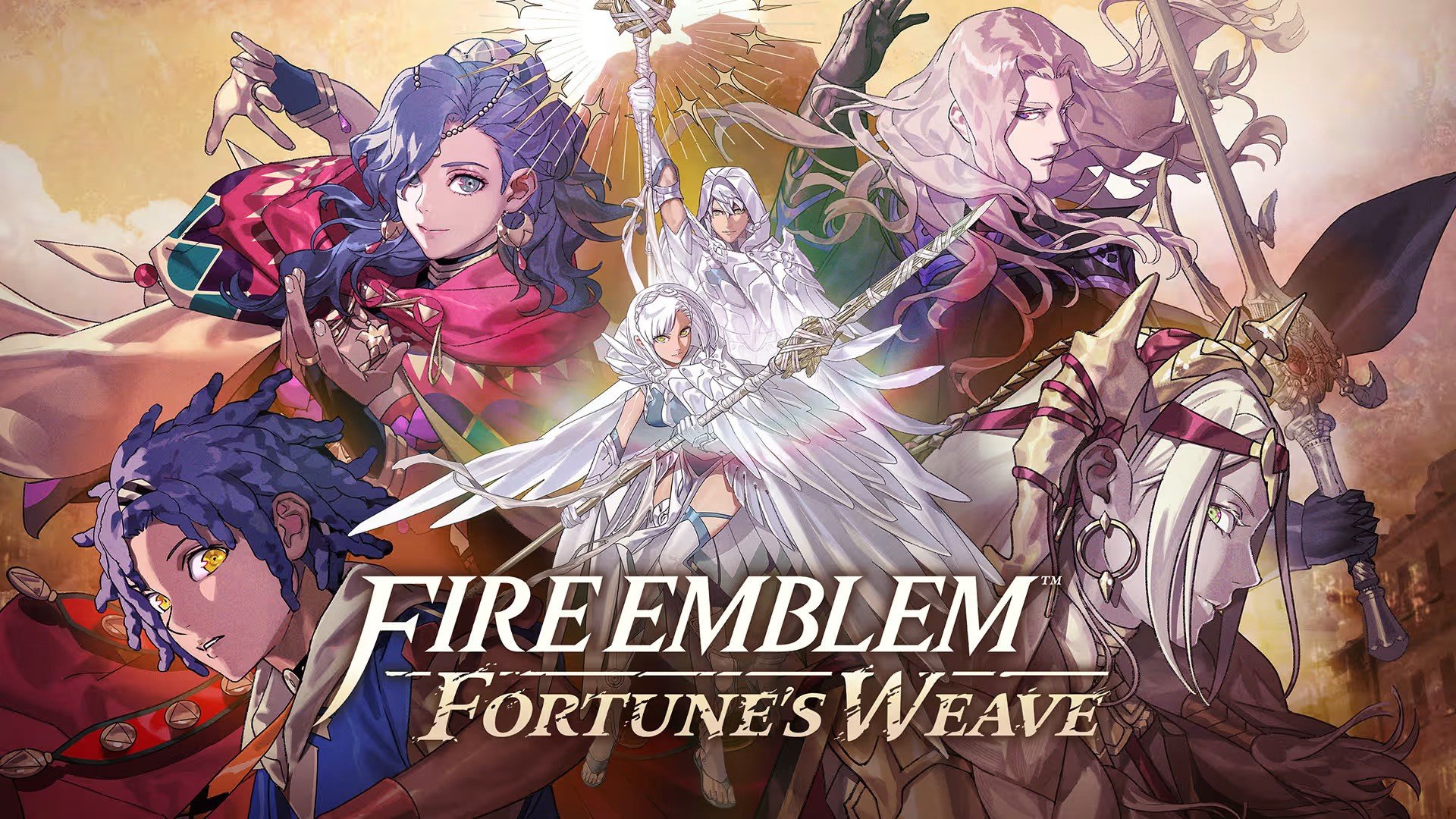
The recent release of Fire Emblem: Fortune’s Weave has brought forth the opposite extreme of a mainstay in games discourse. While video games are often critiqued for being too short, Fire Emblem is being critiqued for being too long and too bloated. How much merit do we give to game length in determining a game’s quality? // Image: Nintendo
I’ve thought a lot over the years about how much game length matters to me, especially as I get older and find myself with less free time than I had in my teens and early twenties. The topic reentered my mind after the recent release of Fire Emblem: Fortune’s Weave.
This follow-up to 2019’s Three Houses offers even more content than its already-massive predecessor. Fortune’s Weave begins with an hour-long prologue before revealing its structure: a game divided into three parts. The first of these three parts is a dense 30-40 hours’ worth of content that sees the player assume control of one of four characters.
Each of these character routes are almost entirely unique despite all occurring in the same setting. There is some crossover between routes, but even these sections bring different context and perspective to scenes that the player has already seen in another route. This makes every route feel meaningful to play. Unlike previous Fire Emblem games that offer multiple routes, Fortune’s Weave lets players complete every route in a single playthrough.
After completing as many routes of Part I of the game as the player desires, Parts II and III follow, offering significant narrative and gameplay shifts that evolve the gameplay. Paralogues (the game’s story-driven side quests) even affect certain narrative and gameplay outcomes later in the game. Depending on how many routes the player decides to do, how many paralogues they undertake, and how much time they devote to develop the dozens of playable characters at their disposal, Fire Emblem: Fortune’s Weave is a game that easily exceeds 100 hours in length, with HowLongToBeat showing that the game can be as long as a whopping 160 hours (this is in addition to the game’s upcoming expansion, which offers four additional routes to play, likely meaning that the game may nearly double in length after DLC).
As a longtime Fire Emblem fan, hearing that the new game offers so much content made me so excited to jump into the game and get lost in the interconnected story and wide variety of maps and characters. Even as someone with limited free time, I knew that it would be worth spending as much time in this game’s world as possible.
While many critics praised the game for its gameplay quality, narrative, soundtrack, and more, its length was a topic of contention. Some loved that the game offered so much content, while others thought it was a result of significant bloat present in the game’s many, many systems. Upon the game releasing, some creators even critiqued the game as being “good, but too much” - referring to the fact that it’s just too long for some people to be willing to see through to its end.
Should that be a knock against the game, however? Fire Emblem: Fortune’s Weave is a long game, but its various hours of content are varied and worthwhile. The Switch 2 exclusive has flaws and certainly has some unneeded bloat, but I find the reception of Fortune’s Weave’s length to be the child of hypocrisy within games discourse. So often do we see criticism when games are too short, with critics and fans often reinforcing that they like to get at least 10-20 hours from a game. Here comes a game that offers high-quality content for over 100 hours, and it gets critiqued for its long length? What exactly is going on here? How valid is this criticism, truly?
To answer this, we need to take a step back and really ask what the point is about why something takes time to complete in the first place. Conversations about length to this extent are practically exclusive to video games.
Most movies are between 90 and 180 minutes, with the occasional outlier breaking the mold. It’s far more common to see a movie be critiqued for being “too long” instead of being “too short”. By my observation, moviegoers appreciate it when a story is succinctly told and doesn’t waste the audience’s time with a longer running time than what’s necessary to communicate the story. Movies exceeding three hours in runtime are often headaches for theaters, since a longer movie means that they either have less screenings of that movie per day, or have that longer movie take up multiple screens and thus make the theater screen fewer movies. Both the audiences and the companies facilitating the film industry have largely determined the acceptable norm for the medium.
Books are much the same way. Most publishers are only willing to publish novels between 50,000-110,000 words (unless the writer in question has a proven track record that can be enough to ascertain sales). Some genres, namely fantasy, are known for being longer in length than others, but the vast majority of full-length books are between 200 and 500 pages. Publishers run a financial risk if they publish an unknown writer that wants to sell an 800+ page book, since longer books naturally take more paper and ink to produce. Likewise, a significantly longer book has a smaller appeal - primarily being desirable to only the most devoted readers. For a general audience, longer books are a risk. As such, the audiences and the companies facilitating the book industry have largely determined the acceptable norm for the medium.
Given these last two paragraphs, you’d expect me to say something similar for video games. You’d expect to hear about how both players and the companies within and around the games industry determine the acceptable norm for the medium. But games are so vastly different from other media by nature that it has never truly happened. Different games can offer incredibly different experiences, and the length of time that they take to complete varies accordingly.
Certain genres, like RPGs, can offer dozens of hours of content, while a 2D platformer may offer less than five hours. AAA action games can offer fewer play hours than an indie rogue-like developed by a single person. More so than in any other medium, the genre of a game significantly influences how long of an experience it’s expected to be. For some genres, a long runtime can seem natural. For others, a long runtime would be a death sentence to the overall quality and vision of the game.
Not all genres and types of game are created equal - and that especially applies to the amount of time that different games demand from players. For some games, a few hours are all that are needed to get across the developers’ intended vision and message - anything beyond that would sour what the game is envisioned to be.
I think of a game like Gone Home as an example - a beautifully eloquent narrative-driven game built around navigating a house and experiencing a story told loosely out of order. The game only takes roughly two hours to complete on a first playthrough, and once the player knows what to do, they can comfortably go from starting a new game to rolling credits in less than two minutes. Gone Home is as effective as it is because it knows what it is and doesn’t deviate from its vision. This is a game whose vision wouldn’t work at all if it was stretched to fill the 15-20 hour length that games of other genres may be expected to be.
Therefore, I think it’s important to reframe the conversation. Instead of a game being too short or too long, we should instead be asking what the correct length for a game is. In the case of Gone Home, I think the game works as perfectly as it does precisely because it contains a dense amount of content without overstaying its welcome. Gone Home is the correct length for what it aims to accomplish.
Let’s pivot back to Fortune’s Weave. Fire Emblem is a strategy RPG series, and these types of games are at their best when they can add stakes to gameplay. To add weight to the player’s consequential decisions that determine whether characters survive maps or permanently die, Fire Emblem games regularly employ lengthy maps with various boss encounters and environmental obstacles. Depending on the game, certain maps can take multiple hours to complete, with each minute of gameplay adding stakes for the player. The longer a battle goes on, the more consequence the player will reckon with if they lose a character they’ve spent time developing.
There is a cathartic elation upon clearing a nail-biting map without any character deaths in Fire Emblem, letting the player finally take a sigh of relief before they move on. This release wouldn’t have nearly the same power to it if Fire Emblem favored short encounters with lower stakes. Because of that, length works very much in Fire Emblem’s favor. Fire Emblem games being long is a good fit, but how long, exactly, is the correct length for this kind of game? This is where the nuance needs to come in.
Fire Emblem: Fortune’s Weave will take most players 80-200 hours to roll credits, depending on the amount of character routes that they complete. While the classic turn-based strategy battles are the main meat of the experience, there is a lot of supplementary content in Fortune’s Weave that even out the meal. It can be argued that some of this supplementary content bloats the experience to be longer than it needs to be. Support, for example, takes longer to build than it does in previous games. This, in turn, causes Support Conversations (all of which are scenes that make for genuinely great character development and interactions) to be drip-fed to the player at a slower rate than previous games.
Other supplementary content includes the free time that the player is given in Part I of the game. This free time gives the character a number of in-game turns to spend between major battles. The player can choose to spend this free time completing side quests, stocking up on materials and equipment, going dungeon-crawling, and more. It could be argued that this all gets in the way of the core of the Fire Emblem experience. There is a lot of time spent outside of the epic battles the series has become known for - at least, this is the case until Part II of the game, which becomes nearly all combat.
The intensity and stakes of Fortune’s Weave build to an overwhelming level in Part II and III, and this is largely due to the amount of time that the player has spent with the game’s characters at this point. At this point, the player has spent dozens of hours recruiting characters, watching Support Conversations, seeing stories play out from different perspectives, completing side quests, and developing weapon skills and abilities for dozens of characters.
By the time the game significantly raises its challenge, the player becomes practically incapable of parting ways with the characters they’ve built an attachment to. There’s a bond that the player forms with the characters in the game that is uniquely crafted in thanks to the game’s structure and slow-burn pacing throughout its first part. This causes Part II and III to carry with them far more tension, and thus more release and elation when players come out of challenging battles casualty-free.
My point is that Fortune’s Weave is doubtlessly a long game, with various systems that could be defined as bloated when looked at in a vacuum. But when everything comes together to form a cohesive whole, I truly think Fortune’s Weave reaches its highest peaks of quality because of the amount of time it makes players invest with the characters and world of the game. The game’s high hour count feels right for me. If the game had trimmed the fat and removed unnecessary mechanics and cut back on its scale, I don’t think Fortune’s Weave would hit for me in the way that it has.
But I recognize that not all players can devote the 80-200 hours of time to see Fortune’s Weave through to its end. To these people, Fortune’s Weave isn’t the correct length because it falls outside of what is realistic for them. Like general audiences not wanting to watch a 4-and-a-half hour movie in theaters or not wanting to purchase a 1200-page book, certain people just don’t see such a deep time investment as a selling point.
There is value to be had in a game that can be long but chooses not to be. Chrono Trigger, widely accepted to be one of the greatest JRPGs ever made, is an outlier in the very genre it pioneers. In a genre notorious for having games that take 80-100 hours to beat, Chrono Trigger offers a dense experience where lots of events happen in a tight 15-20 hours. There’s nearly no downtime in Chrono Trigger, which keeps the pacing tight and the game replayable and accessible to an audience that may not have as much time to play games.
Undertale, one of the most beloved games of the 2010s, can a see a single playthrough end in less than five hours. For a genre stereotyped as having long lengths, there is a vast array of RPGs that opt to serve a tighter, more refined experience. Clearly, some RPGs work as being epics taking place over dozens or hundreds of hours. Others work with a tighter scope and less of a demand from players. So, when should an RPG be long and when should it be short?
It all comes back to understanding a game’s mission. What does the game wish to achieve? Is it a game like Fire Emblem where it wants to create gameplay with stakes? If so, it makes sense to build a game that gives time for a player to develop a connection with the game’s systems that can then be used to add stakes when testing their mastery of said mechanics. Does the game want to make the player intimately engage with a certain setting and small cast of characters? Perhaps building a shorter game with a smaller scope makes more sense for realizing that endeavor.
This is where I feel the conversation around video game length ought to be. Unfortunately, the topic of length in video games is often tied to my framing at the start of this article - around pricing and value. And it’s those very criteria that are responsible for the ballooning of game lengths in the first place.
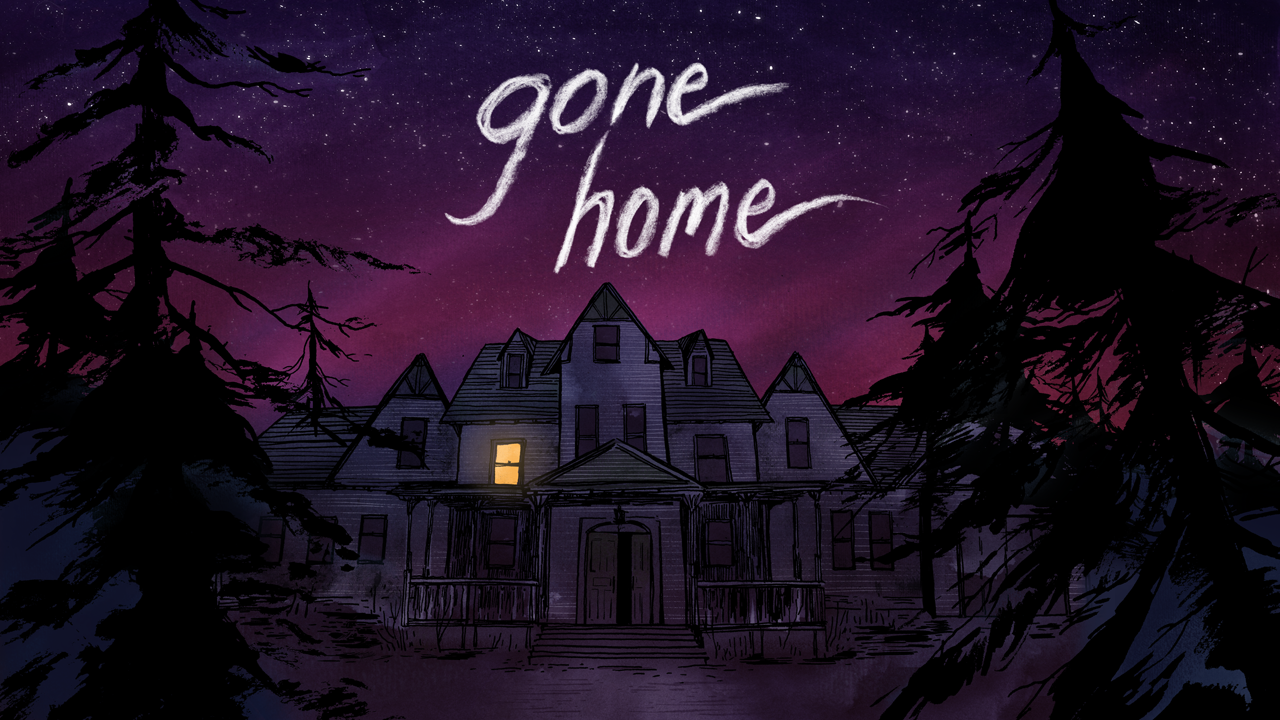
Gone Home is beautiful game that only works as well as it does because its scope and density of content are intentionally crafted to serve the creative vision of the game. Gone Home is the right length for what it aims to be. Being the right length is how we should frame conversations about lengths of games. // Image: Fullbright
Large companies have developed a fear of their games not being big enough, whatever that means. This can equate to wanting the game to hit a certain number of hours played, wanting the game to reach a certain number of players, or wanting the game to become a mainstay subject of conversations in the broader video game community and culture.
If a company is spending tens or hundreds of millions of dollars developing a game, they want to get their return on investment. And if a loud minority of players talk about wanting longer games on social media, then that creates the perception that more people will buy longer games. And so, the market provides. With it, something of a cycle beings to form. That is how we find ourselves in the landscape where so many games are longer than ever, yet feel worse off for it.
I recall 2023’s Starfield being a braking point for a lot of people. Here was a game that was proudly marketed as being the largest game from Bethesda Game Studios - a developer already known for making humongous games. The game lived up to its promise of being larger in terms of amount of space that the player can navigate through - but to what end? The game was huge, but that hugeness came at a cost of the game’s consistency and quality. Starfield offers a big in-game world to explore, but there isn’t all that much to actually do relative to that large space.
Starfield is remembered as a game that prioritized scale for meaningful gameplay content and underdelivers on what many players want from a western RPG. The game was so obsessed with being a big game that it never stopped to consider if being a big game that takes many, many hours to complete was right for the game’s vision.
On the other side of the spectrum is Hellblade II: Senua’s Saga. This game finally released in 2024 after multiple years of teasers and trailers that built up the game as being an epic that would expand upon the impressive Senua’s Sacrifice that preceded it. The result was a game that was ridiculed upon release for being too short, especially considering its projected development time and the amount of pre-release marketing for the game starting years before launch. The game’s marketing cycle built a game of a certain scale, and when the final game didn’t deliver on that scale, it didn’t feel right to players. The game wasn’t the length its marketing propped it up to have, and thus there was a disconnect between what was suggested and what was delivered.
That said, Senua’s Saga is actually roughly the same length as the first Hellblade. Perhaps these games’ shorter lengths are an intentional part of their design. Perhaps, in the minds of the original vision of the game, their shorter lengths make the most sense - but the marketing for the game painted a different picture of what that vision was. Senua’s Saga is evidence that even if you have an idea of what the right length of a game may be as a developer, you still need to effectively communicate that vision to consumers so that it feels right to them as well. If not, you create a disconnect that will inevitably disappoint players.
My final and most important point in this whole conversation is that I think all this hullaballoo about length of video games disregards the most essential part of what makes video games worth playing in the first place: the joy that games impart onto us.
I recently played through Sonic Colors for the first time in over a decade. I played through the entire game in two hours, with an extra hour spent grabbing collectables that I missed. I had a great time in those three hours and felt like I got a complete experience for what I was looking for when I decided I wanted to play the game. Sonic Colors is one of my favorite games ever because of how quick and simple it is - and I am confident that I wouldn’t feel that way about it if it was a significantly longer game. The quality of the hours I spent with Sonic Colors matters to me far more than the quantity of those hours.
It seems like such a simple note to end on, but that’s really what matters the most: that we enjoy the games we play and not to fixate on how long or short we arbitrarily think they need to be. To fixate on length of games is to disregard what brings us to video games in the first place. We play games because we want to experience something that activates our brain, our soul, our essence. Wanting games to arbitrarily hit a certain length for the sake of it undermines what art should be game and all art should be about.
We come to games, as we do for any form of art, because we want to spend the finite amount of time we have on this Earth engaging with something that brings us joy and helps us find meaning.
We can convince ourselves that the length of games matter, and maybe they do to an extent given that we only have so much money to spend on entertainment and art - especially in our current economy. But by no means should that be a primary part of the way we discuss games. When a new $70 USD AAA video game comes out, I don’t want to hear whether a 15-20 hour playtime is “too short” or “too long” for that price tag. Rather, I want to hear about whether that’s the length of the game that enables the vision of the game to come through as best as it can. It is only by those metrics that we should determine whether a game’s length is a potential issue.
So, does game length really matter that much? It only does if you’re incapable of digging into what a game needs to do to achieve its mission. Some people may want to get the largest number of hours out of their game as possible to justify their purchase, but this is a weak way to cope with our boundedness.
We are unable to experience all the art that we would like to throughout our lives. Knowing that, we should pivot our focus away from debating whether a certain game is too long or not long enough and direct it somewhere else; somewhere more productive. We need to think of length as something more than just something that justifies the value of a game to us. We need to think of a game’s length as something that works in tandem with a game’s vision, just as mechanics and other creative aspects of games do.
Only then will we have a better time discussing games. We only get so much time in our lives talking about games thanks to our mortal coil. We might as well reframe the way we talk about game length to make that finite time discussing games a little more enjoyable and productive.
Thank you very much for reading! What are your thoughts on how game length ought to be factored into the determination of a game’s quality? Do games have to be a certain length to justify certain price tags? As always, join the conversation and let me know what you think in the comments or on Bluesky at DerekExMachina.com!