The Legend of Zelda: Ocarina of Time (2026) Review: Brilliance Built Upon Brilliance
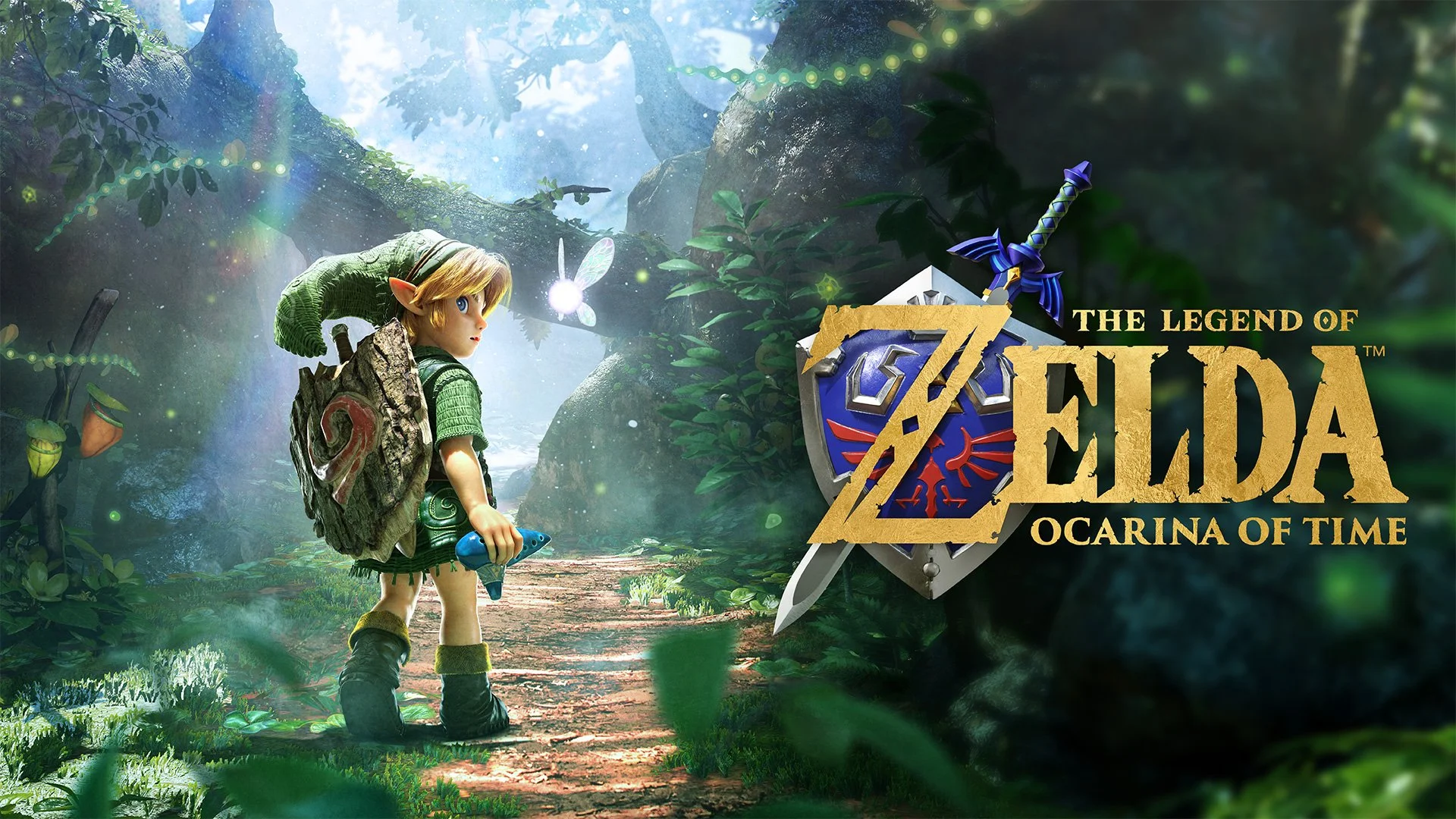
28 years after its original release, people are falling in love with The Legend of Zelda: Ocarina of Time all over again. And for good reason. Not only does the game’s core design continue to appeal to returning and new players alike, but its new presentation makes the game destined to appeal to a new generation. // Image: Nintendo
The Legend of Zelda series has a superpower: its ability to craft experiences that let players build memories that stick with them for the rest of their lives. That superpower makes nearly every entry in this 40-year-old franchise find its way into a special place in the hearts of players.
The Legend of Zelda: Ocarina of Time and Majora’s Mask were among some of the first games that I have memories playing. As a child of the late ‘90s with older brothers that introduced me to video games, a lot of my early memories associated with video games revolved around watching them play. Of the few early memories with games that I made by actually playing games themselves, many of them were with Nintendo 64 games, specifically. This makes the console and its library have a specific association with my discovery of my love of games. Games like Super Mario 64 and Banjo-Kazooie made me love the very idea of moving around in a game, but the system’s two Zelda games really showed me how vast and otherworldly games could truly be.
My appreciation for what these Zelda games accomplished grew as I aged. The majority of my playthroughs of Ocarina of Time and Majora’s Mask were done on the Collector’s Edition compilation on GameCube. Released in 2003, this limited edition collection of games included the two NES Zelda games and two N64 Zelda games, alongside a demo for The Wind Waker. Alongside Sonic Adventure 2 Battle and Super Smash Bros. Melee, this was probably my most played GameCube game.
Both Ocarina of Time and Majora’s Mask enamored me as a kid. These games employ a beautiful blend of whimsical fantasy infused with a layer of creepy, dark undertones that make playing them feel magical. I was actually quite scared of Majora’s Mask’s title screen when I was young, with the titular mask flying towards the screen when the game boots. Aspects of Ocarina of Time like the Shadow Temple and the creepy texture of the original, unpatched version of the Fire Temple music really stuck with me as a kid as well.
All this is to say that I, like just about any other person that played these games during their youth, have an immense amount of memories associated with the Legend of Zelda series. Ocarina of Time specifically has an aura inherent to it that makes it feel like a playable fairy tale that has appeal to adults and kids alike. From a kid’s perspective, Ocarina of Time provides the power fantasy of being a child that quickly becomes an adult in order to save the world. From an adult’s perspective, Ocarina of Time’s whimsical nature invites an embrace of your child-like wonder. In a way that few other games have ever mirrored, Ocarina of Time has something to offer to anyone that plays it, regardless of age, gender, race, or lived experience.
That, above all else, is what has made the game so impactful for so many generations of players. The original 1998 game is intuitive yet mysterious. Whimsical yet foreboding and scary. Ocarina of Time is a game that the player can not help but make memories from while playing.
And those memories can be special. Some people have memories of the elation they felt when they finally got through the Water Temple as kids. Some people have memories playing Ocarina of Time with parents or loved ones that have since passed. More so than most other games on the market, memories tend to gravitate to this game, making it special for generations of the past.
It also helps that Ocarina of Time is a relatively lean game, clocking in between 10-25 hours, depending on how much side content the player does and how much difficulty they have with the dungeons. This makes the game an easy one to replay. I, myself, have played through Ocarina of Time well over a dozen times throughout my life, across the N64 original, the GameCube port, and the 3DS remaster released in 2011.
As someone that has played the game so many times, it should carry merit when I say that the game still holds up despite its age. Obviously, the 1998 game has the most clunk to it given the limitations of the Nintendo 64. The game runs at 20 frames per second, features some janky animations, and directs players in ways that are sometimes unclear. The 2011 remaster addressed some of these issues while also injecting a lot of quality-of-life improvements to the game. On top of adding the GameCube-exclusive Master Quest as an unlockable bonus, these improvements all came together to make me consider the 3DS version of Ocarina of Time to be the definitive version of one of the most important games ever made.
But now, I’m not sure if I consider that to still be the case.
After being heavily rumored and leaked earlier in the year, The Legend of Zelda: Ocarina of Time was confirmed to be getting a remake in June 2026’s Nintendo Direct presentation. At the time, I had figured that this new version exclusive to the Nintendo Switch 2 would serve a similar purpose as the 3DS version 15 years earlier. The 3DS version cleaned up the rough edges of the N64 game, added some new features, but ultimately left the core experience the same. I expected this new version to be an effective repeat of the glow-up from N64 to 3DS, now going from 3DS to Switch 2.
In time, it became clear that I had underestimated what the Nintendo Switch 2 remake of Ocarina of Time was going to be. This wasn’t a game being outsourced to Grezzo nor was it a game reusing the original game’s source code. The 2026 Ocarina of Time remake was a from-the-ground-up remake being developed in-house at Nintendo with a lot of junior staff that worked on Breath of the Wild and Tears of the Kingdom (with additional help from Monolith Soft and Bandai Namco).
This remake was a far bigger deal than I initially gave it credit for - and that became more and more obvious as the game approached its November 2026 release. The Legend of Zelda Direct in September of 2026 formally showed off the game and revealed just how drastic of a remake this was. That’s when the magnitude of this project truly hit me: this is a remake that Nintendo can’t screw up. This is a game that has so much legacy and impact in video game history that the task of rebuilding it for a new audience carries with it a lot of pressure for Nintendo to deliver upon. Much like Square Enix’s Final Fantasy VII Remake Series, Nintendo knew they needed to pull out all the stops to make this remake a game that does the legendary original game justice while also making it feel like a brand new game in today’s market.
And Nintendo made it look easy.
The Legend of Zelda: Ocarina of Time’s 2026 remake is more than just an incredible video game. It is a gold standard for what remakes in any medium ought to be: something that honors the original experience while recontextualizing what makes the source material legendary for both a new and returning audience. In many ways, the remake of Ocarina of Time feels like it was not built as a remake, but as a brand-new 2026 video game that just happens to adapt content from a nearly 30-year-old game.
The original game informed the entire industry how to build action-adventure games in a 3D space in a way that works, along with normalizing features like locking on to enemies. I don’t think this remake can have the same legacy due to the nature of the progress that the games industry has made since the original game’s release. That said, I firmly believe that the Ocarina of Time remake is going to forge a legacy of its own - one that informs what people seek from remakes.
Like the original game before it, The Legend of Zelda: Ocarina of Time (2026) is a game with a superpower: it is destined to craft memories for anyone that plays it. Whether you’re a player returning to this incarnation of Hyrule or you are a child being introduced to video games through this title, you are going to form memories with Ocarina of Time - and doing so will feel magical. Let’s discuss why.
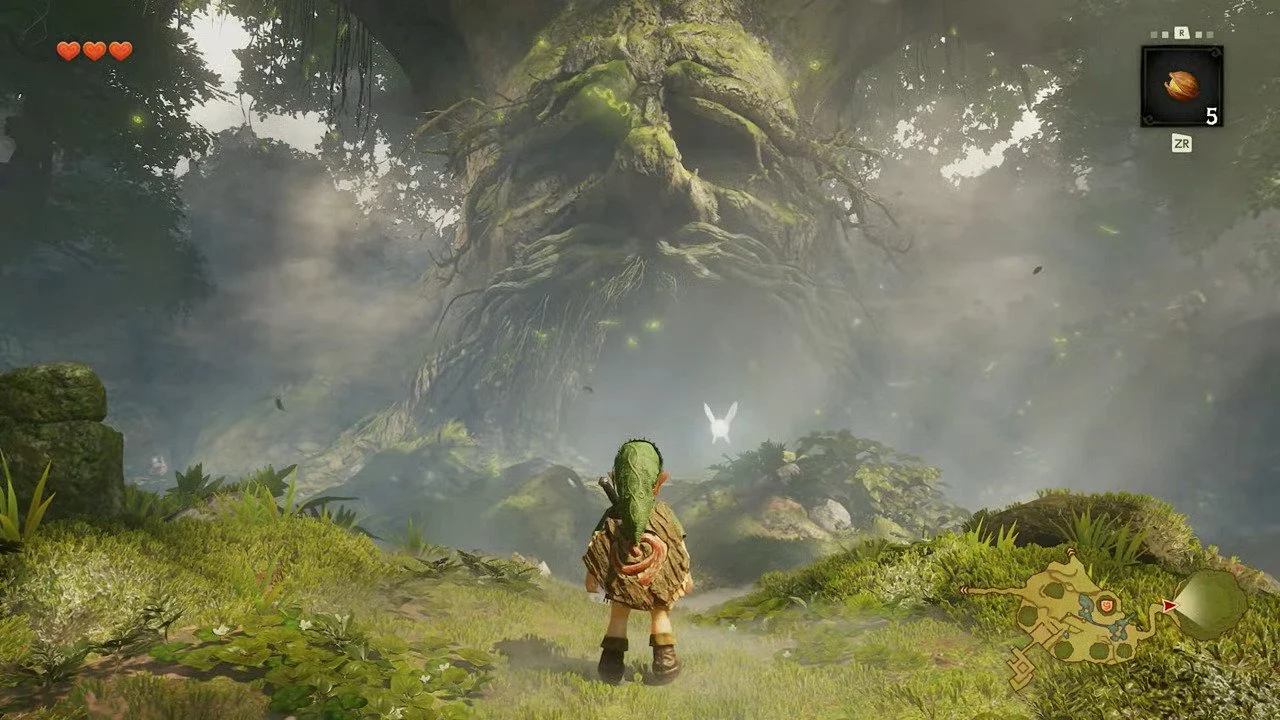
Ocarina of Time’s remake utilizes exceptional lighting, ambient occlusion, fog effects, and highly detailed texture work to make a game that looks visually striking. The improved presentation along with the rock-solid 60 FPS performance go a long way at improving game feel to make Ocarina of Time feel smooth as butter to play. // Image: Nintendo
So what exactly makes Ocarina of Time so magnetically charming? What makes this game historically have such a wide appeal and make so many people have such a deep appreciation for it? I think the answer lies in how the game makes the most of simplicity.
The narrative of Ocarina of Time is one that’s remarkably simple. Up to this point in the Zelda series, Nintendo has never made the narratives in these games more complicated than they need to be. Each game offers some lore and character interactions to dig into, but the main narrative is made simple in order to facilitate gameplay as efficiently as possible.
Ocarina of Time retains this simplicity by not replacing it with complexity, but rather enhancing simplicity with attention to detail. This philosophy continues in this remake. Ocarina of Time’s 2026 overhaul still features a mainly straightforward narrative where Link needs to travel through Hyrule to collect MacGuffins that eventually allow him to progress to the next beat in the story. Likewise, it features simple combat, a relatively compact world, and various puzzles that have one correct solution to them.
This remake fundamentally understands that Ocarina of Time’s brilliance came in no small part from how it balanced making the game consistently approachable but satisfying to progress through. Let’s take combat, for instance. Later Zelda games introduced more combat mechanics, such as parrying in Wind Waker, the various Hidden Skills to expand Link’s moveset in Twilight Princess, the emphasis on motion controls in Skyward Sword’s combat, and Flurry Rushes in Breath of the Wild. Each subsequent 3D Zelda game sought to add more complexity and mechanics to make combat a deeper and more prevalent mechanic.
It would have been tempting to inject this complex design into Ocarina of Time, but the developers showed restraint by choosing not to do that. Instead, Nintendo retained the simplicity of OoT’s combat while focusing on improving the game feel of each strike performed by the player. Combat in this remake largely boils down to attacking when enemies leave openings, and performing the occasional spin attack or jump attack if the player wants to spice things up. Link doesn’t have many options for combat, but he doesn’t need to. Combat does not emphasize options; it emphasizes pure game feel. Every hit on any enemy has a delicious crunch to it thanks to excellent visual and audio feedback. This makes the player feel the satisfaction of combat, despite the mechanic itself being fairly simple and not demanding too much from the player.
I bring this example up first because I feel it serves as a microcosm of the entire design philosophy of Ocarina of Time’s remake. Taking the simple combat and showing restraint with regard to changing it results in a combat system here that remains simple but makes for an incredible playing experience. Every change to Ocarina of Time in this remake is a result of the same logic: only changing things to improve the immediate feel of the game but keeping the core soul of the original experience intact.
Another strong example of this is dungeon design. Dungeons make up the core of early Zelda games’ identities - Ocarina of Time included. Each dungeon is a test of the players’ understanding of the tools made available to them, with each dungeon’s new item granting them a new tool to take into consideration. The dungeon tests the player on the new addition to their toolbelt with puzzles and combat challenges, climaxing with a boss fight. The fact that Ocarina of Time’s dungeons haven’t been touched up too much here is a testament to how strong the core level design of the 1998 game remains. 90-95% of the layout for each dungeon is the same. The remaining 5-10% of the dungeon designs are different, but feel thoughtfully crafted to service the game’s pacing and mechanics a bit better.
For example, Inside the Great Deku Tree, the game’s first dungeon, adds a new section to the room where the player acquires the Compass. This item, acquirable in each of the game’s dungeons, highlights information on the dungeon map, including the location of unopened chests. In the original game, the player gets the Compass and immediately turns back to leave the room. In the remake, there is now a hole behind the chest. If the player looks at the map, now complete with their newly acquired Compass, they’ll see an icon for an unopened chest in this room. Eagle-eyed players will see this visual information and/or notice the hole behind the chest, crawl through it, and voila - acquire a chest containing some Deku Nuts.
The reward isn’t necessarily the contents of the hidden chest - the reward is an immediate demonstration of the Compass’ utility. This is an instance where the game is teaching the player through showing, not telling what the player’s tool enables. This instance is a brilliantly thoughtful addition to dungeon design - and it is also emblematic of most other adjustments to level design. The Forest Temple features an elevator that significantly shortens an instance of backtracking that the player needs to do. The Water Temple features less Small Keys and includes visual indicators of where the player can change the water level (an addition carried over from the 3DS version).
What makes these changes so impressive to me is, again, the restraint on display. It would have perhaps been easier to keep the dungeons completely as is. Few people would have argued, since the level design of the original game holds up incredibly well. Likewise, many other developers may have been tempted to take more creative liberties with the dungeon designs and completely reimagine them. The development team here have decidedly stricken a balance that supplements the excellent design of the original game with thoughtful inclusions and omissions. The restraint of making few but meaningful changes ensure that dungeons feel as good as they ever have, while still retaining their original identity that contribute to the game’s overall identity and flow.
One of the biggest changes to the game is how the player accesses items. The original game allowed the player to equip three items at a time and have to pause the game if they wanted to re-equip items or equipment. The 3DS version expanded this by letting the player map four items at a time, with the Ocarina being permanently accessible via its own dedicated button. This Switch 2 version opts to inherit the style of equipping items from the last decade’s worth of Zelda games. Players now access items via a quick-equip menu where they can swap between items like how players can switch between different swords, shields, and bows in Breath of the Wild.
This understandably made many players hesitant ahead of the game’s release, since this method of switching items reared its ugly head most profusely in Tears of the Kingdom and Echoes of Wisdom. These games feature dozens of items (and in Echoes of Wisdom’s case, over a hundred items) to swap through. This gave each game a stop-and-go feel whenever the player needs to change equipment, bringing down the pace of encounters. Additionally, the linear horizontal menu makes sorting through multiple items become monotonous, making most players prefer to only use the first couple items in the menu and ignoring the rest.
Thankfully, this system works much better in Ocarina of Time thanks to the game’s leaner array of items to sift through. Because there is a smaller number of items to navigate through on this menu, this menu actually achieves its intended purpose (unlike in Tears and Echoes) by making players switch items very quickly. Purists still have the option to pause and equip items by selecting them on the Inventory screen if they so choose.
While the player can only equip one item at a time, the item button mapping is now set to the right trigger. This means that players can use items while still having full access to both control sticks. This means that while using items like the Slingshot or Bow, players can freely move Link and the camera, making aiming feel incredibly dynamic and smooth. This is on top of the gyro controls (yet another returning feature from the 3DS version, as well as previous Switch-era Zelda games) that make aiming shots feel incredible.
While players can only have one item at a time, they have constant access to accessories, boots, Navi, and the Ocarina via the Directional Pad. This, on top of the quicker item switching, makes accessing all the tools available to the player feel snappier and more accessible than ever. It can be argued that all of these quality-of-life improvements make the game easier - but then, I’m not convinced that people came to Ocarina of Time for challenge in the first place. Rather, Ocarina of Time is a game defined more by the satisfaction of overcoming trials rather than the overwhelming challenge of the trials themselves.
The improved controls and the miscellaneous quality-of-life improvements don’t belittle the satisfaction that comes from defeating enemies or solving puzzles - it merely makes experiencing that satisfaction more efficient.
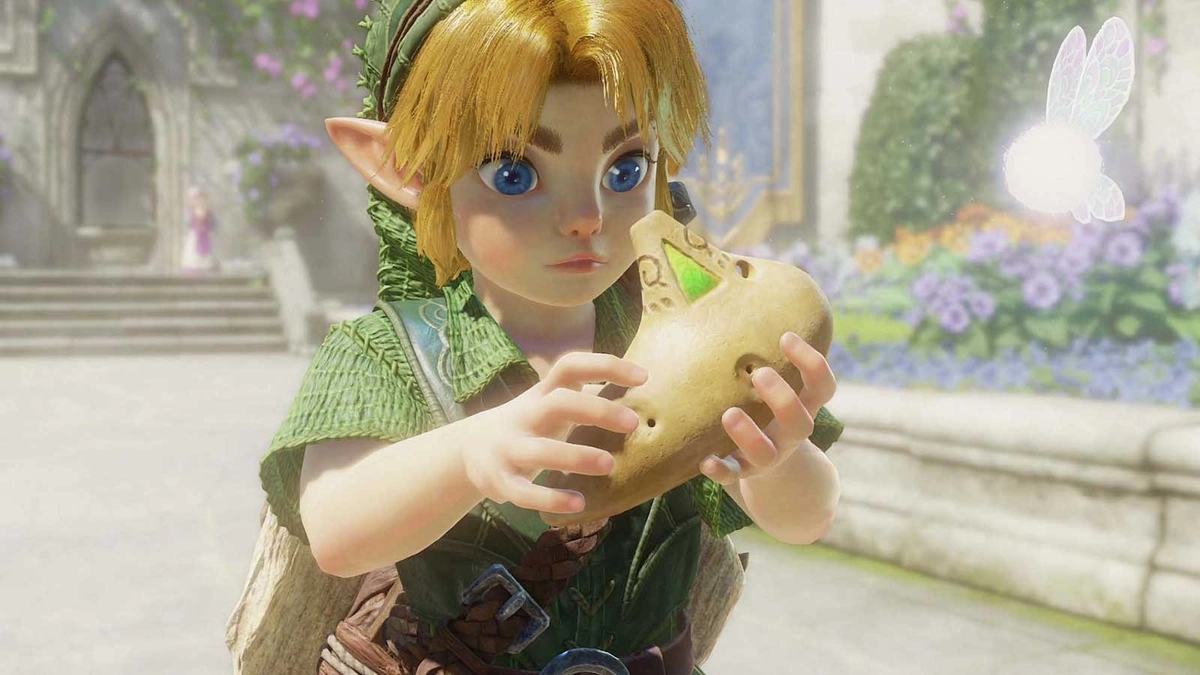
One of the biggest changes made to Ocarina of Time is its presentation. New cutscenes complete with voice acting, a stellar score that retains samples used in the 1998 soundtrack, and highly detailed animations and dialogue make this iteration of Hyrule feel more lived in than most modern game worlds. // Image: Nintendo
What exactly made the original Ocarina of Time capable of making so many memories in the first place? I would argue that it is the immense attention to detail that the game features. There are so many moments in Ocarina of Time that don’t need to be in the game, but are present for the sake of making a moment feel more special. I think of the moment when the player can find a Hylian soldier in the backstreets of Hyrule Castle Town after acquiring the Ocarina of Time, but before acquiring the Master Sword. He gives some context to Link about Ganondorf taking over Hyrule Castle before dying in front of Link.
It’s a remarkably dark moment that the player only has access to see for a small window of the game. Most players will likely miss it, since the player has to go off of the beaten path to see this moment. And yet, the players that do see it will remember it for the remainder of the playthrough and well beyond. The detail sticks with them, because it truly doesn’t need to be there, but still is because it adds something to the experience, however small.
This ingredient is another essential component that makes the remake excel. Like the original game before, Ocarina of Time’s remake includes many new small details and moments that don’t need to be there. But minor inclusions that some players may not even notice or care about only makes those that do notice these details remember the game even more fondly. An example of this is the soldier in Castle Town’s building full of pots. A popular fan theory from the original game is that the Hylian soldier in this building during the child era of the game becomes the mysterious Poe collector NPC in the adult era of the game.
This remake adds voice grunts and new dialogue that allude to and practically confirm this fan theory. This is a small, insignificant detail - one that Nintendo could have easily not included and no one would have thought about wanting it. But the fact that this new detail is here at all shows a level of care and attention to detail that makes this remake retain the magic of what made the original game so special in the first place.
Another example that is more prominent is the revamped Mask of Truth. In the original game, this item’s utility was limited primarily to being able to read hints on Gossip Stones. This remake adds the function of being able to read the thoughts of every NPC in the game. On top of already getting tons of new dialogue, this gives player get to know these NPCs even more through hearing their thoughts. Sometimes, hearing character’s thoughts merely sees them comment on how bizarre Link’s mask is. Other times, it reveals quirks of characters that we otherwise don’t see, such as with the dancing couple in Castle Town.
Once again, this is an addition that no one would have been asking for had this remake shipped without it. Nintendo could have rested on their laurels and let the power of nostalgia carry this game to retain the magic of the original. But it’s the fact that Nintendo went out of their way to include a lot of unnecessary details that make the world feel more believable and lived in that makes this world feel magical all over again.
Like the original game before it, I think every player is destined to have memories associated with this game. For me, one of my core memories of playing this remake was getting the Fairy Ocarina after the cutscene where Link and Saria share a heartful goodbye (that feels more emotional than ever thanks to the strong cutscene direction). Immediately after this emotional exchange, I taught myself how to play “Take On Me” by A-ha on the ocarina, and I eventually decided to use that as my Scarecrow Song later in my playthrough. So, now, whenever I think of the scarecrows in Ocarina of Time, I now think of the “Take on Me” music video.
It may be a silly memory, but it is nevertheless a memory born of the game’s attention to detail and flexibility. Players can play just about any song they can think of with the versatile ocarina in this game. Another memory I have is getting shivers from the cutscene of when the Great Deku Tree withers away after completing the game’s first dungeon. The new take on this cutscene sees a beautiful new track convey the devastation of what’s occurring. Additionally, the camera pulls back to reveal the other Kokiri seeing the Deku Tree’s leaves fall. It’s a new detail that, again, didn’t need to have been added, but is. The fact that it’s here at all reveals an intentionality to thoughtfully add upon what the original already provided.
That leads to the strong cutscene direction. The style of storytelling is mostly in line with the direction seen in Breath of the Wild and Tears of the Kingdom. Voice acting and more thoughtful camera movement makes scenes feel more dramatic and cinematic. That said, Nintendo still knew when to show restraint and keep changes minimal, such as in the infamous cutscene where Darunia dances to Saria’s Song or when King Zora slowly scoots over to open the way to Zora Fountain. There is a delightful blend of new and old to the game’s presentation that retains the storytelling style of the original now unburdened by technological restrictions. This feels less like revising Ocarina of Time’s story to feel more modern and more like realizing what the original Ocarina of Time wanted to accomplish but couldn’t, due to limits to what the Nintendo 64 could accomplish.
Another aspect where that feels the case is the art direction. With the added fidelity enabled by the Nintendo Switch 2 hardware, we now get to see character designs that feel like the original game’s illustrations fully brought to life. The Kokiri have clothes that look like they were handcrafted by materials of the forest. The Gerudo are now rocking six-packs and Nabooru, in particular, has long nails and a shade of pink in her long, black eyelashes. Every species in Hyrule and every character has so much color and detail packed into their design, complete with animation flourishes that are vibrant.
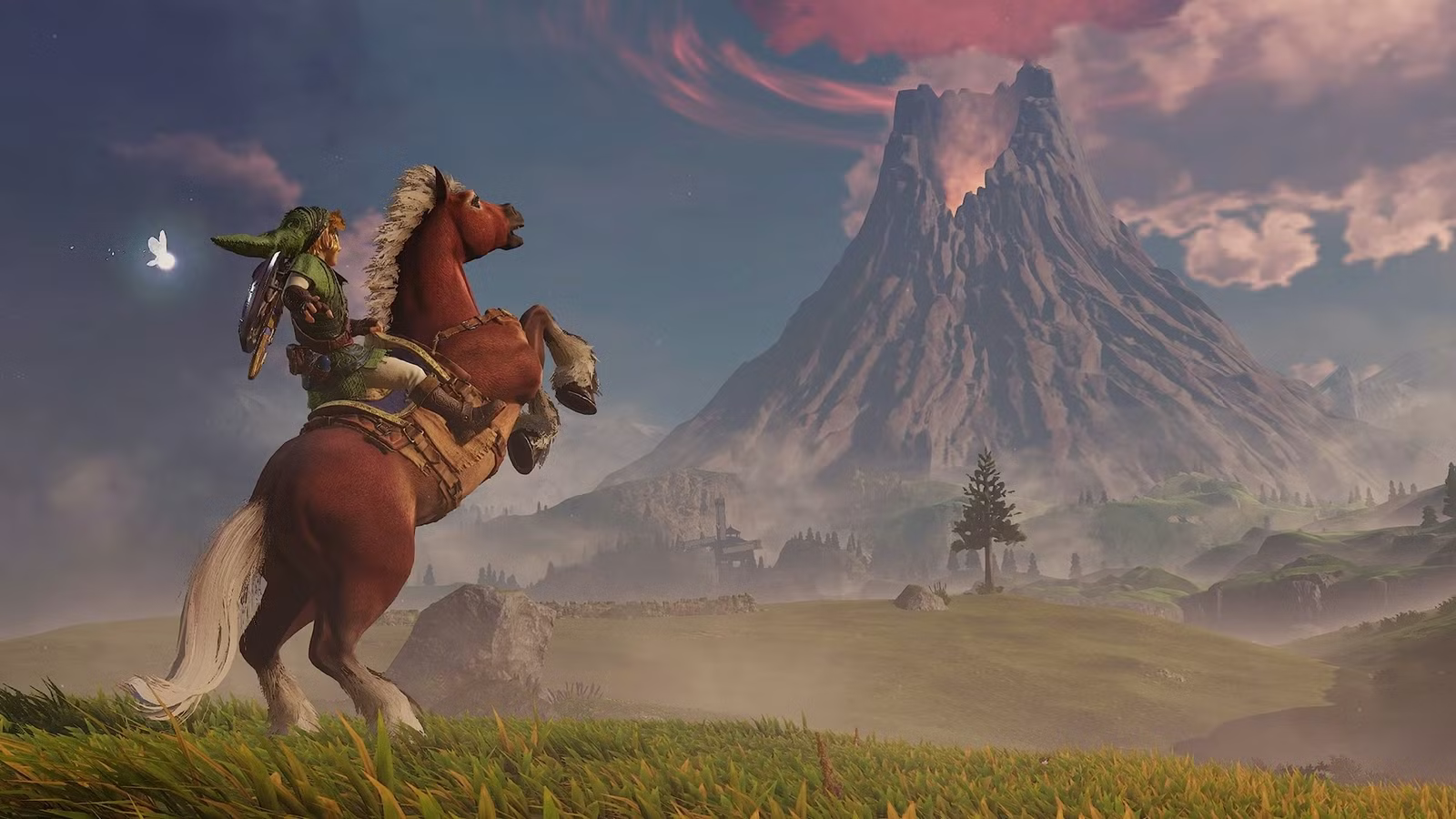
While characters look great, it’s the environments that truly steal the show. This remake’s phenomenal lighting and fog effects make the vistas of Hyrule feel truly otherworldly - capitalizing on the idyllic high fantasy aesthetic that very few games truly realize. The look of Hyrule invokes the feeling of a fairy tale taking place in a whimsical land. That is never more evident than when you get to see the sunrise in Hyrule field, as the sunlight bounces off of the grassy hills, revealing the distant fog and rolling hills of Hyrule.
Ocarina of Time retains the original game’s compact size. While this keeps the original game’s tight pacing intact, it also ensures that the developers could take this modestly sized game world and make it look as good as possible. The result is a game that is one of the most visually striking games ever made - an especially impressive feat considering that the Switch 2, while powerful for what it offers, is the least capable machine among modern hardware offerings.
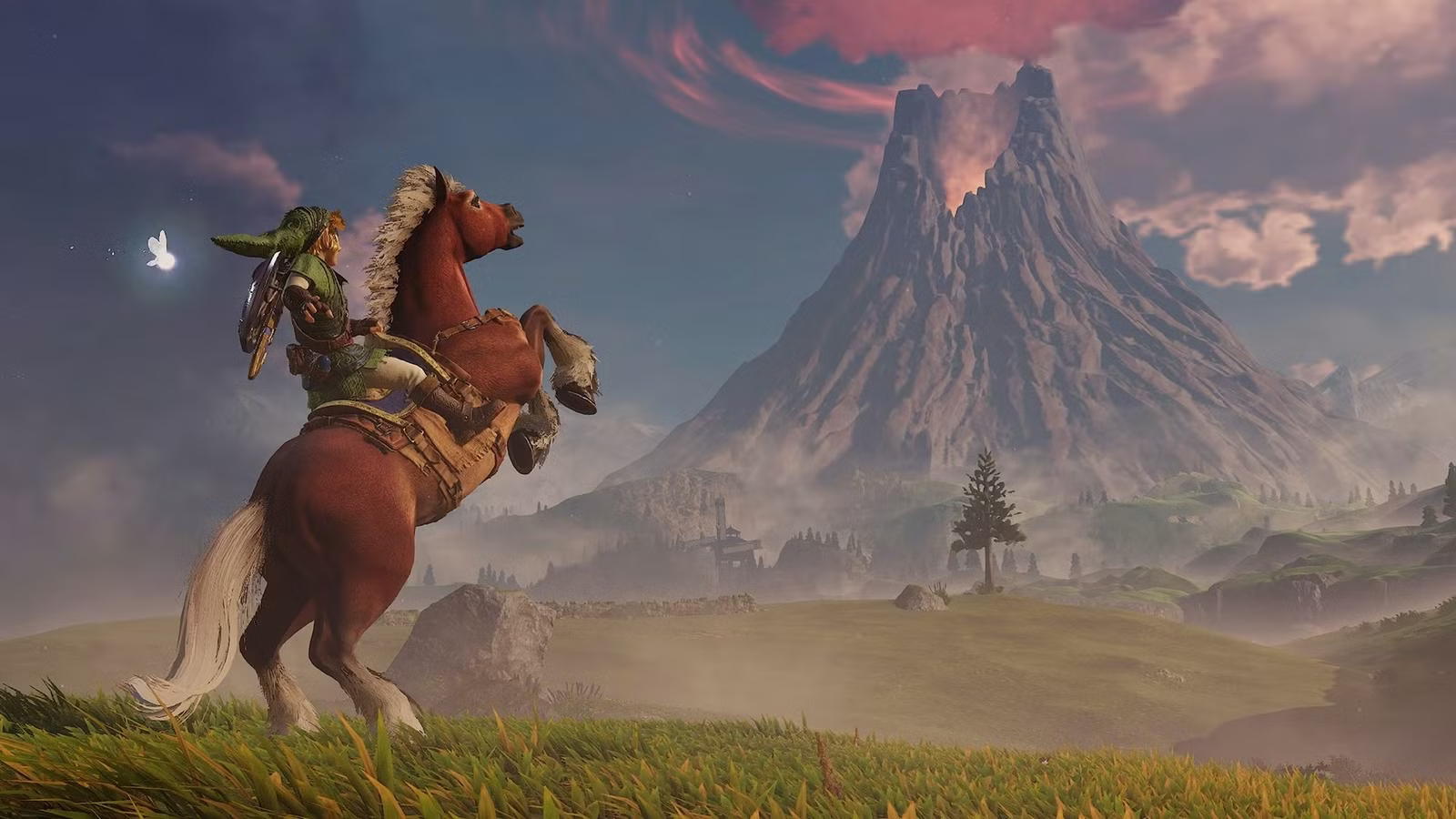
You’re always doing something in Ocarina of Time. There is almost no downtime in the adventure, making for an experience that’s as replayable as it is satisfying to progress through. This remake helps one of the greatest games ever made put its best foot forward for future generations to enjoy to the fullest extent. // Image: Nintendo
An integral part of Ocarina of Time is its spirit of adventure. When we talk about the concept of going on an adventure in a game in a modern context, we typically think of large open-world games that offer vast player agency. Think of games like Skyrim, Cyberpunk 2077, The Witcher III, and even the open-air Zelda titles. These games invite adventure onto the player with the plethora of options given to them. This type of game has become the most popular variant of adventure titles in this era of games. That may prove why it’s so refreshing that a revamped Ocarina of Time is still able to capture that spirit of adventure with a condensed game world.
What makes Ocarina of Time such a consistently entertaining game to play is that it employs rich design across a compact area that means that the player never has much down time. The only instances of Ocarina of Time where it can be argued that there is little to immediately engage the player, both in the original game and its remake, are the stretches of time where the player has to run across Hyrule Field, the game’s central hub that connects each of the game’s major areas. During the adult era, this issue is mitigated by the player’s access to Epona and Fast Travel to some of the game’s areas, During the child era, however, there is a lot of running back and forth across Hyrule Field.
This remains one of the larger issues with the game. However, I don’t find it to be too much of a gripe. During a recent Ask the Developer interview, Series Producer Eiji Aonuma confirmed that additional warp points were added during the game during development, but this feature got cut because it undermined the game’s sense of wonder and discovery.
I asked the team to add warp points that didn’t exist in the original game, giving players access to shortcuts. But when we actually tried playing the game with those warp points, we realised that we were missing out on the moments of discovery that came from stopping along the way and wondering, “Wait, what’s this?” Through this development process, we were reminded once again just how important those moments are to the very structure of The Legend of Zelda: Ocarina of Time. So even though I was the one who proposed adding warp points, they just weren't working for me in the end, so I got the team to take them all back out again.
- Eiji Aonuma
Maybe creating a game with more convenience makes the player get to the thrilling parts of the adventure far faster and more efficiently. But this design decision reveals why the spirit of adventure is retained so well in this remake. The sense of adventure that we feel in any piece of media cannot be entirely upheld by bombast, by things happening all the time. Since 1998, the world has become more and more fixated on more immediate gratification. People want to avoid the boring parts and get to the most exciting parts of a game, a movie, a book. But such a mindset undermines what going a journey should be like.
This isn’t to say that Ocarina of Time is a slow burn of any kind, but it does invite the player to regularly stop in their tracks in take in the quieter parts of the journey. This can be when walking across Hyrule Field and discovering a grotto or a Gold Skulltula hidden in one of the trees. This can be looking at the environment’s incredible vistas and just taking the view in. This can be returning to older areas with newly acquired items to realize how far you’ve come in your journey.
This remake serves as a reminder of what makes a journey work in media. The length of a game doesn’t matter, nor does complexity. If they did, Ocarina of Time would pale in comparison to system-driven open-world RPGs - but it doesn’t. Rather, Ocarina of Time creates a journey filled with small and big moments alike that, by its end, makes the player really feel like they’ve partaken in a grand adventure.
Lastly, I want to touch on what makes this the antithesis to remake fatigue. Many people point to rereleases of older titles as being cash grabs that capitalize on nostalgia. And perhaps that is warranted to an extent. Lots of remakes and remasters release and rest on their laurels and make minor changes. Maybe a rerelease comes out not too long after the original, making it unclear why the rerelease is happening in the first place.
It’s easy to initially think that Ocarina of Time has been remade after 28 years as a means of capitalizing on the nostalgia of the original release. All the kids that grew up with the game are now adults, many of whom now have families of their own. This remake is not for those ‘90s kids. This remake is not built for the people like me that have replayed this game over a dozen times since its original release. Rather, this remake is for today’s kids - for the future generation of game players and developers.
The original Ocarina of Time left a massive impact throughout the games industry - the effects of which we’re still seeing to this day. If you have played any game that features a lock-on mechanic that dynamically frames the action between the player character and an enemy, then you have Ocarina of Time to thank for that. The original Ocarina of Time innovated 3D movement in a game, the impact of which is impossible to replicate given how far forward the industry has come since 1998. That said, the impact of the level design, the puzzle design, the aesthetic, and the memories associated with the game continue to effect new players to this day.
The point of this remake is to ensure that this impact lives on for future generations. Kids will play this remake as one of the first games they ever play. It will inform their critical thinking skills as well as craft memories for them as they play - the likes of which will stick with them throughout their life and potentially even inspire them to make art and games of their own. That is who this remake is for. And, honestly, that’s incredibly refreshing.
So many modern games are built for a more mature audience - dishearteningly so. Many publishers and developers have abandoned the younger audience, convinced that they’ve been lost to the likes of Minecraft and Roblox - but I’ve already seen the Ocarina of Time remake prove that younger audiences care about experiences like this. I’ve already seen streams where parents play OoT with their children, with the kids becoming fully immersed in the game’s world and enjoying solving the game’s puzzles.
Obviously, Ocarina of Time isn’t a game explicitly for kids, but it welcomes them in as part of the audience in a way that fewer and fewer modern non-Nintendo titles do. This game proves that making games that make children feel included in the audience while not catering to them is an essential path towards success. The game’s 5.2 million copies sold in its first four days on the market is a testament to that. Many players will play Ocarina of Time for the first time through this remake - a significant number of those players will be younger players that were not alive when the original game released.
The game’s dedication to simplicity and attention to detail makes it accessible to a wide audience yet carry a depth that will make any player appreciate what has been presented to them.
I am usually capable of stepping back and being as objective as possible when I review or talk about a piece of media, but doing so with Ocarina of Time is admittedly difficult. While playing this remake, I felt like a kid again as I explored the mystical world of Hyrule in a brand new way. As a remake, this adventure feels more intuitive and fluid to control, it looks and sounds incredible, and it gracefully recaptures the spirit of adventure through thoughtful additions and adjustments to the original game’s content. As a game, it is proof that the core design philosophy established in The Legend of Zelda and perfected in A Link to the Past still has immense value. I have seen this game introduce so many people to the traditional Zelda formula, and it has caused people to fall in love with this franchise all over again.
Whether you grew up with the original game and have immense nostalgia for the original title, or you are getting to play this for the first time, you can rest assured that you’re going to have a magical experience. The game is compact and focused, ensuring that the player’s time is never wasted on menial busywork. And yet, the game also has so much thoughtful detail and intrigue embedded into it that I foresee lots of players be willing to take their time and enjoy the adventure with Link and Navi.
Ocarina of Time retains its superpower of enabling memories to be crafted around it over 28 years after it changed the world. Indeed, Ocarina of Time continues to change the world through this remake - the only difference now is who it is changing the world for. Older and returning players such as myself will appreciate the massive quality-of-life enhancements to the game, but none will appreciate what this video game accomplishes more than the millions of people that will have this remake be their first exposure to the Ocarina of Time adventure, including younger players getting their feet wet with video games.
It’s cliché to refer to Ocarina of Time as timeless, but I can truly think of no other word to describe my assessment of this game. Even though I know just about every secret of this game’s world, I still found myself falling in love with this story, with this world, with these dungeons, and with these characters all over again. My connection with this game hasn’t withered a bit - and I think that will remain the case 20 years from now when people look back on their connection with this version of Ocarina of Time.
No matter your prior relationship to it, the remake of Ocarina of Time will impress you and remind you of the superpower that video games have when they are at their best. You will craft memories with Ocarina of Time through this remake whether you are new to the game or returning to it. That’s the power of a meaningful adventure meant to be experienced by everyone, regardless of age, regardless of generation.
Thank you very much for reading! What are your thoughts on Ocarina of Time and its 2026 remake? Does this remake offer how video game remakes should be handled moving forward? As always, join the conversation and let me know what you think in the comments or on Bluesky @DerekExMachina.com!