Top 15 Movies of 2025

While the year had notable droughts without big releases, particularly throughout the late summer and early autumn, 2025 ultimately offered a great collection of films, many of which have stuck with me throughout the year. // Image: Focus Features
An unexpected trend that became the norm throughout my moviegoing endeavors throughout 2025 was that of surprise. Some of my most anticipated films of the year, many of which were follow-ups to some of my favorite films from my most highly regarded directors and screenwriters, ended up not impressing. Although loving 2019’s Parasite, Bong Joon Ho’s 2025 offering with Mickey 17 ultimately felt underwhelming beyond its initial intrigue. Likewise, Celine Song’s masterful 2023 debut with Past Lives was followed up with a more conventional rom-com with Materialists, a 2025 that, while fun, didn’t floor me like Song’s previous effort.
Rather, many of my favorite films of the year came from unexpected sources, from unexpected directors. And therein lies the true magic of art - you can never truly predict what you’ll be inspired by until you sit down and let a narrative journey unfold before your eyes. I’ve talked many times on this blog about the value of going into stories without expectations. Indeed, many of my favorite movies of the year came from instances where I knew next to nothing going in, and such a mindset led me to uncover some of the greatest surprises of the year. If 2025 was an indicator of anything, it’s that we all deserve to continue allowing art to surprise us, and open our hearts enough for new, unexpected stories to reshape how we think about the world.
With respect to that, I want to share what were my favorite films of 2025. As with any opinionated list, I didn’t see every movie (like the Oscar-nominated darlings Frankenstein and Train Dreams), and many movies I enjoyed didn’t quite make the cut for the list (with some honorable mentions going to Jane Austen Wrecked My Life, Eternity, and Blue Moon). Moreover, this isn’t necessarily a list of my most highly-rated movies of the year. Rather, this list is a curated collection of the films that have stuck with me the most as I reflect on the previous year and the stories and experiences that impacted me the most. If you want to see the which films I rated the highest immediately after I saw them, as well as my thoughts on films right as I see them, I invite you to look at (and dare I say, follow!) my Letterboxd account. With all that in mind
15. Tron: Ares
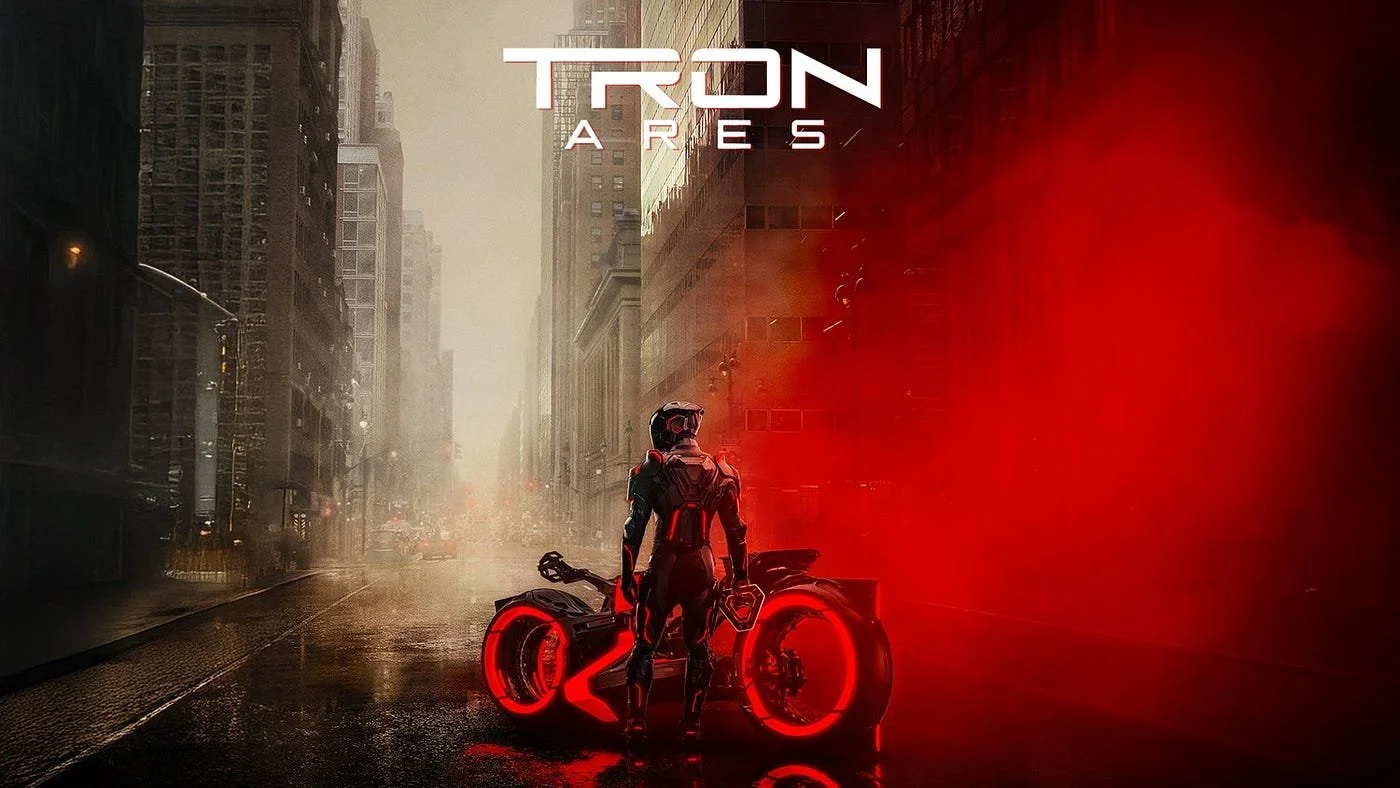
While not the formative and visual benchmark that its predecessor was, Tron: Ares is one of the few cool-as-hell movies that I could get fully immersed in and be taken to another world. // Image: Disney
Okay, I’m aware that I’m starting this list with a somewhat contentious pick. Tron: Ares has received a lot of flack for being a sequel no one asked, for being a movie having the gall to star the easily dislikable Jared Leto, and for feeling like yet another legacy cash grab from Disney’s endless vault of IP. I want to skirt around all of that criticism (some of which are more valid than others) and really focus on what made me enjoy Tron: Ares so much: its escapism and vibes.
I think there’s a much-needed place for cool-as-hell movies that transport us to different worlds. That’s why James Cameron’s Avatar movies make billions of dollars, despite not making any significant cultural impact. Those movies transport audiences to another world and offer a style of cinema escapism that is very rare to see nowadays. Tron: Ares is one such instance of cinematic otherworldliness that feels like a glimpse of what more big-budget films should strive to be like.
From the premise that sets itself apart from previous Tron films to Nine Inch Nails’ soundtrack that feels like a distinct yet honorable successor to Daft Punk’s iconic work in Tron: Legacy, there’s a lot different about Tron: Ares that makes it an interesting film to discuss, even when divorced from other Tron films. What makes this film appeal to me so much, beyond its infectiously cool aesthetic, is the sheer spectacle of seeing the fantastic world of Tron mesh with the real world. Watching this franchise’s signature neon lights paint the city in bombastic action scenes made for some of the most fun I had in a theater all year.
And to me, that’s enough. I’m fully cognizant of my bias for this film given my attachment to the source material and that this appeals to my personal preferences quite a bit. Even with my personal bias and the film’s shortcomings in mind, it still offered a lot of fun for me. Tron: Ares felt the most cool while watching it, and that’s a feeling that I’ve come to value in storytelling.
14. Sinners
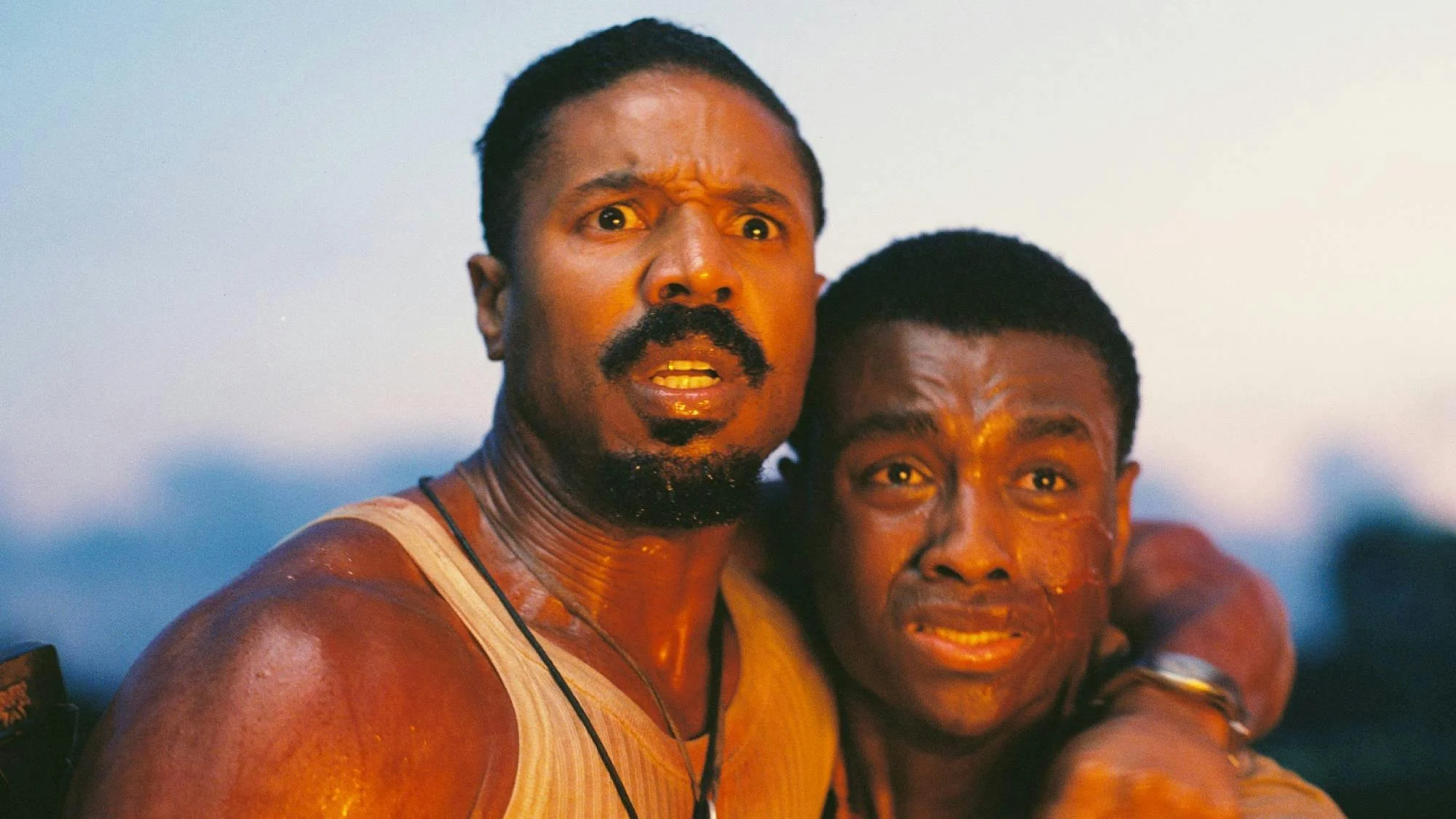
Sinners is a modern poster-child for a slow burn. The film is perhaps the most subversive and innovative horror film since 2017’s Get Out, and a large part of that is due to how the film builds tension through worldbuilding. // Image: Warner Bros. Pictures
There are a finite number of directors in the film industry that have been afforded the unique privilege of being able to do whatever they want. Directors like Christopher Nolan, Guillermo del Toro, and Quentin Tarantino are among the few afforded to truly make whatever films they wish to make because they’ve demonstrated a commitment to create worlds and tell stories in stylistic, dedicated ways that are immediately identifiable.
I bring this up because I genuinely think that Ryan Coogler has just joined that small collection of directors. After seeing success with films in the Creed and Black Panther franchises, Sinners is Coogler’s first big-budget feature whose very existence and success is an underdog story that’s impossible not to root for. The film somehow got a $100 million budget despite not being tied to any established IP - an absolute rarity in today’s age (unless you’re one of the previously mentioned small number of directors trusted to make whatever they wish). Not only is Sinners expensive - it’s different. It’s experimental. Dare I say, it’s weird. And for all of those reasons, Sinners is a film that’s impossible to forget.
Beyond its exceptional cinematography scenes, including one particular long take during a party scene that’s easily one of the most impressively shot scenes of all time, Sinners is special because of its commitment to worldbuilding and complex characters. In fact, it could be argued that the first half of Sinners is hardly even a horror film - but rather, a character-driven drama about veterans turning to the criminal underworld. This commitment to drama and worldbuilding works in the film’s favor, as it creates a delicious tension that carries significant weight when the film morphs into a film that’s more recognizably horror-infused. Even with that said, the way in which Sinners elucidates its horror is unlike anything else in the genre, classic or contemporary, and that often leads to scenes and character interactions that truly feel innovative for the genre.
Sinners is as good as it is because it dares to walk its own path - an admirable mission for a film entering the crowded horror film space. While having an initially impressive but still modest opening, Sinners grossed over three times its budget and became one of the most critically appreciated films of the year primarily through word of mouth. It was nearly impossible to exist in the film space and escape the eclectic buzz surrounding this movie. Such a phenomenon was earned in my eyes. Sinners is a great movie because it wins an uphill battle while doing so in a visually excellent and narrative intriguing way. Ryan Coogler has catapulted himself into being a director that I think the entire film community should be eagerly praising. I’m certainly anticipating whatever he works on in the future with a lot of excitement.
13. If I Had Legs, I’d Kick You
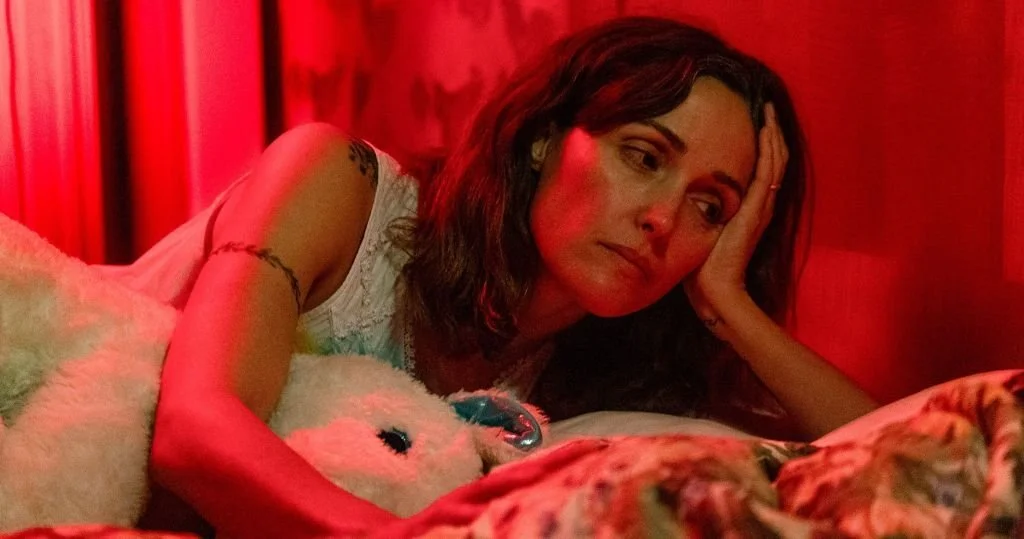
If I Had Legs, I’d Kick You wallows in the unrelenting chaos of being a working-class mother. This film brilliantly focuses on the anxiety of a woman whose struggles are as mundane as they are impossible to not get stressed by. // Image: A24
The first time I heard about If I Had Legs, I’d Kick You was a comedic Letterboxd review that dubbed the film as "Uncut Gems for women”. That was effectively the only context I had going into seeing If I Had Legs, I’d Kick You, and…while perhaps reductive, that comedic review is shockingly apt.
To put it in a single word, If I Had Legs, I’d Kick You is anxiety. Unrelenting, unresolving, unbearable anxiety. And such an experience is as uncomfortable as it is exhilarating to watch because of two things: a phenomenal lead performance from Rose Byrne and the smart direction and writing from Mary Bronstein.
If I Had Legs, I’d Kick You exclusively follows Linda, a therapist in an uneven marriage with a husband we barely see and a disabled daughter whose condition is never fully unveiled. What makes Legs work so well is the hyperfixation that we have on Linda’s perspective. Much of the film’s drama, chaos, and anxiety largely derives from how Linda stressfully reacts to many things that go wrong around her on top of having to hold it together in front of her daughter. In a stroke of directing brilliance, we never actually see Linda’s daughter (the source of much of Linda’s anxiety and scatterbrained thinking) until the very end of the film. This stylistic decision further iterates how Linda’s stress has enveloped her entire life to the point where little seems to matter to her besides herself.
This film is as unrelenting as the anxiety that unfolds within it, and that makes for an unforgettable viewing experience. This movie’s one that likely flew under many peoples’ radars, and it’s one that I strongly advocate for anyone to go see, especially if you want to feel seen for going through never-ending gauntlets of stress.
12. Sacramento
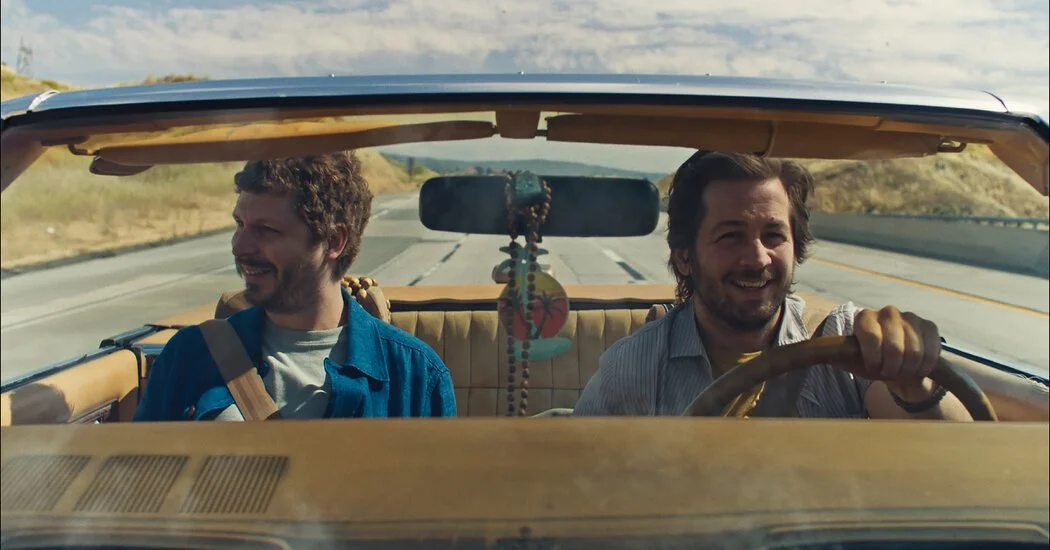
Sacramento is a brilliant implementation of the cozy road trip paradigm while wrapping it up in a thoughtful exploration of how adulthood reforms how we look at our own lives. / Image: Vertical
On the subject of films that flew under most peoples’ radars, Sacramento is a simple-but-thoughtful execution of the road trip film. What makes this film work is the foil between its two characters. Rickey (played by Michael Angareno) and Glenn (Michael Cera) are childhood friends that have drifted in practically opposite directions. Glenn is convinced that their friendship is in the awkward position of existing passed its natural expiration date, but Rickey’s chaotic personality has kept them in touch in spite of the different ways they lead their lives.
Like with any smart execution of foil characters, though, Sacramento’s two protagonists are as effective characters as they are not because of how they’re different but because of how they share a very human experience. Both men are in transitional periods in their lives, particularly as it relates to emerging fatherhood. How exactly does one become a parent? How much does it truly change a person and how they live their lives? There’s a lot of genuine anxiety that goes into such a thing, yet parenthood being such a common experience in the world that it’s easy to feel as though it’s not something anyone is allowed to feel anxious over.
This is what Sacramento is primarily interested in grappling with. The changing nature of our lives once parenthood and its associated responsibilities come into the picture is at the core of Sacramento, and the film’s quirky humor blended with its thoughtful depiction of insecurity, fear, and anxiety makes it a commendable, quaint, and cozy journey for its characters.
11. Bugonia
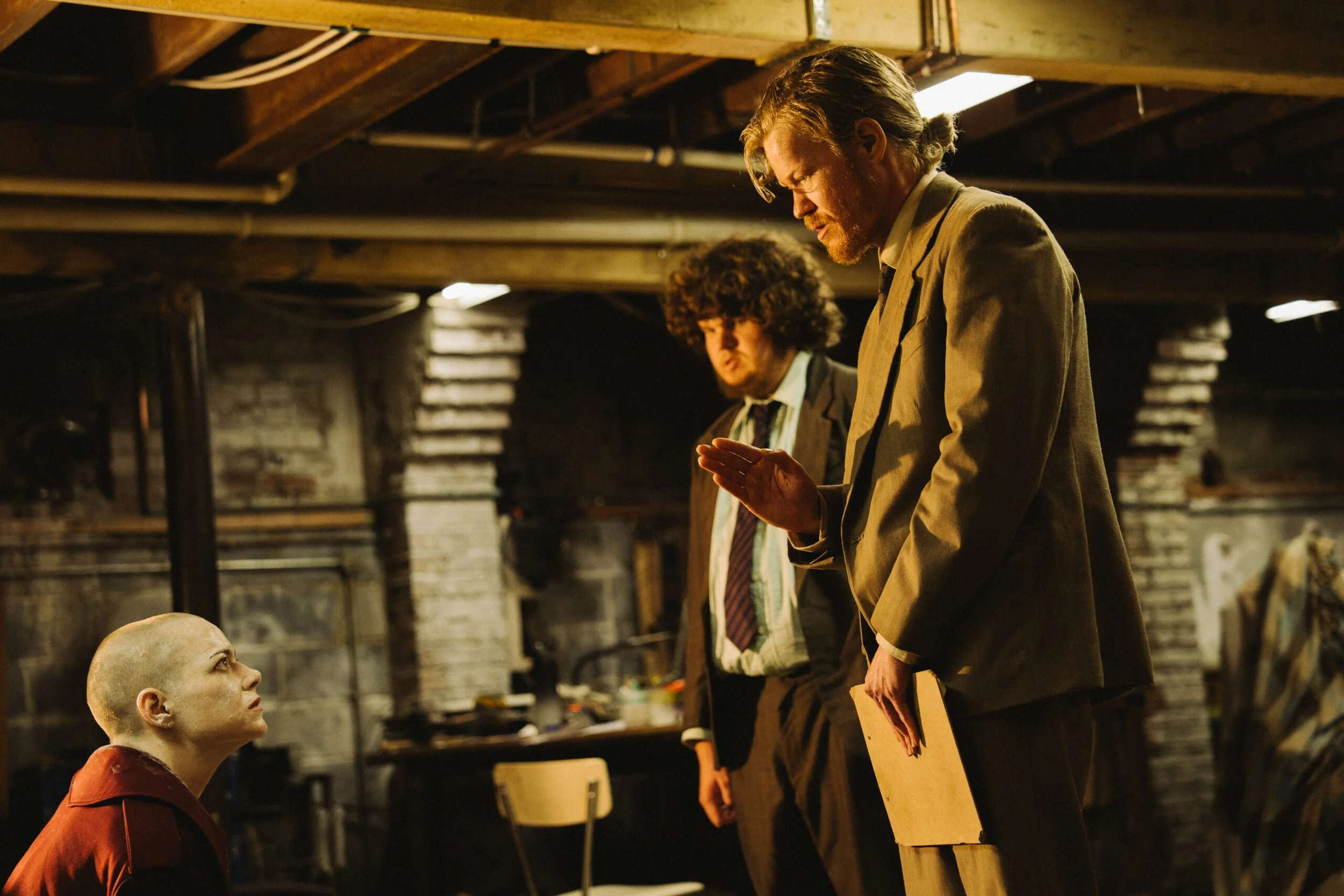
Bugonia is weird, but what else could you ask for? This film features a brilliant cat-and-mouse adventure about where truth ends and conspiracy begins, making for fun character interactions that carry the film to unexpected places. // Image: Focus Features
Yorgos Lanthimos has done it again. After the excellent Poor Things and Kinds of Kindness, the Greek director has found a consistent and fast-paced stride of mesmerizing flicks that are as visually interesting as they are unapologetically weird and unpredictable. Bugonia foregoes the (in my opinion) ugly fixation on the fisheye lenses of The Favourite and Poor Things in favor of a more conventional-looking concentration on smaller settings. Bugonia’s premise is as bizarre as it is unmistakably Lanthimos’ kind of story. Two apparent conspiracy theorists kidnap and torture a CEO of a pharmaceutical company, believing her to be an alien on a mission to destroy the human race.
Bugonia works as well as it does thanks to its serious consideration of the theory posited by its protagonists. Rather than brushing off Teddy (Jesse Plemons) and Don’s (Aidan Delbis) beliefs as being rooted in delusion, the film treats their beliefs with the genuine energy that they themselves are convinced of. This leads to conversations between them and Michelle (Emma Stone) that command a beautiful back-and-forth between deceit and belief. Teddy and Don believe in their cause so much in such vivid detail that it’s hard to dismiss what they believe. Likewise, Michelle responds to their beliefs with such a commitment to good-faith discussion and negotiation for her release that it creates a believability and merit to conversations about objectively ridiculous concepts.
I’ve continued thinking about Bugonia long since having seen it because of the beautiful back-and-forth it creates in relation to fact and fantasy, truth and deception. The many interactions between Teddy, Don, and Michelle make it increasingly difficult to know which characters to trust, who to side with, and what to generally view as believable. This accomplishment makes way for incredible tension and stakes that come to a head with bold narrative decisions that no sane viewer will see coming. Bugonia is a marvel because of its unpredictability. That said, the additional style and writing finesse on display makes a movie that is mostly constituted by conversations feel endlessly exciting to watch. Such is a mark of truly strong writing and direction. Because of that, Bugonia is an easy film to recommend for all seeking something weird but unforgettable.
10. Bob Trevino Likes It
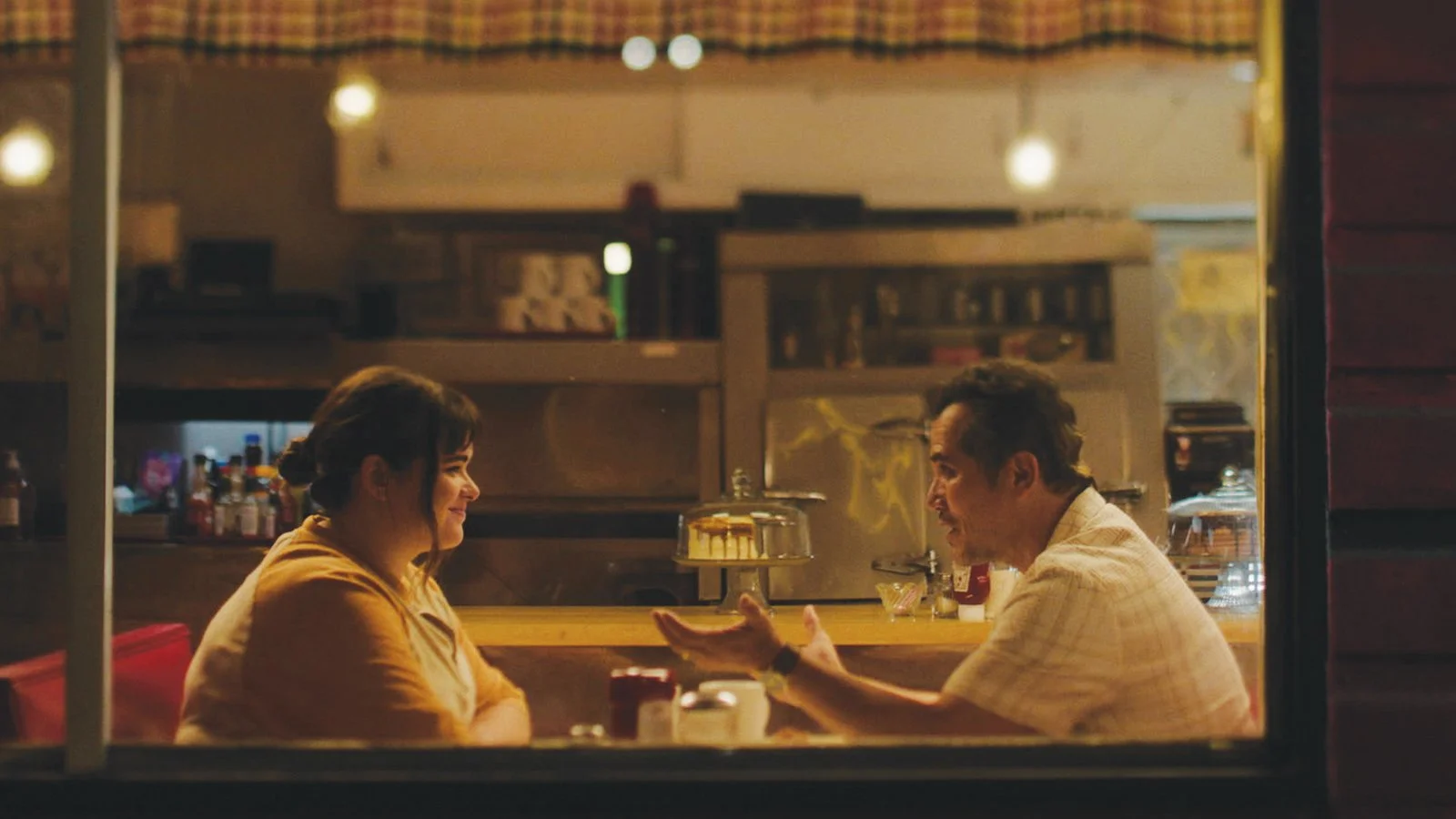
Bob Trevino Likes It is a warm hug and gut punch about the reality of a digital world that has propelled us into an uncharted era of loneliness. // Image: Roadside Attractions
There’s a palpable wholesomeness to Bob Trevino Likes It that has kept me thinking about it. This is a film that is primarily interesting in discussing the paradox of loneliness that pervades culture. Very few films talk about the way the age of social media and online interactions have influenced the ways we fit into the world, mostly because it’s a challenging concept to make visually interesting and exciting to watch. Bob Trevino Likes It discusses this topic with heartful nuance and believability and does so in a way that proves how the digital age affects us: by telling a story informed by true events.
Lily (Barbie Ferriera) accidentally becomes Facebook friends with a complete stranger that happens to have the same name as her father, but this connection ultimately opens the door for Lily to finally have someone that can make her feel seen. This concept is wholesome to watch unfold because it’s one that society has somehow allowed to become foreign. The very idea of becoming friends with someone through happenstance was once the primary way in which we forged connections and built a network of loved ones around us. And yet, social media’s transformation of the way we communicate with another has made us more isolated from each other than it has connected us. Lily is a damaged person that doesn’t have any significant support system - just by having a single friend, Lily has someone to listen to and understand her problems as well as have a different perspective to be around. It’s a seemingly small change to her life, but it’s one that greatly improves Lily’s life and her sense of self.
Bob (John Laguizamo) recognizes the pain and sadness that likely comes from posting on Facebook and having no one engage with your posts in any way. Bob goes on to like her social media posts, just to let her know that she’s seen. It’s a small act of kindness that grows into something greater. The humanistic peek into this aspect of modern communication and friendship that this film provides is enough to have kept me thinking about Bob Trevino Likes It throughout the year. The film’s sorrowful third act and strong pacing also help keep the film a short and sweet execution of a concept that needs far more conversations about it. Bob Trevino Likes It is a great glimpse into what more films can offer about this subject matter.
You can read more of my thoughts on Bob Trevino Likes It here.
9. Nuremberg
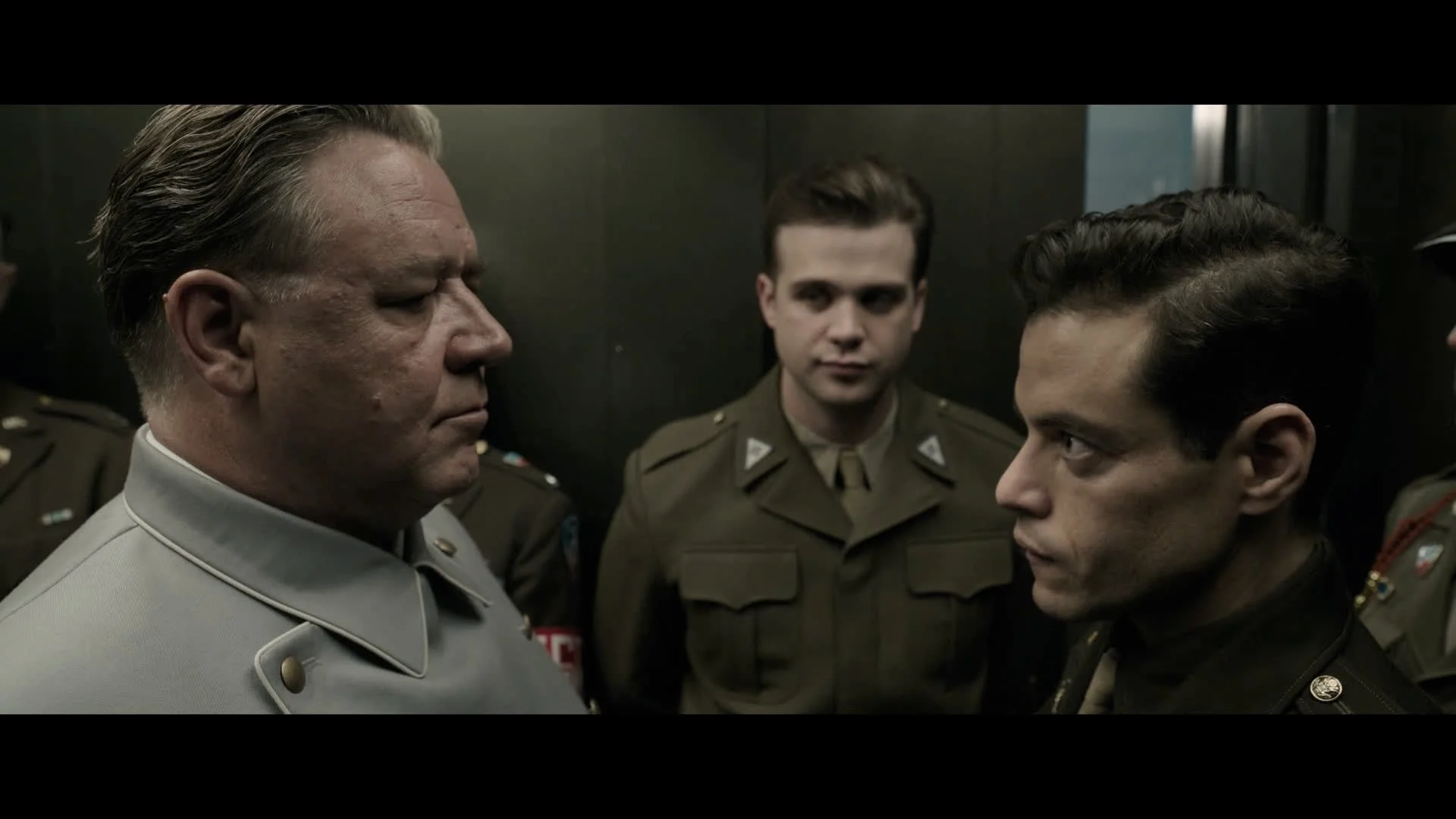
Nuremberg is as chilling as it is riveting. Structured through the lens of a psychiatrist assessing the mental state of Hermann Göring in the leadup to the Nuremberg trials shortly after the end of World War II. // Image: Sony Pictures Classics
Historical biopics are typically a hard genre to captivate me, given how bloated and familiar the genre has become. That should add further weight to the achievement of Nuremberg that, despite its genre and premise, managed to become one of my favorite movies of the year. A lot of the reason for the film’s excellence comes down to its focused objective. For a historical moment as dense and tragic as the Nuremberg trials that followed the end of World War II, Nuremberg manages to tell a focused story that primarily focuses on a relatively small number of characters.
This choice helps the film have a refined structure that finds a balance between being a psychological thriller that investigates the warped yet charismatic personality of Hermann Göring (Russell Crowe) and a legal drama that serves as many characters’ first glimpses at Holocaust footage. The movie masterfully balances the heaviness of its subject with the intrigue posited by its characters flaws and nuances that make for great scenes and conflict. For a film that, conceptually, could have been very messy and bloated, Nuremberg is as strong of a biopic as it is because of its dedication to a finite number of characters - a decision that works in the film’s favor to deliver a tale of tragedy that leads into justice. Strong performances from Russell Crowe and Rami Malek particularly help elevate Nuremberg into being one of the year’s best.
8. Twinless
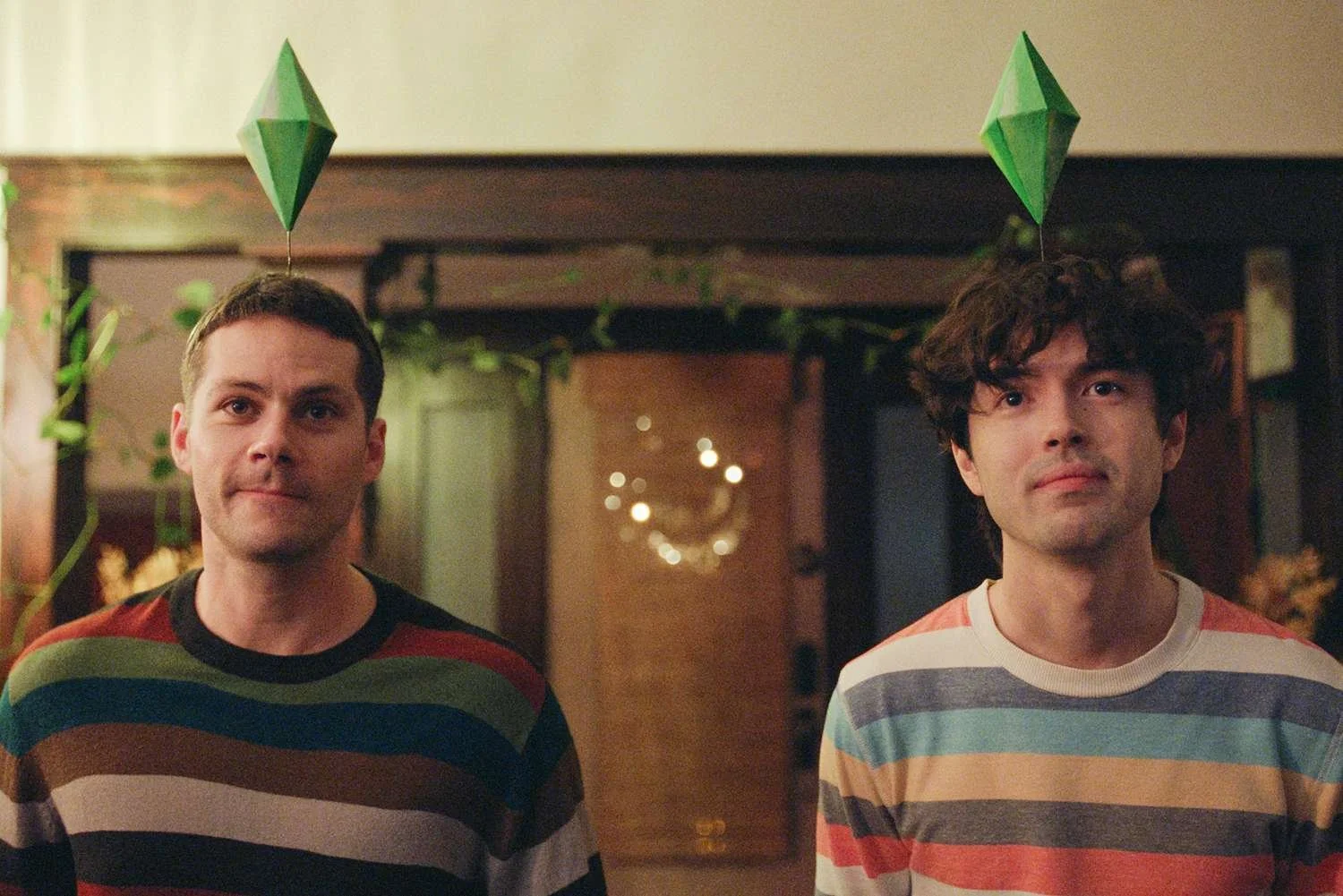
Twinless is excellent in the way it deceives its audience through perspective. The friendship between Dennis and Rocky has somber origins that ultimate twist this comedy into something darker and unsuspectingly thoughtful. // Image: Lionsgate
There is a dialogue oddity that’s repeated throughout Twinless where characters Dennis (James Sweeney) and Rocky (Dylan O’Brien) say opposing things at the same time, illustrating their disconnect in different scenarios. For the majority of the film, this is done in a comedic context, putting the two characters in situations where they need to improvise and lie about something in the moment and end up saying two completely different things the immediately contradict one another. This quirk in the film’s writing appears in various contexts throughout the film until its conclusion, where the two characters finally say something in unison and finally are in alignment after being on different pages throughout the entire film.
This small detail is single-handedly what transforms Twinless into being one of my favorite films of the year. While initially posited as a comedy where two twins that have lost their siblings become friends with each other, Twinless slowly unravels into being something far more tragic and thought-provoking than its initial premise suggests. While Twinless is doubtlessly a funny movie thanks to quirky comedic style of writer and director James Sweeney, this film is also one that’s unafraid to play with perspective as a way of altering the way we look at certain characters. While protagonist Dennis appears to be a certain kind of character that we’ve seen in queer comedies thousands of times before, the intelligent writing on display reconstructs the character into a flawed, perhaps unforgivable person that feeds off of the validation and attention of others.
Twinless isn’t afraid to morph into something that combats the notions you have towards it - and that energy of rebelling against pre-conceived notions also extends to its characters and conflicts. Twinless is yet another film that I’m sad to see didn’t get a ton of attention throughout the year, but its manipulation of the audience is a commendable subversion of what’s typically expected for a film of this type. This is one worth circling back to.
7. Sentimental Value

Sentimental Value is perhaps the most emotionally resonant movie of the year with regard to its primary emotion it wishes to analyze: fulfillment. Protagonist Nora’s entire identity is intrinsically linked to her complicated relationship with her father. This leads to compelling and relatable drama that sticks with the viewer. // Image: Neon
Part of me is sad that I have to put Sentimental Value at this spot in the list. For context, The Worst Person in the World, Joachim Trier’s previous film, is one of my favorite movies of all time. The microsecond I heard of Sentimental Value, I immediately knew that it was a film that I had to see thanks to my adoration of Trier’s previous work. While the film didn’t quite meet my expectations, Sentimental Value salvages itself by being an ostensibly interesting movie to talk about.
What happens when we don’t get the closure to major parts of our lives? Can we really expect people to reenter our lives despite harms they’ve done to us in the past? And is it possible for every relationship to be mended? If so, what does that process exactly look like? Sentimental Value asks these questions and more, and that’s a large part as to what makes the film endlessly fascinating. Beyond that, Sentimental Value is a movie primarily interested in exploring identity, fulfillment, and how emotional closure are tied together. Nora (Renate Reinsve) is an actor who has tried to build a life independent from her absent father (Stellan Skarsgård), a notable film director. But is Nora’s vocation as an actress a remnant of influence from her auteur father? Even if she claims to have mostly cut off her father from her life, there’s a part of Nora that carries on her traumas as part of her identity in everything that she does.
In the face of all of that, Nora does end up reuniting with her father, who seeks to make a film starring Nora. The movie Nora’s father seeks to create is clearly a spiritual retelling of their family’s own history and story, written and designed as a type of therapeutic release. This creates palpable conflict between Nora and her father. Their situation isn’t clear cut one way or another - like the movie itself, Nora and her father’s relationship is decisively complicated and layered, making for a film that filled with characters that hide parts of their identity until critical moments in the plot. This leads to a dramatically riveting story where it becomes cathartic when we finally get to see characters reveal their true feelings and thoughts.
Beyond that, Sentimental Value is a movie that is concerned with investigating fulfillment. Unlike most films that discuss similar subject matter, Sentimental Value is willing to grapple with the fact that we almost never get the emotional closure that we feel would help us close the book on past traumas and hardships. Like life itself, Sentimental Value illustrates how traumas and hardships simply carry on and command how we live our lives only insofar as we allow them to. This approach is as insightful as it is difficult to respectfully pull off, and yet Sentimental Value does just that. I walked away from Sentimental Value deeply admiring its realistic, bold approach to how we seldom get the emotional release that we wish we could one day see in our lives. Sentimental Value is a beautifully emotional adventure that everyone deserves to see.
6. One Battle After Another
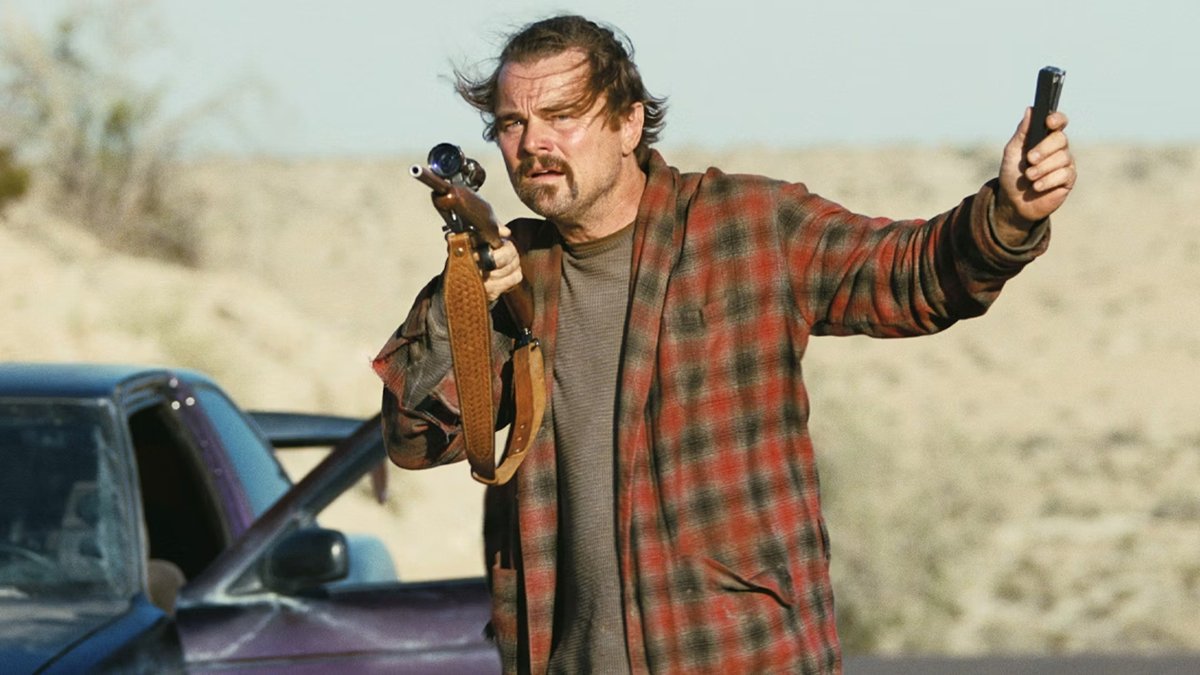
In what feels like an absolute passion project, One Battle After Another is a standoff between extremes. From its wildly different cast of characters to the eclectic pacing, it’s hard to not classify One Battle After Another as a modern classic. // Image: Warner Bros. Pictures
Out of all the films discussed in this list, One Battle After Another is the movie I expect to see win the most amount of awards overall. And honestly, it’s hard to argue that it doesn’t deserve it. Out of the many films released this year with long runtimes, One Battle After Another easily flows the best and hardly feels like two-and-a-half hour gauntlet of action, thrills, sociopolitical drama, and tender character moments.
I mentioned before about how there a finite number of directors that are uniquely allowed to make whatever type of film they want. Paul Thomas Anderson is one such filmmaker, and it’s very clear that he’s one of these directors because, well…it’s hard to imagine any other filmmaker tackling an ambitious film like this. One Battle After Another has a lot going on within it. There are many characters, some of whom are absolutely detestable, there are many different set pieces, there are many different action moments that other filmmakers may have struggled to bring together in a cohesive film. What makes One Battle After Another so remarkable of an achievement is that it combines so many different elements so seamlessly and naturally. Despite featuring so much chaos and bombastic action, One Battle After Another never feels hard to follow, and I think a lot of that can be attributed to thoughtful direction and writing, along with fantastic performances that breathe life into the film’s diversely flawed cast of characters.
There is one particular chase sequence the occurs in the film’s third act that may be one of the most exciting scenes put to film in recent memory, but that scene is only as good as it is because there are nearly two hours of meaningful buildup that creates meaningful stakes that any audience member can’t help but care about. Beyond that, One Battle After Another tackles certain subject matter that I think is going to make the film inevitably have the legacy of being a biting snapshot of culture in the 2020s, particularly with regard to political extremism and polarization. It’s hard to not think of One Battle After Another as a modern classic because if feels like an event - one that isn’t tied to any franchise or shared universe of films. Cinematic events are more necessary than ever, and One Battle After Another is certainly an event worth taking a look at.
5. Sorry, Baby
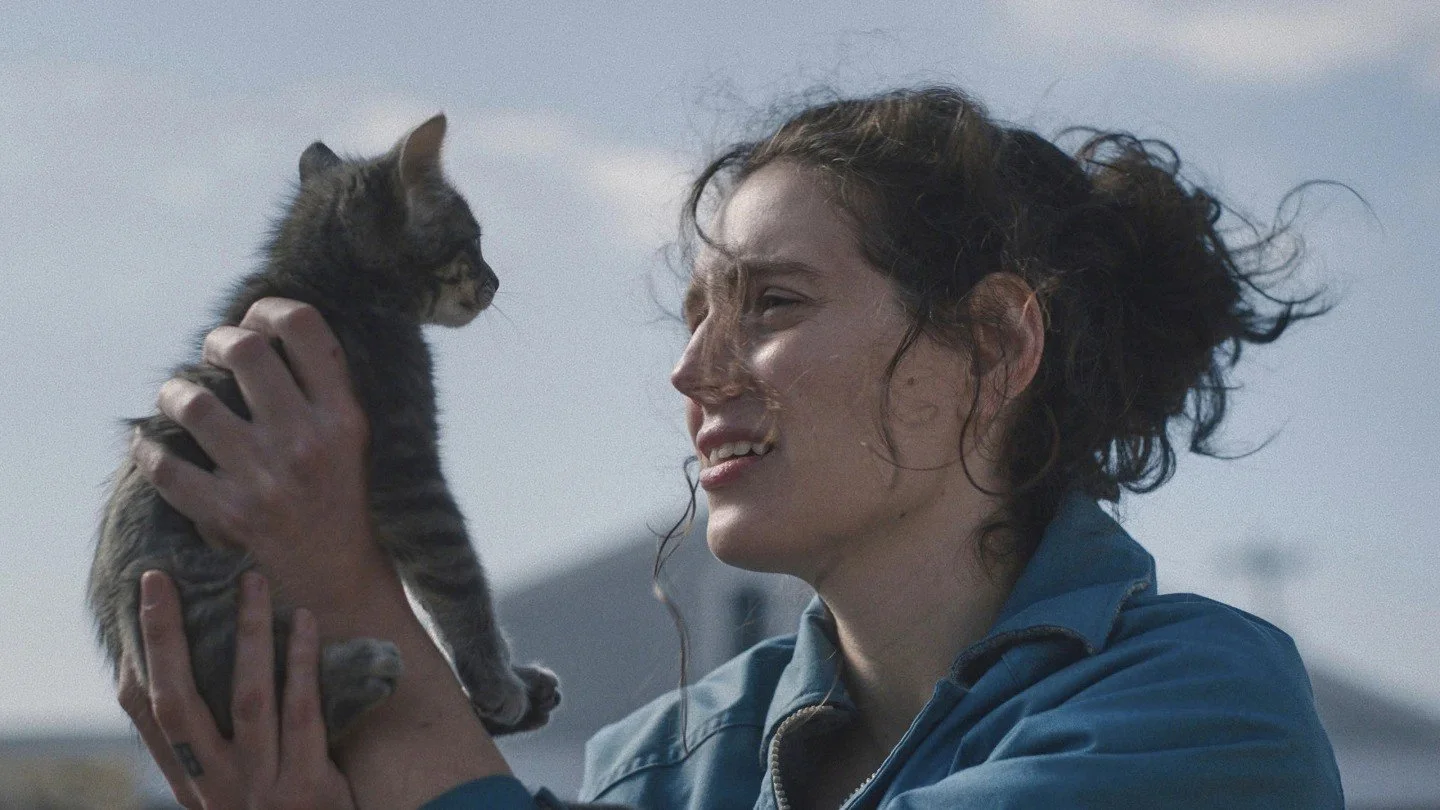
Sorry, Baby is sweet, tender, and heartbreaking. The fact that this film came from a debut director’s vanity project really showcases the necessity of paying attention to and funding the projects of emerging talent. // Image: A24
Like many people, I discovered Eva Victor a couple years ago through her comedic Twitter video sketches. Those videos showed off a quirky punchiness to her humor that felt distinct and memorable. Years later, Victor announced her directorial debut with Sorry, Baby - a movie that, while still featuring her distinct style of humor, appeared to be a film that used humor as a medium to communicate an emotional story. The story behind this movie was one that immediately caught my attention and turned it into one of my most anticipated films of 2025. Unlike most of my anticipated films of the year, Sorry, Baby greatly surpassed my expectations and became one of the most essential watches of the year for me.
If Sorry, Baby is about anything, it’s emotional numbness - the very process of feeling like you have no feelings left to feel after awful things happen to and around you. Some may construe this phenomenon as depression - which numbness can certainly be a symptom of -, but Sorry, Baby is primarily interested in exploring this particular sensation and how it impacts someone’s life. Agnes (Eva Victor) is a phenomenal realization of a character that has been assaulted because of how she reacts to the experience. Agnes has moments of somber quietude just as often as she has moments of clever wit as a means of coping with the emotional trauma that she now has to carry with her. To say this depiction of a depressed, emotionally numb, and suicidal woman is handled with the respect and grace it deserves is an understatement - Victor realizes this character and subject matter so beautifully that it feels effortless.
The most emotionally mature aspect of Sorry, Baby is that it doesn’t “fix” any of the character’s issues or conflicts in a manner we’d immediately like to see. Agnes’ assaulter effectively disappears and never sees the consequences of his actions. Agnes’ friend Lydie tries to support her, but acknowledges that Agnes’ healing and path forward need to be found by herself. Sorry, Baby understands and conveys what every person needs to know about hardship and trauma: it never fully goes away. Likes Agnes says to a newborn at the film’s conclusion, horrible things happen to people. The world is full of tragic events that happen to undeserving people and there’s no easy solution that will ever rid the world of that. But all we can do is try to navigate the world and move forward as best we can.
Sorry, Baby is emotionally raw in the best way possible. Any person that has ever experienced depression or trauma will immediately click with the way Eva Victor tells this story.
4. Hamnet
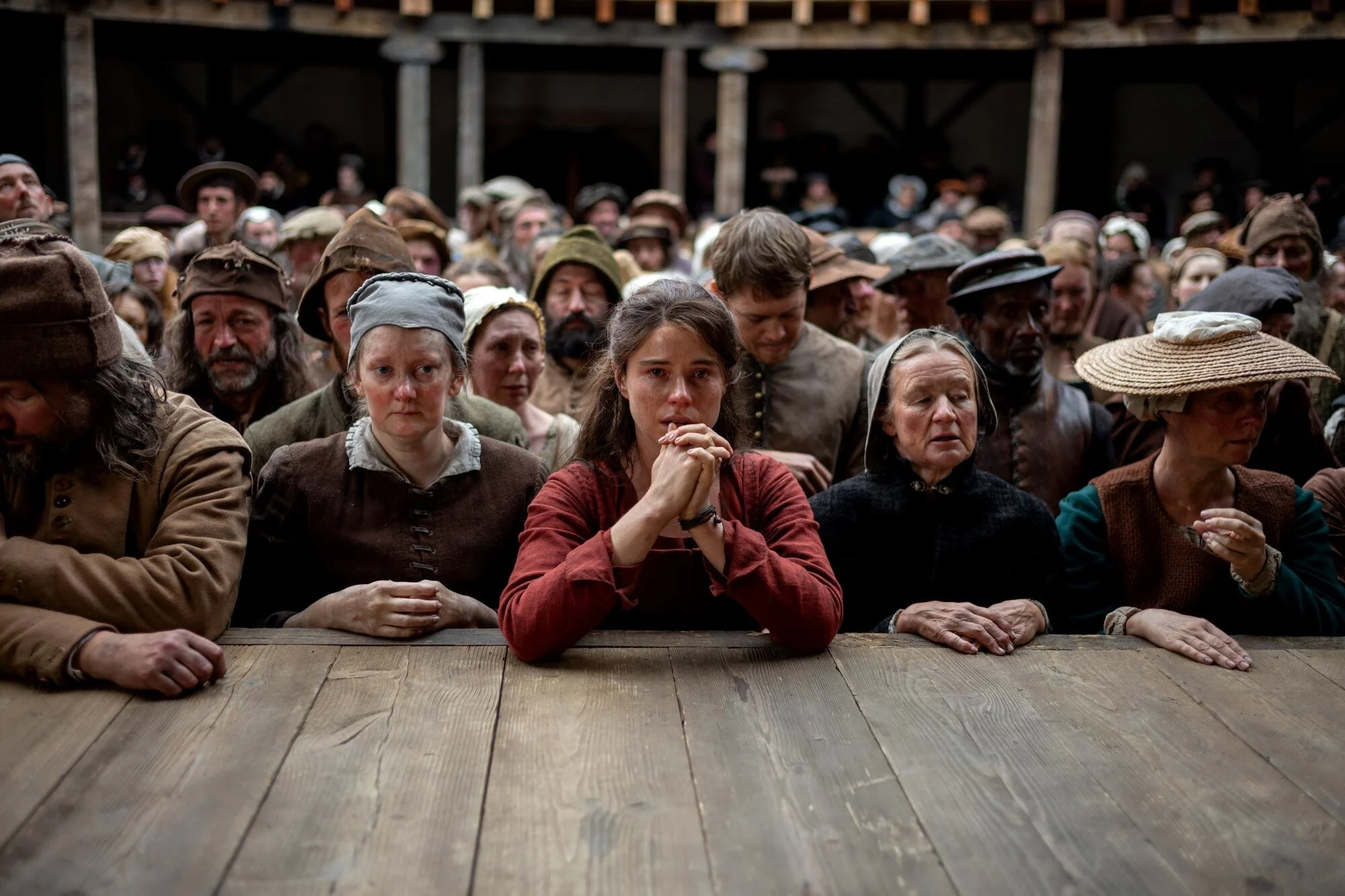
Hamnet is as sad as it is cathartic. This fictionalized interpretation of William Shakespeare’s process of writing Hamlet crafts a beautiful story of love and grief in a way that honors the humanity of the departed and survivors. // Image: Focus Features
Chloé Zhao clearly excels in productions that are concerned with telling smaller, more intimate stories - as was proven by her work in Nomadland. Zhao finally returns to the space of intimate settings and stories with Hamnet after her out-of-place assignment on Eternals that didn’t (and couldn’t) take advantage of her unique strengths as a director. Hamnet is refreshing because it’s a quiet observation of tragedy and the grieving process. Much of the film is focused on the partially fictionalized relationship between William Shakespeare and Anne Hathaway and their troubled marriage and family life that often say Shakespeare spend much time and distance away from his family. This alone creates a divide of hardship across this family, but the emotional core of Hamnet comes into play when analyzing the relationship that William and Anne have with their children both before and after the tragic passing of their 11-year-old son, Hamnet.
This loss creates a rift within the William and Anne’s relationship and family, creating a miserable if believable depiction of a shattered family. William copes with this loss by creating a play we know as Hamlet, resulting in a brilliant third act where the audience sees how Shakespeare’s play honors the life and legacy of the character we get to spend time with earlier in the film prior to his harrowing death.
In addition to the film’s finely crafted screenplay and excellent cinematography amidst its intimate, cozy setting, Hamnet achieves greatness in large part due to its excellent performances taking center stage. Paul Mescal as William Shakespeare brilliantly showcases the pain and regret of a father wishing that he got to spend more time with his seen prior to his death. More crucially and substantially, though, is Jessie Buckley’s jaw-dropping performance as Anne, who is clearly wrought with pain and loneliness throughout much of the film. Even before her son’s death, Anne is a woman frequently confronted by hatred and discrimination from others. She very rarely ever feels seen or capable of trusting others because of how she’s treated in the world. This even continues during her marriage and life as a mother, when she has to go through many hardships in her life, including childbirth, entirely on her own. There’s an infectious sorrow inherent to Jessie Buckley’s performance that emotionally grounds the film. This sets up the stage for a phenomenal final act where we see this sorrow and mourning finally become addressed through the creation of Hamlet.
Hamnet is a deeply bittersweet film that tackles the concepts of grief, loss, and how to productive convert tragedy into stories that can inform and inspire the hearts of generations. Hamnet is a beautiful reminder of the power of storytelling, especially in the wake of difficult emotions. Stories allow us to honor those that have come before while inspiring those who will come in the future.
3. Wake Up Dead Man: A Knives Out Mystery
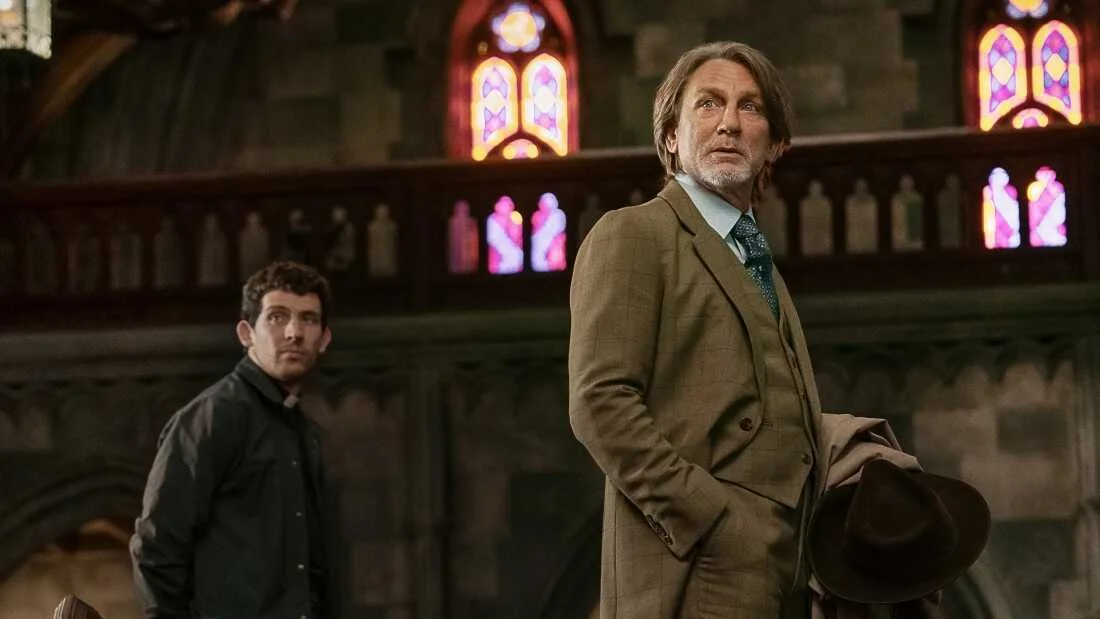
The third film in the Knives Out franchise, Wake Up Dead Man constructs a mystery that’s uniquely dark for the series of detective whodunnit films. Through that darkness, Wake Up Dead Man crafts a compelling mystery that’s as entertaining as it is unpredictable. // Image: Netflix
Knives Out has officially become a franchise that I’m 100% okay with going on forever. Since the first film’s release in 2019, I’ve only found these movies to get better and more entrancing with each installment. I think a large puzzle piece of that is the fact that these films are class-acts in a genre that effectively doesn’t exist anymore. Through crafting adventures towards the truth amidst impossible crimes and mysteries, the Knives Out films make for unforgettable movie-watching experiences that are apt reminders of the special power of cinema.
Wake Up Dead Man, the third Knives Out film, may very well be the best film yet, largely in part because of the unique structure and pacing of the film that sets it apart from the previous whodunnit romps. We don’t even get to see the franchise’s signature detective until well into the film’s second act, which communicates a confidence in the power of this film’s unique setting and collection of characters. That confidence is well-placed, as Wake Up Dead Man features various characters that are as multilayered as they are interesting to watch. Moreover, the ways that characters interact with each other constantly raise suspicions and help create compelling but contradictory rationales for the primary mystery in this film - which just opens the door for the viewer to have a ton of fun while watching Wake Up Dead Man.
The compelling and nonlinear direction of the mystery may be the main star of the show, but it can’t be understated that this film’s willingness to being different from what’s come before is a mark to what makes this film work as well as it does. Being the third installment in a collection of mystery films, it would be understandable if director Rian Johnson were to begin resting on his laurels and letting this film be iterative of the formula established in previous Knives Out films. But what makes this franchise and this director so special is that Rian Johnson refuses to do that. Each Knives Out film has opted to find ways to innovate and circumvent audience expectations to create mysteries that never let go of the audience’s intrigue and attention.
It’s for that reason that I’m comfortable trusting Rian Johnson to keep working on this franchise - he clearly has no interest in letting his directorial style with these films go stale or safe. Wake Up Dead Man is a great film because it’s unafraid to go to dark places and shock the audience in many instances - all while delivering smart writing, great performances, and stylistic structure. Wake Up Dead Man and the Knives Out franchises represents exactly what all franchises should strive to be: innovative, bold, and always willing to push the envelope of what audiences can ever expect to see.
2. Rental Family

Brendan Fraser’s triumphant return to being a leading man hits a crescendo with the excellent Rental Family, a beautiful exploration of the value of human connection, even when it comes from an inauthentic source. // Image: Searchlight Pictures
“Sometimes, we need someone to look us in the eye and remind us that we exist.” This is what Aiko (Mari Yamamoto) tells Phillip (Brendan Fraser) to justify why Rental Family’s namesake business does what they do. Indeed, the premise of Rental Family as a business is a difficult one to grasp from a Western perspective. People pay a company to perform certain social tasks to make certain processes more emotionally sustainable and manageable. The primary conflict in Rental Family derives from Philip, a struggling American actor in Tokyo, joining Rental Family and acting as a foreign father for a mixed heritage girl interviewing to get into a prestigious school. The concept is perplexing but leads to instances of emotionally endearing situations where connections inauthentically built on a lie begin blossoming into something more genuine and meaningful.
That genuine energy is one that carries the film towards greatness, which also makes Brendan Fraser feel like a fantastic fit for the film’s goals. Fraser feels like such a genuine presence among the other characters in the film, despite acting under a pretense of being someone that he isn’t for the sake of achieving his clients’ intended goal. The film grapples with the impure intentions of people that craft fake, inauthentic connections for personal gain with the sheer humanity that comes from being connected with people that bring new perspective into our lives. Aside from the next film I’ll discuss, Rental Family is the movie that made me smile and feel the most while watching it. There’s an optimistic brightness purveying underneath Rental Family’s depictions of selfish dishonesty that is impossible to not admire.
Rental Family has informed how I think about characters but faces on around each other, whether for a purpose or unconsciously. The film’s smart and diverse ways in which it highlights character relationships, however authentic they may be, brilliantly showcase the different, meaningful options that writers and directors have with crafting scenes and conversations. I’ve thought about Rental Family a lot because it reminds me that I exist, because it reminds me that there’s so much to think about within a story and its characters. My deep admiration for this movie makes it an easy recommendation for anyone, especially for those that pursue any kind of creative expression.
Little Amélie or the Character of Rain

Little Amélie or the Character of Rain is visually and narratively spectacular. No other film this year made me reflect on the ways in which characters’ ideas are represented. Much of Amélie’s excellence comes from allowing visuals to take the spotlight in order to highlight how a character is feeling. // Image: GKIDS
For the second year in a row, my contrarian ass is picking an obscure, foreign animated film as my favorite movie of the year - and I have zero regrets. Like I’ve mentioned multiple times throughout the life of this blog, the greatest pieces of media are the ones that stick with us for days, weeks, months, and years after we’ve engaged with them. No other film has made me think about it for as long and as commandingly as Little Amélie or the Character of Rain. Beyond just being an incredible achievement of animated storytelling, Little Amélie has stayed with me because of its imaginative boldness that demands the child-like wonder that all of us have buried somewhere in our soul.
That’s to say nothing of the film’s creative premise. Amélie is introduced as the incarnation of God, possessing incredible powers despite being born in a vegetative state. Despite her condition, Amélie is still cared for by her family until she finally wakes up from her vegetative state and begins experiencing life as a person. What follows is a journey of a divine being becoming infatuated with the ways of human life. Amélie experiences joy, pain, loss, and connection in a relatively short window of time - and this all greatly informs the way that she looks at the world and her place in it. Despite believing herself to be the incarnation of God, Amélie becomes more interested in living her mortal life with the people around her that she loves. Put simply, this is a story that celebrates the unique triumphs and struggles of being human - and I find that to be an utterly remarkable concept for an animated, family-friendly film to explore.
Little Amélie also employs a gorgeously vivid artstyle that is impossible to not get lost in. Throughout much of the film, Amélie uses her supernatural powers to have the world conform to her whims, opening the door for creative, awe-inspiring visuals. Moreover, the animation’s leaning on watercolors creates a harsh contrast between the warmness of Amélie’s human existence and the hollow frigidity of her divine existence. Little Amélie stuns through its visuals just as much as it impresses with its shockingly insightful story that’s unafraid to discuss heavy subject matter.
Even in the face of discussions of grief and meaning behind one’s own existence, Little Amélie brandishes itself in an escapable sense of whimsy that communicates the unique strengths of animation. I can’t imagine a non-animated film telling Little Amélie’s story with this level of narrative cohesion and visual excellence - and such a triumph is a reminder that animation deserves respect and recognition for being uniquely equipped to tell human-centered stories in spectacular, unparalleled ways.
You can read more of my thoughts on Little Amélie or the Character of Rain here.
2025 admittedly had stretches of weeks where I didn’t feel super impressed with what I was seeing. This year had the unfortunate fate of likely being the consequence of the SAG-AFTRA strikes from a few years ago that halted production on a lot of projects. With that said, a lot of phenomenal films still came into light - especially international and independent movies. More than anything, I retroactively look at 2025 as a reminder that the film industry is still capable of productive evolution. From original ideas seeing great success to first-time directors knocking it out of the park, there’s a lot to remain hopeful for in this medium as we look towards the future.
Here’s to 2026 being a continuation of such a hopeful pivot for the future of film. Let’s have a great year at the movies!
Thank you very much for reading! What were some of your favorite movies of 2025? Are there any movies you think I should have included? As always, join the conversation and let me know what you think in the comments or on Bluesky @DerekExMachina.com.