Shin Megami Tensei V: Vengeance Review: Netherworldly Bliss with a Story that Still Underwhelms
It’s easy to be cynical that 2024’s Shin Megami Tensei V: Vengeance is yet another instance of Atlus rereleasing a game with new content, but I can’t help but look back on Vengeance as being one of the most polished and consistently fun games that the JRPG developer has ever produced. // Image: Atlus
Despite offering a total of six different endings, the scene that plays out during Shin Megami Tensei V: Vengeance’s credits is always the same: the young man that has become the Nahobino walks toward the Empyrean to claim his godhood and decide the fate of the world. This stroll towards the very source of all the game’s conflict is a contrast to everything the player has seen before. Throughout their journey, the Nahobino has conquered terrifying demons, gods, and angels in a mad scramble that takes place in the Netherworld after Lucifer kills the God of Law (who is referred to as Yahweh or YHVH in previous SMT titles). In a godless world, there has been endless bloodshed and countless battles of control over territory. The Nahobino has watched demons and humans alike fall because of their own greed and lust for power. And yet, as the Nahobino walks toward the Empyrean after defeating the final boss of whichever story route the player has gone down, there’s an unmistakable tranquility amidst the chaos; a finality to the oppressive atmosphere that has defined the preceding journey.
Shin Megami Tensei V: Vengeance’s credits sequence is bizarrely emblematic of the very experience it caps off. The credits come abruptly after a final boss is defeated - one which is determined by what alignment the player has chosen. Unlike other entries, such as Shin Megami Tensei IV or Strange Journey, though, the decision for what alignment the player takes is largely determined by only a few decisions made at the very beginning and very end of the game. Therefore, most of the decisions that the player makes throughout the game feel hollow and meaningless. Watching those credits roll made me reflect on how little I felt I was in control in determining my character’s alignment and philosophy over how they would utilize their newfound godhood.
Regardless of what ending the player sees, SMT V: Vengeance never offers a dramatic deep dive into the consequences of the player’s alignment and choices. The endings are different but hardly leave a resounding impact with regard to philosophy. For a game that is centered so much on differing philosophies over how this new world should take form, the player’s reward for completing the game is a remarkably narrow peek at what the new world they’ve created looks like. This is where SMT V: Vengeance’s credits sequence comes into play: it’s a tranquil walk after a barrage of chaos, unrelenting suffering, and needless death and destruction. The Nahobino quietly walks towards the Empyrean as developer names scroll upwards across the screen. It’s quiet, contemplative, a little jarring, and perfectly encapsulates the ethos of Shin Megami Tensei V: Vengeance.
More so than any other Shin Megami Tensei title, SMT V: Vengeance is a game far more interested in the journey it offers instead of any particular destination. Many choice-driven RPGs put a lot of effort into making the consequences of the player’s decisions made throughout the game be directly seen and felt at their conclusion. The narrative destination is an essential payoff for the decisions that the player makes throughout their journey, but Shin Megami Tensei has historically opted to take a different path. Narrative destinations are certainly offered with variety and finality in Shin Megami Tensei, but they rarely make you look back on your own choices; making you question if your decisions and actions throughout the game were right. Rather, Shin Megami Tensei aims to be an RPG franchise that is so interested in the journey that it is prioritized above all else, even when it may be to the detriment of other aspects of the games therein.
More than anything, Shin Megami Tensei has always prioritized atmosphere and gameplay over all else. Unlike most of its JRPG peers, Shin Megami Tensei doesn’t depict fantastical settings and cheery characters. SMT’s atmosphere is regularly one of bleakness, hopelessness, and consequences of humanity’s hubris going one step too far. The original Shin Megami Tensei grapples with nuclear fallout wiping out most of the world’s population, while Nocturne’s Conception event sees the world contort in on itself and cease to exist. Shin Megami Tensei is primarily interested in exploring what happens after these apocalyptic events and the conflicts that follow.
It is in this context that the player makes decisions about how the world heals and moves forward. Can humanity be trusted to pick up the pieces by themselves and rebuild the world? Or will the world be put in better trust by demons to build a world of only strong people? Perhaps the angels should destroy the world and everyone left in it in order to start from scratch. What’s the best path to take? Is any path from this point truly good? Clear answers are rarely ever given in Shin Megami Tensei, and that plays a large part as to why the series hits so different from just about anything else in the RPG market.
Beyond its ambiguous and atmospheric approach to storytelling, Shin Megami Tensei also stands apart from the JRPG crowd by being part of the small monster-collecting subgenre of JRPGs. SMT stands out from Pokémon and other monster-collecting RPGs through its unique emphasis on demon fusion to create more powerful monsters to fight alongside, as well as demons’ unique characteristics that lead to complex and deep buildcrafting. From alignment to weaknesses and resistances to races to the Potential system first introduced in SMT IV: Apocalypse, there’s a unique flavor to Shin Megami Tensei’s approach to RPG gameplay that has kept the series (and its plethora of spinoff franchises) alive and thriving for nearly forty years.
Persona 3 FES was my first Atlus RPG and effectively served as my gateway drug into Shin Megami Tensei. In 2013, following the announcement of the mysterious Fire Emblem and Shin Megami Tensei crossover that would eventually morph into 2015’s Tokyo Mirage Sessions #FE, I would find myself quickly becoming a fan of both franchises. Fire Emblem: Awakening released in early 2013 and quickly converted me into a huge Fire Emblem fan. To promote the upcoming crossover game, Nintendo of America ran a special promotion that rewarded $30 of Nintendo eShop credit to players that registered both Fire Emblem: Awakening and Shin Megami Tensei IV to their Club Nintendo accounts (RIP Club Nintendo, by the way).
This convinced me to pick up Shin Megami Tensei IV when it released in North America in summer of 2013. I quickly fell in love with the game. The dark setting, the grungy atmosphere, the stellar soundtrack, and the addictive gameplay all enraptured me to the point where I happily replayed the game to make different builds and see every ending the game had to offer. Shin Megami Tensei IV became my all-time favorite Nintendo 3DS game and one of my personal favorite games of all time. As such, I became a hardcore Shin Megami Tensei fan and eagerly awaited what would come next.
Unfortunately, that wait would be a long and somewhat strange one.
In the years following Shin Megami Tensei IV’s release, Atlus would release the alternate-ending-turned-sequel Shin Megami Tensei IV: Apocalypse, which expanded upon the gameplay and world of SMT IV, but injected a lot more character banter evocative of what one would expect from Persona. The game itself featured gameplay sometimes surpassing SMT IV, but something special was lost in translation when putting a more conventional JRPG party composed of oddball teenagers in the grungy, hopeless world of Shin Megami Tensei IV. Apocalypse was a good game, but it didn’t quite deliver on the unique style and atmosphere that’s expected for a Shin Megami Tensei release.
The other SMT title that would arrive in North America in 2016 was Tokyo Mirage Session #FE. Despite being a crossover game, Mirage Sessions absolutely skews more heavily towards being a Shin Megami Tensei title with regard to its combat and approach to dungeon design. The game opted to tell a story about teenagers pursuing careers in the Japanese entertainment industry and thus had a radically different tone from anything seen in Shin Megami Tensei or its spinoff franchises. The game was aesthetically nothing like SMT and, gameplay-wise, had little to do with Fire Emblem. This caused a lot of people to get turned off by the game - which is a shame, because Tokyo Mirage Sessions #FE, when judged for what it is on its own merits, is a great JRPG. It just didn’t exactly give the fanservice that fans of either franchise were expecting to see in a crossover game. That said, Tokyo Mirage Session #FE would end up being more of a preview of SMT’s future than I expected at the time. However, it would take time to see that manifest.
Throughout the later 2010s, I had become a full-on SMT addict. I had played through most of the PS2-era titles, including SMT III: Nocturne and Digital Devil Saga. I had played the Redux rerelease of Shin Megami Tensei: Strange Journey that became one of my favorites in the series. I even played through the Super Famicom SMT games via fan translations. I had become fully invested in the series since SMT IV introduced me to this unique and wide-reaching series. But I was still waiting for a definitive future for this series - and in early 2017, I would finally get a peek as to what that future would be.
January 2017 saw the now-legendary Nintendo Switch Presentation - a special press conference that saw Nintendo formally unveil the Nintendo Switch just two months before its launch. This presentation saw new trailers, most of which composed of many of the Switch’s first year of heavy hitters, such as The Legend of Zelda: Breath of the Wild, Super Mario Odyssey, Xenoblade Chronicles 2, Fire Emblem Warriors, Splatoon 2, and more. Yet, there were a few games that offered glimpses at what the future of the system’s library of exclusives would be. Games like Octopath Traveler and Travis Strikes Again: No More Heroes ensured that the system was going to get exclusives - third party exclusives, no less - well into the system’s life. It’s in this context, that a new game by Atlus was revealed. Indeed, this trailer revealed a new Shin Megami Tensei title, though it’s worth noting that it was still unclear during this time whether this new game was the next numbered game in the series. All we learned from the trailer was that it was going to be a Switch exclusive and that it was going to be built in Unreal Engine - making it the first game that Atlus would ever make with the popular engine.
It wouldn’t be until later in 2017, as part of Shin Megami Tensei’s 25th anniversary, that this new title was confirmed to be Shin Megami Tensei V. It was clear from this brief view of the game that SMT V was a massive visual upgrade from Shin Megami Tensei IV and Apocalypse - to the point where all the game’s demons were rendered in 3D like they were in the PS2-era of SMT titles. But now, these demons were rendered with greater detail and more personality. Most vitally, though, the game showed a destroyed Tokyo and featured music and visuals that evoked the unmistakably grungy and post-apocalyptic atmosphere that only Shin Megami Tensei can truly provide. We are so back, I thought - but I was getting ahead of myself. I couldn’t truly assess if the game would reach the peaks of atmosphere and gameplay cohesion seen in Shin Megami Tensei IV until I had this new title in my hands. And it would unfortunately be a long time until that happened.
Shin Megami Tensei V effectively went dark for a few years, making fans worry that the game was in development hell. In truth, the undertaking of developing a game in Unreal Engine proved to be more difficult than Atlus expected. A lot of SMT V’s development, it would be later learned, was spent getting acclimated to Unreal Engine as well as getting the hundreds of demons fully rendered and animated - and for all of this to run well on a Nintendo Switch. It was no doubt challenging, but it still led to a period of radio silence.
That was, until a Nintendo Direct in July of 2020 revealed a remaster for fan-favorite entry, Shin Megami Tensei III: Nocturne. After this remaster’s announcement was a new trailer and confirmation that Shin Megami Tensei V still existed and was on track for an international release in 2021. The Nocturne remaster was effectively an appetizer, with the brand new title being the main course for fans starved for a new entry in a series whose last main installment (if we’re not counting Tokyo Mirage Sessions and Apocalypse) had released over seven years earlier at this point.
I, like most Shin Megami Tensei fans, was starved for this new game and it quickly became my most anticipated game for 2021. It took a lot of waiting, but by November 2021, Shin Megami Tensei V was in my hands. Most crucially, Shin Megami Tensei V was also released internationally at the same time, which should be remembered as a landmark moment for Atlus. Practically every release from Atlus had a staggered international release. As recently as Persona 5 Royal, it was normal for Atlus to take a few months to over a year to release a game in other territories. This is to say nothing of the fact that most of Atlus’ output in the ‘80s and ‘90s included titles that never got localized, including many early Shin Megami Tensei games. Shipping a game simultaneously in all territories has thankfully become a lot more standardized throughout the games industry - but Shin Megami Tensei V deserves to be remembered as the turning point for Atlus prioritizing releasing their games for everyone all at the same time.
I was mesmerized by Shin Megami Tensei V. The game lived up to the promise of being a technological leap over Shin Megami Tensei IV and Atlus’ other output on the Nintendo 3DS. In many ways, the game’s visual fidelity and aesthetic pushed the Nintendo Switch to its limits and easily surpassed what Atlus achieved with Persona 5 in terms of visual ambition. Shin Megami Tensei V delivered for me by offering the deep, rewarding combat that made me fall in love with the series in the first place. The atmosphere was there, the music was there, the demon fusion was there, and the series-standard degree of challenge was there as well. The pieces were all there to make Shin Megami Tensei V an all-timer experience and a worthy follow-up to one of my favorite games of all time.
But I couldn’t but feel like there was something…off with SMT V.
The primary letdown of Shin Megami Tensei V, for me, was twofold. The first of the game’s issues was its underwhelming story. While never confirmed, SMT V reeks of having a story that’s been cut and rewritten multiple times. There are characters, such as Goko and Miyazu Atsuta, who have largely negligible roles in the plot yet are introduced as if they are major characters. In fact, many of the game’s characters lack any real development - which, mind you, SMT IV didn’t revel too much in either, but unlike that game, SMT V struggles to have characters leave much of an impact. No characters truly feel like they’re representing a completely different worldview to the protagonist.
The other primary issue for Shin Megami Tensei V was that of various features that made the game feel like a step back from SMT IV and Apocalypse. Shin Megami Tensei IV allowed the player to save anywhere, but in SMT V, we’re back to save points and it’s hard not to think of it as a step backward. While I adored the game’s commitment to having larger environments to roam through and explore, some areas and dungeons were a bit of a pain to navigate due to a lack of shortcuts and easy ways to move around the environment. A lot of small things got in the way that prevented SMT V from usurping its predecessor in my eyes.
That said, Shin Megami Tensei V is still a game I very much enjoyed despite some disappointments. The combat, exploration, and demon fusion are arguably at their very best in this installment. The game is far more ambitious than much of what Atlus has produced before, and therefore, SMT V offers a good view at how far Atlus has come over the last few console generations and decades. SMT V is a huge, expensive production that, despite some flaws, was worth the four-year-long wait.
Like many others, I thought that would be the end of this story until we got an eventual Shin Megami Tensei VI (a game we’re still waiting to hear a whisper of as of writing). However, Atlus revealed in yet another Nintendo Direct that Shin Megami Tensei V would be yet another recipient of Atlus’ signature rerelease treatment - one that injects substantially more content into an older release. Shin Megami Tensei V: Vengeance was the name of this new release, and it would offer tons of new story content, more demons to collect, and see the game release on other platforms, allowing for greater resolution and performance to let the game’s ambitious visuals shine even greater.
Tolerate them or despise them, Atlus has never relented in their strategy of releasing older games with new content. It happened with Persona 5 and its Royal rerelease, it happened with Catherine and its Full Body rerelease, it happened with Radiant Historia and its Perfect Chronology rerelease, and it has happened many, many more times than that. And it will likely continue to happen. At least, with Vengeance, the initial appeal of the game’s rerelease was that it would make Shin Megami Tensei V more accessible by virtue of being on more platforms. The game was going to look and run better on just about every other device it was releasing for - and that helped soften the blow of realizing that I was certainly going to buy Shin Megami Tensei V for a second time.
But another part of what softened that blow was that Vengeance appeared to be offering a severe amount of new content through its new Canon of Vengeance storyline. While players could play through the story of Shin Megami Tensei V’s original release via the Canon of Creation, the Canon of Vengeance option takes the players on a different storyline that diverges quite heavily from the original story seen in the 2021 game. This new scenario adds new characters, new bosses, new side quests, and a completely different take on how the game represents alignments in the narrative - complete with two brand-new endings. Canon of Vengeance offers such a vast volume of new content that it felt like the Vengeance rerelease was justified.
The most exciting prospect of the Vengeance rerelease, though, was that it offered the golden opportunity for Atlus to transform Shin Megami Tensei V into overtaking Shin Megami Tensei IV as my favorite game in the series. Vengeance provided the perfect opportunity for Atlus to add new quality-of-life features to improve the small issues I had with base SMT V. Additionally, the Canon of Vengeance seemed vast enough of an overhaul to the game’s story that it could also fix my issues with SMT V’s underwhelming story and make for a more involved, compelling, and philosophical story.
What makes Vengeance a frustrating rerelease to talk about is that it comes so close to doing just that. The new bosses, side quests, and characters are excellent. The quality-of-life additions make the game a breeze to play. The availability of the game on other platforms means that I can see this beautiful world that Atlus has created at high resolution and frame rates. Vengeance does a lot right…but it doesn’t exactly “fix” the greatest issue of Shin Megami Tensei V. Despite overhauling the game’s story, Canon of Vengeance doesn’t transform Shin Megami Tensei V’s story into being the series’ very best. There are still weird holes in this narrative. There are still issues here that could have and maybe should have been addressed with the rerelease that weren’t.
Shin Megami Tensei V: Vengeance is a fantastic game that I wish hit that elusive, legendary status that Shin Megami Tensei IV hit for me back in 2013. It gets impressively close, but it falls short thanks to some underwhelming decisions that hold the game back. Let’s talk about where Shin Megami Tensei V: Vengeance excels and how it still stands as one of the best monster-collecting RPGs on the market. But let’s also talk about where it comes short and how close the rerelease gets to being among Atlus’ very finest games of all time.
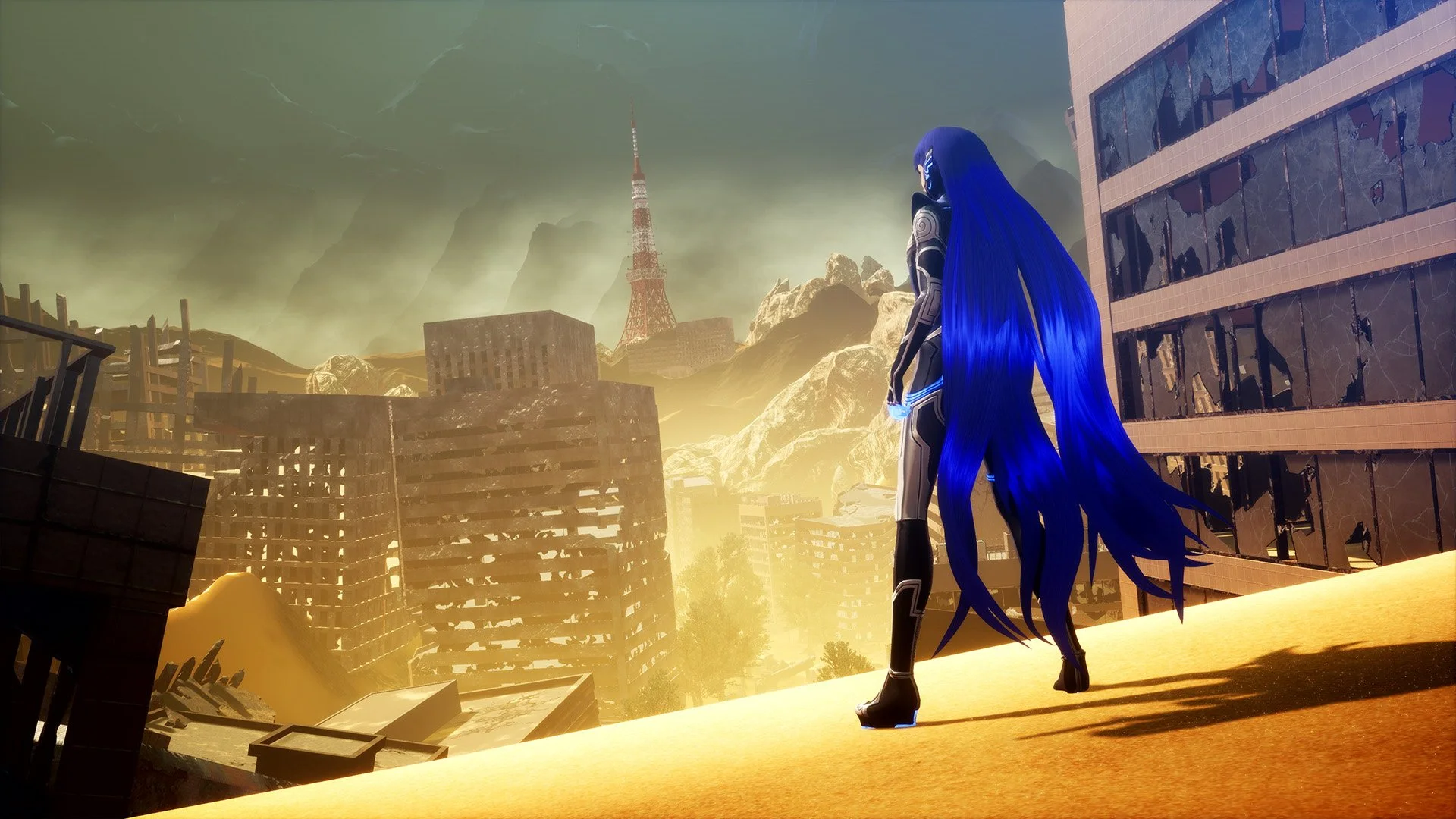
Shin Megami Tensei V: Vengeance sees the Nahobino roam the Netherworld - a destroyed version of Tokyo that is revealed to be the real world. The regular Tokyo that the protagonist has been living in is, in truth, an illusion that is fading away now that the God of Law is dead. The Nahobino journeys to claim God’s throne and reshape the world. // Image: Atlus
Shin Megami Tensei V: Vengeance is an admittedly awkward release, in the sense that it’s pitched as a definitive version of Shin Megami Tensei V that improves upon the original game’s weakest link: its story. However, the way in which Vengeance goes about improving upon SMT V’s story is unconventional to put it mildly. Adding new story content into rereleases isn’t a new concept for Atlus, but when they do so, they typically inject new plot elements intermittently throughout the narrative. Persona 5 Royal is what I would argue to be Atlus’ best instance of adding new narrative content interwoven throughout the entire base game’s narrative.
In Royal, there are the added characters of Kasumi and Maruki - both of which are introduced very quickly in Royal. Both of these characters are introduced as relatively minor characters during the section of Royal that covers the base Persona 5 story, but their significance in Royal gradually expands throughout the course of the game. Royal smartly integrates these new characters, along with other new bits of narrative content, subtly but meaningful throughout the game’s runtime in a way that makes Royal consistently add a bunch of meaningful story content that complements the already-great narrative of the base game. By the time that the player reaches Royal’s additional story content that takes place after where the base Persona 5 would have concluded, Royal’s subtle additions ultimately culminate with big narrative moments and payoffs that make it hard to see Royal as anything but a net gain to Persona 5’s overall narrative quality.
One would think that this would be the same approach that Atlus took with Vengeance. Most would expect, even upon the game’s announcement, that Canon of Vengeance would simply be the original game’s story but with more narrative elements thrown in.
Not so. Canon of Vengeance is effectively a rewrite of a major portion of the game, but the extent of Vengeance’s rewrite of SMT V’s story is still inherently limited by Shin Megami Tensei V’s pre-existing structure as a video game. Vengeance’s narrative changes are substantial enough to warrant additional playthroughs for those that have already played Shin Megami Tensei V, but they also don’t completely overhaul the game’s story to the extent that it feels like a version of SMT V’s story that reaches its potential.
When starting a playthrough in Shin Megami Tensei V: Vengeance, the player is given the choice to save a girl who is later revealed to be Yoko Hiromine. If the player does not save her, they will walk down the Canon of Creation path and experience the original story of Shin Megami Tensei V, as that story effectively takes place in a timeline where she doesn’t exist. If the player does save Hiromine, they walk down the Canon of Vengeance path, showing a timeline where Hiromine’s very existence alters the events that take place in the game’s narrative.
The way in which Hiromine’s presence in Vengeance’s narrative starts off subtly - not dissimilar to how Kasumi is introduced in Persona 5 Royal. However, it takes time for Hiromine’s presence in the game to ultimately make itself known. During the game’s opening in the Canon of Vengeance, the game’s events play out largely the same.
Living a quiet school life, we follow a protagonist that we can name as he’s advised by his school to walk home with a peer due to recent murders taking place in the area surrounding the school. Another murder takes place on his typical route to his dorm causes the protagonist to take a different way home - a route that ultimately takes him to the Netherworld, or Da’at, as it’s later dubbed as. As demons start surrounding the protagonist, a program named Aogami interjects and rescues the protagonist by fusing with him. The protagonist grows some cool-as-hell blue hair and is blessed with a glowing sword the emerges from his arm as he becomes the Nahobino. A fusion of a human and proto-fiend, the Nahobino gains the ability to fight against demons and navigate the strange but harrowingly familiar Netherworld.
There are other characters introduced during Shin Megami Tensei V’s intro sequence, but unlike its predecessor, the game fails to leave any significant impact with these characters. Shin Megami Tensei IV’s implementation of character alignment worked as well as it did because it surrounded the player with characters that represented different alignments and views on how the world ought to be. Jonathan, Walter, and Isabeau aren’t deep, complex characters - but they don’t need to be. They have distinct personalities that represent the different sides of society in the Eastern Kingdom of Mikado. When their worldviews get shattered when they discover the existence of Tokyo, each of these three characters engage with the world around them differently. This gives rise to their different philosophies that ultimately represent the different alignments the player character can side with via choices they make throughout the game.
Shin Megami Tensei V’s narrative doesn’t have anything like this. On the surface, SMT V doesn’t need to have characters that represent alignments. SMT V is under no obligation to go about its narrative the same way that SMT IV did, but my point is that Shin Megami Tensei IV handled its characters with a clear intentionality that gave them significance in the context of SMT IV’s narrative and alignment mechanics. Shin Megami Tensei V’s base story failed to do this. While the game quickly introduces characters like Yuzuru Atsuta, Miyazu Atsuta, Ichiro Dazai, and Tao Isonokami, they all fail to leave any significant impact beyond very basic character traits. While I’d be open to seeing them develop and take more of a role in the game’s narrative, the game is very selective with how it utilizes these characters. While these characters do represent different alignments to an extent, they are severely underutilized within the game’s narrative. They don’t leave an impact as characters, they hardly meaningfully progress the game’s story, and they don’t clearly represent the game’s different alignments and potential endings in an effective way.
The exception for this is with Tao Isonokami, whose significance is revealed later on in Shin Megami Tensei V’s narrative. While Tao is important during the game’s final act and serves as a major vehicle for exposition that explains the nature of the game’s world, I would still argue that Tao is an underutilized character that could have been made better use of throughout the game’s narrative.
This is where Vengeance has the most potential to improve upon the shortcomings of Shin Megami Tensei V. It has the unique opportunity to rewrite the game’s story in a way that makes each of these characters more narratively engaging and mechanically informed. To an extent, Vengeance does just that, but the game still feels as if it’s holding back on how it makes use of these characters. Partway through the game’s first area, Minato, the Nahobino reunites with Yuzuru Atsuta and the two try to understand their situation and get a grip on what they can do to return to their Tokyo. New to Vengeance, Yoko Hiromine joins the two students during this scene, and she goes on to fight alongside the Nahobino, complete with the ability to use skills as a party member during battle.
This leads into one of Vengeance’s primary additions: adding Human party members throughout its story. Each of the human characters that the protagonist meets during the game’s intro sequence becomes a playable party member at some point during Canon of Vengeance, which helps each character feel more mechanically integrated into the game itself. It’s easier to get attached to characters in an RPG when you’re given the ability to fight alongside them and manage their stats alongside all of your other party members. While the Nahobino and Yuzuru Atsuta still part ways after they meet each other in the Canon of Vengeance just as they do in the Canon of Creation, the difference here is that Yoko joins the Nahobino as a party member throughout the remainder of the game’s first area.
The remainder of the game’s first area plays out largely the same as it does in the Canon of Creation, but the addition of Yoko creates more scenes where the Nahobino and Yoko talk to each other - particularly when completing certain side quests that ask the player to pick a side between two demons that want to kill each other. These are small interactions, but seeing the Nahobino and Yoko talk about whether their choices were the right ones to make does a solid a job at building character for Yoko as well as giving the player more narrative to chew on as it relates to how these characters are thinking about their place in this scary new world.
One of Shin Megami Tensei V’s greatest strengths upon its release was its fantastic level design that felt like a true evolution of Shin Megami Tensei’s flavor of dungeon-crawling. Previous Shin Megami Tensei games are structured by having an overworld that connects various dungeons and towns together. The bulk of the player’s time within this structure is spent navigating through dungeons, with time in the overworld being the connective tissue that lets the players go from one labyrinth to the next. This structure, as effective as it is, is an inherently rigid one. There’s a sharp contrast between when the player is in a dungeon and when they’re out of a dungeon. Shin Megami Tensei V blurs the line between dungeon and overworld by putting players in large open zones that feel like sprawling, thoughtfully designed areas that feel like dungeons in their own right.
Shin Megami Tensei V: Vengeance is absolutely not an open world game - rather, it’s more appropriate to call it an open-zone game: a game that has large, self-contained levels that feature vast opportunities for environmental navigation. These areas have next to no puzzles or gimmicks - rather, they’re just large areas that often ask the player to examine the environment and figure out a path forward. Terrain is layered, complex, and vertical. Given that much of the Netherworld is that of a wasteland littered with remnants of human civilization, the player will be navigating fallen buildings, destroyed highways, and rolling desert hills that have overtaken what was once an urban jungle. These environments are a treat to look at just as much as they are to navigate. The source of the fun of navigating SMT V’s areas is their diversity and attention to detail.
The Netherworld is big but never overwhelming - and that’s key to making Shin Megami Tensei V’s areas work as well as they do. Atlus has successfully created large levels that feel like natural evolutions on an idea of level design brought to a natural conclusion. Most areas have different zones within them, complete with various opportunities for platforming, demons to fight, and side quests to take on. SMT V can admittedly be a bit aggressive with the likes of its invisible walls that make its environments feel limited to fully explore and find shortcuts with, but Atlus’ commitment to the confinement of these wide-but-still-linear spaces feel focused and conducive to solid game pacing.
Throw in collectable resources that refill the player’s HP, MP, and Magatsuhi as well as various treasures that can be sold for cash and statues that can immediately level up all of the demons in the Nahobino’s party, and SMT V’s world feels consistently filled with things to meaningfully engage with. Controlling the Nahobino as he Naruto-runs through the bleak yet beautiful world of Da’at is consistently fun and responsive. Movement feels like a massive step up from anything Atlus has attempted before.
Even outside of the SMT series, Atlus has never been known for prioritizing navigation and movement in their games. Many of their RPGs typically view movement as a means to allow characters to roam through the dungeons that serve as the main course of a navigational challenge. Shin Megami Tensei V takes the dungeon design Atlus is known for and creates movement and navigation options that make the very process of roaming the world a meaningfully engaging part of dungeon-crawling. It’s just fun to run around this desolate world. The consistent treasures and Miman smartly tucked away in hard-to-reach corners of the world make curious players feel regularly rewarded throughout the game’s runtime.
Miman, the primary collectible hidden throughout the game’s overworld, are creatures that offer two meaningful rewards. The first of these rewards is the immediate exchange of Glory upon finding them. Glory functions as a second currency in addition to the series staple of Macca. While Macca is used to purchase items and buy previously acquired demons from the player’s Demon Compendium, Glory is used for purchasing Miracles in the World of Shadows - something that I’ll touch on later. Given how substantial many of the game’s Miracles are with regard to expanding the player’s options in combat and buildcrafting, the process of acquiring Glory through finding Miman and the rare chests that reward the special currency feel like big rewards that competently reward player-driven exploration and curiosity.
For every five Miman collected, the player also receives a reward from Gustave, the game’s shopkeep that can be found at every Leyline Fount (SMT V’s rest stop points that let the player save, heal, fuse demons, shop, and more). While some of Gustave’s rewards are underwhelming, the vast majority of them are strong payoffs for taking the time to explore the game’s world. From items that bestow permanent stat increases to Essences that can teach new moves to the Nahobino and his demons (more on those later), SMT V goes a long way at rewarding players for taking the time to fully inhabit and uncover the game’s world and its secrets.
As a huge fan of and advocate for games that consistently incentivize and reward player curiosity and exploration, I think Shin Megami Tensei V brings a refreshing and addictive new direction for the series. While previous SMT games have had bits of exploration, they were mostly in the context of navigating through narrowly designed dungeons rife with winding corridors and branching, linear pathways to find treasure chests. SMT V’s expansion of its environments has intentionality to it - it doesn’t just provide bigger areas than anything from previous games for the sake of it. Through creating larger areas that welcome player-driven curiosity, the world of SMT V inherently feels more vibrant and immersive while never losing sight of the game’s linear focus and pacing. Pivoting from SMT’s signature dungeon crawling to this new format works wonderfully and serves as something Atlus continues to build upon in future RPGs.
New to Vengeance is the brand-new Shinjuku area exclusive to the Canon of Vengeance route, which makes full use of another of Vengeance’s additions: Magatsu Rails. These grind rails effectively provide shortcuts to quickly move through different portions of the map without having to resort to fast traveling to different Leyline Founts. While most Magatsu Rails serve as shortcuts, some lead to brand-new sections of each map - meaning that returning players from vanilla SMT V can still look forward to finding new nooks in each of SMT V’s areas. I found myself appreciating the inclusion of these new shortcuts most crucially in the game’s second area, Shinagawa. This sophomore area is ripe with steep hills and bridges that make getting to different areas of elevation deceptively challenging. This was one of the quality-of-life features new to Vengeance that I truly found myself appreciating the most. Magatsu Rails help streamline area navigation that significantly cuts down on downtime from the original 2021 release that would only see the player backtracking and covering old ground when trying to get to certain parts of areas for certain side quests.
Vengeance’s new area of Shinjuku is visually spectacular and feels distinct from any of the other desert-y areas of SMT V, however its integration in the game feels admittedly bizarre. Shinjuku is the only area exclusive to the Canon of Vengeance, and yet it accounts for the third of four areas that the player goes through. It replaces the Chiyoda area that originally served as the game’s third area in the Canon of Creation. Shinjuku contains the largest concentration of Vengeance’s brand-new content, and yet it feels like an odd decision to have it entirely replace a whole area of the game - one that makes up for roughly 10 to 15 hours of the game’s runtime. That said, Shinjuku’s size and diversity is staggering and is a contender for the most well-designed area in the game because of that. Various quests and optional bosses populate this new area, and the layout of the area feels unlike any other area in the game, making it a worthwhile addition to the game.
Shin Megami Tensei V: Vengeance is at its best when the player gets into the flow of navigating through these areas. What makes these zones work as well as they do is how well they string together each of Shin Megami Tensei V’s different systems. From their layouts making way for great exploration to having areas where the player can fight regular demons and even optional bosses to having unique areas where quest givers are located, the open zones create a connection between all parts of Shin Megami Tensei V in a way that gives a strong sense of unity and pacing to the game.
Unfortunately, Shin Megami Tensei V doesn’t always put players in these areas. Outside of these open-zone areas, the player will be spending time in two places: the overworld of the illusory Tokyo stylized like the overworld of the original Shin Megami Tensei as well as proper dungeons. The abstract overworld only truly appears for a small portion of the game’s runtime and is truthfully something I find charming. My real issue comes from the other setting of SMT V: its dungeons. Despite committing to creating areas that meaningfully blur the line between overworld and dungeon, Shin Megami Tensei V still opts to create dedicated dungeons to explore - and they were among the most disappointing aspects of the vanilla release.
The main issue of Shin Megami Tensei V’s dungeons is that they don’t provide anything that isn’t provided in a better capacity in the open-zone areas. Dungeons could have theoretically been a place where dungeon design could become more puzzle-focused and dangerous places for the player to explore. To the game’s credit, dungeons do contain puzzles and offer more labyrinthine design that series veterans will be more familiar with. The problem, though, comes from the fact that these puzzles and navigational gimmicks within these dungeons are superfluous at best and detractingly dull at worst.
Most dungeons are placed after each area. After exploring Minato, the player will go through Jouin High School, which is ultimately just a sequence of narrow hallways with a few branching paths. After exploring Shinjuku or Chiyoda (depending on the chosen Canon), the player will go through either Shakan or the Demon King’s Castle, which both feature minimal puzzles. For Shakan, the player goes through a couple rooms with a gravity-switching gimmick. In the Demon King’s Castle, the player navigates blowing wind puzzles. These dungeons are truthfully the best instances of dungeon-specific gimmicks to make the player think more crucially about navigation, and yet both of these gimmicks feel quite basic and done before. SMT V doesn’t do anything revolutionary with its navigational puzzles in its dungeons - and by the time these navigational challenges start getting interesting, the dungeons come to an end.
After exploring Taito, the player goes through the Temple of Eternity, which is immediately followed up by the Empyrean Throne. The Temple of Eternity’s gimmick with time stopping when going through certain passageways is so minor that it can be entirely ignored by players paying close attention to visual indicators of the gimmick within the dungeon - effectively making the dungeon-specific mechanic feel kind of pointless. The accompanying Empyrean Throne is such a short instance of a dungeon that it may as well just be a climactic walk towards the game’s final boss. There isn’t much going on here aside from a few quests to complete and a couple branching pathways with treasures to collect.
And…that’s it. These dungeons are underwhelming and feel like the most outdated part of Shin Megami Tensei V as a package. For a game that takes great steps forward with the design of its areas and the options available for its combat, the few dungeons that are here feel remarkably trapped in the past in the worst possible way. Shin Megami Tensei V’s dungeons lack the feelings of trepidation and danger inherent to so many of Nocturne’s dungeons that were regularly (and perhaps obnoxiously) wrought with traps and obstacles. They also fail to have the compelling atmosphere of many of SMT IV and Apocalypse’s dungeons. They even fail to give the dizzying scale of the larger, more robust dungeons of games like Strange Journey. Put simply, SMT V’s dungeons are a weak point of the game that, sadly, were not touched upon at all in Vengeance aside from the addition of the still-lackluster Shakan.
Vengeance could have been the perfect opportunity to substantially improve upon the underwhelming dungeons that drug down the otherwise fun navigational challenges and exploration inherent to much of Shin Megami Tensei V’s design. The fact that Vengeance leaves its dungeons as they were is a massive disappointment and missed opportunity to improve upon one of the original game’s greatest weaknesses.
Thankfully, mediocre dungeon design is easy to look past when so much else of what Shin Megami Tensei V: Vengeance does is fantastically executed. While areas and exploration are a joy to play through, it’s the combat sandbox of SMT V that feels intoxicatingly addictive and massively polished to the point where it genuinely elevates the entire experience. Indeed, Shin Megami Tensei V: Vengeance features some of the best turn-based combat you’ll find in any game.
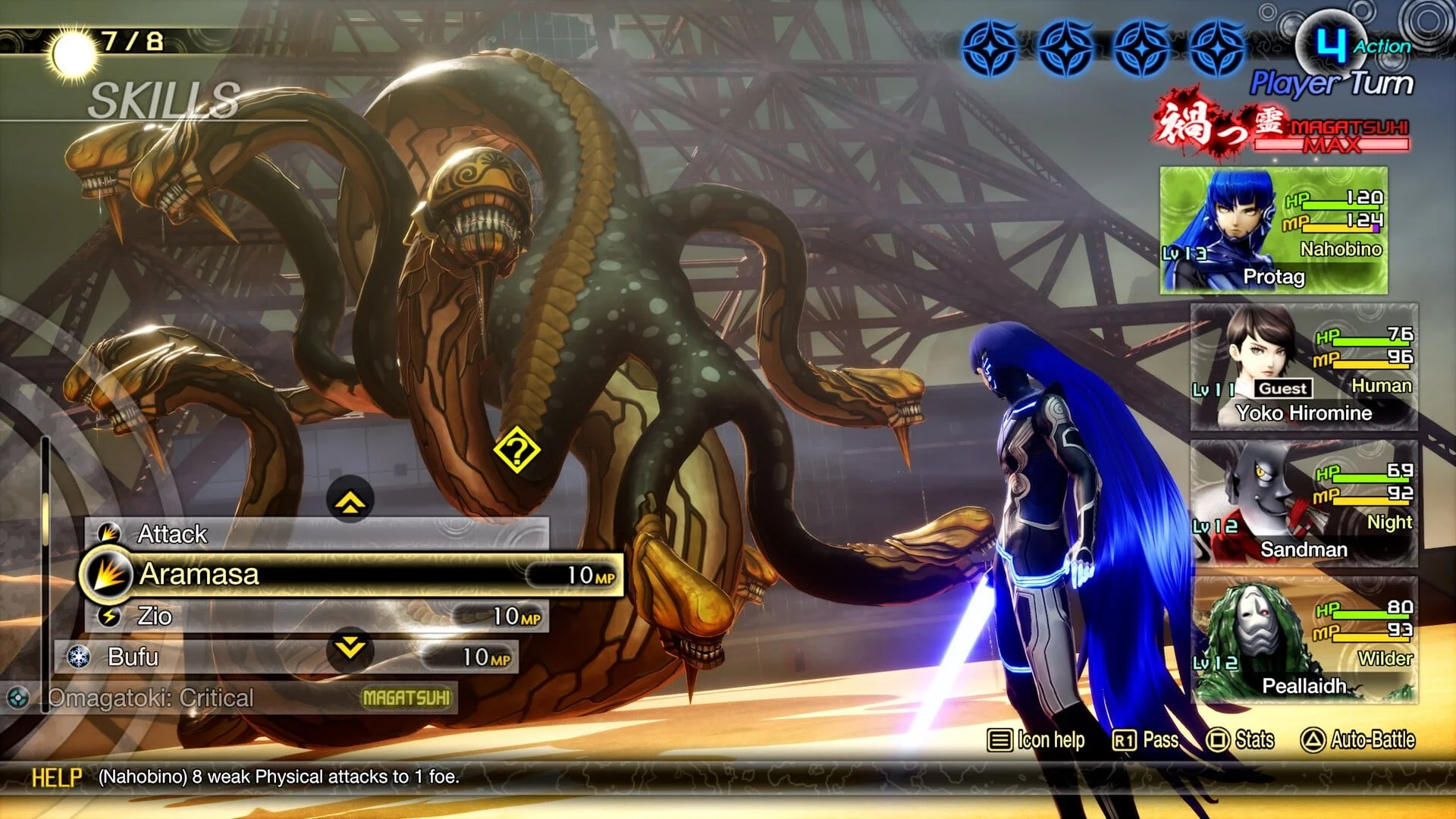
Shin Megami Tensei V: Vengeance offers the perfect level of challenge in order to encourage the player to take full advantage of all strategic options available to them while never creating combat scenarios that feel hopeless, overwhelming, or unfair. Every battle in SMT V:V can be thoughtfully conquered when taking the game’s many mechanics into consideration. // Image: Atlus
I’ve been as vocal about Shin Megami Tensei V’s shortcomings as I have because they hold the game back from being one of the best RPGs ever made. Imperfections outside of the game’s combat system stick out because I genuinely think that Shin Megami Tensei V offers one of the best turn-based battle systems in any game ever.
The magnificent structure of Shin Megami Tensei V’s turn-based battles is the culmination of decades of refinement and polish. SMT V builds upon the Press-Turn combat system first established in Shin Megami Tensei III: Nocturne as well as the Potential system introduced in Shin Megami Tensei IV: Apocalypse. Coupled with the clean battle UI adopted from Tokyo Mirage Session #FE, Shin Megami Tensei V does a fantastic job at building upon an already-great foundation and running with it.
The meat and potatoes of combat are unchanged. The name of the game is exploiting weaknesses to maximize the amount of actions the player can take per turn. That’s been the case for Shin Megami Tensei titles for over twenty years. SMT V doesn’t reinvent the wheel because it doesn’t need to - the Press Turn combat system is as addictive as it was in 2003, and Vengeance’s additions add even more depth and room for strategy within the Press Turn system’s already-vast potential for strategy.
Nearly every demon in Shin Megami Tensei V brings with it unique strengths and weaknesses that need to be taken into account during combat. Casting an Agi spell on an enemy weak to fire attacks will grant an additional action for the player’s turn, but casting a Bufu spell on an enemy that reflects ice attacks will immediately end the player’s turn. This system incentivizes players to create diverse parties where they’re equipped to exploit enemy weaknesses while also minimizing weaknesses for themselves, because yes - as per series tradition, enemies can take advantage of Press Turns just as much as the player can. If enemies exploit the weaknesses of party members, they’ll gain additional actions per turn.
This creates a tug of war between the player and the various challenges they’ll face throughout SMT V’s entire runtime. The player will consistently gain access to new demons and be able to rebuild their party construction - but in so doing, they’ll also need to consider what weaknesses these new party members will leave open for enemies to exploit. The player is constantly having to consider what skills they can give to demons in order to maximize the amount of actions they can acquire per turn while also being well-rounded to avoid catastrophe if enemies exploit your newfound party’s weaknesses. It’s a constant balancing act that never truly ceases in Shin Megami Tensei V - and that’s what makes it endlessly engaging.
No matter how far the player progresses, they will always be encountering new enemies that bring with them unique weaknesses to be exploited. This opens the door to diverse buildcrafting. For example, if the player is fighting a boss that has multiple elemental weaknesses, then it makes sense to build a magic-focused party that can exploit those elemental weaknesses in a fight. Other bosses may not have any elemental weaknesses, but be weak to status effects or be susceptible to critical hits (which, alongside exploited weaknesses, also grant additional actions per turn). This diversity in enemy variety invites the player to consider different strategies - and this invitation is one that is constantly reintroduced to the player with every new boss fight and every new challenge.
The best illustration of this is with the Yamata-no-Orochi fight in Vengeance’s new Shinjuku area. As part of a side quest, I needed to fight the series-staple demon. Up to this point, I had primarily invested in a magic build throughout the game and had prioritized having as many demons have access to each of the game’s elements, with some having healing capabilities thrown in to keep my party’s HP topped off. On the bench, I would have some demons with physical moves if I needed to prioritize crowd control for battles with multiple demons or if I needed to go for critical hits if I fought any enemies with no elemental weaknesses. I additionally built up a team of dedicated healers and buffers to support my damage dealers.
By the time I reached the Yamata-no-Orochi fight, I had gotten used to seeing my magic-focused build comfortably deal with many of the game’s challenges. I’d have to adjust my strategy for a couple bosses, but having an overwhelming magic capability was working in my favor for most fights in the game thus far. What makes the Yamata-no-Orochi fight so exceptional, though, is the fact that this boss gets eight actions per turn. Equipped with devastating physical moves, Yamata-no-Orochi has the capability to potentially wipe out the party with eight consecutive attacks - potentially even up to sixteen attacks if it lands critical hits and gains more actions per turn. While this boss is weak to lightning, Yamata-no-Orochi has so much HP that the battle will inevitably take multiple turns to down the multi-headed demon. Just resorting to lightning attacks will still take multiple turns. As such, the player is guaranteed to have to deal with the 8-16 attacks from Yamata-no-Orochi per turn, and such a fate can quickly turn south and spell doom for the party.
And indeed, that’s how the battle looked for the first few attempts I took at it. I had tried to brute force the battle through exploiting Yamata-no-Orochi’s lightning weaknesses to maximize my actions per turn, then use buffs and debuffs to make his attacks more likely to miss and thus reduce his amount of actions per turn. The flaw in this strategy, though, is that misses only subtract two actions per turn. During a normal encounter, this usually suffices, as most encounters only give enemies anywhere from 2-5 actions per turn. Since this particular boss fight granted at least eight actions per turn, relying on missed attacks wasn’t as effective. In order to bypass the onslaught of attacks from Yamata-no-Orochi, I needed another strategy.
What followed was a complete reassessment of how I had been approaching combat up to this point in the game. I generally don’t rely on afflicting status ailments in any JRPG because that kind of strategy typically just doesn’t appeal to me - but Yamata-no-Orochi is primarily weak to sleep, poison, and confusion. Sleep and confusion are both specifically useful because they cause actions to be skipped. With good luck on my side, I could have status ailments eat up Yamata-no-Orochi’s many turns.
After spending a lot of time in the World of Shadows to create demons with status-afflicting moves, I built a party uniquely equipped to take advantage of Yamata-no-Orochi’s weakness to status ailments. I then tackled the fight through maximizing my actions per turn by exploiting the demon’s lightning weakness, then cast buff and debuffs, then capped off the turn by casting spells like Dormina and Pulinpa to instill the sleep and/or confusion status ailments, respectively. I only needed one of the two status ailment types to land - and since Yamata-no-Orochi’s weak to them, their chance of successfully landing was higher.
My strategy worked! Yamata-no-Orochi would typically fall asleep and lose all eight actions for its turn, effectively skipping its entire turn and letting my party continue dishing out damage. This was still a long fight thanks to how much HP Yamata-no-Orochi has, but through skipping most or all of its actions in a given turn, I was able to tear through its health in far safer and productive capacity then if I had to recover from all of its 8-16 actions from a single turn. I still needed to stay on my toes, though, as my status ailment-afflicting moves could still miss and render its turns still deadly. Additionally, Yamata-no-Orochi could immediately recover from the status ailment and still get seven actions for its turn. My strategy was successful, but it still needed to be dynamic and flexible to account for things going wrong - which is something that happens often and quickly in SMT combat. I managed to come out on top, though. This optional boss fight that culminated at the end of a side quest (both of which were brand-new to Vengeance) was one of the most uniquely challenging and satisfying fights to overcome in the entire game.
I bring up this single example because it serves as a microcosm for what makes Shin Megami Tensei so uniquely challenging, satisfying, and smart. Shin Megami Tensei V: Vengeance offers so many different viable strategic avenues for the player to take that there can be a near endless way to overcome a certain challenge. This single optional fight got me, with my magic-focused build that I had been developing for the entire game, to transform my strategy to consider the viability of status ailments more seriously. I revised my entire game plan and was rewarded for it by overcoming the boss fight in a way that would not have been possible if I stuck to my typical strategy. Shin Megami Tensei V: Vengeance is full of these moments and opportunities. New strategies and build considerations are constantly encouraged, but never necessarily forced upon the player. Rather, Shin Megami Tensei V: Vengeance bestows the player with a vast array of tools to take into consideration and trusts the player to devise how they want to use those tools to build new strategies and paths through the game.
Some players may fight Yamata-no-Orochi in an entirely different way, using a completely different lineup of demons and abilities - and all those different strategies and means of overcoming the same challenge are distinctly valid. This is what makes Shin Megami Tensei V: Vengeance so special - a nearly limitless variety of builds and party constructions are equally valid, giving every new playthrough the potential to be completely different from the last. Different players can come up with different strategies and approaches to combat. Such a trait, I feel, is the special sauce that turns a fun RPG into an endlessly replayable one.
What helps with this is Shin Megami Tensei V: Vengeance’s balance. Nocturne particularly struggled with its balance because physical and support-oriented builds were far more valuable than magic-focused builds, for example. In order to make a game feel viable to play through regardless of the player’s chosen build and strategy, then all avenues of strategy need to be given equal attention, value, and potential.
Vengeance succeeds with this through a few methods. Firstly, the Potential system first introduced in SMT IV: Apocalypse makes its return here. This system gives further identity to demons, granting them stronger or weaker or variants of certain types of moves based on their properties. Jack Frost is a demon associated with ice, so it makes sense that he would have a positive potential with ice that makes his ice attacks stronger, but a negative potential with fire that would make his fire attacks weaker. Every demon in the game has unique Potentials that increase or decrease their viability with every type of skill in the game. From physical moves to elemental spells, from buffs and debuffs to status ailment-afflicting moves, every demon carries with them Potentials that will either increase their strength and reduce MP costs or decrease their strength and increase MP costs for certain moves. It’s a system that dissuades players from making stronger demons that have the exact same moves as each other and encourages diversifying skills for each demon in order to cater to their strengths via their positive Potentials.
Another way that SMT V: Vengeance keeps its various playstyles equally valid ties back to the game’s emphasis on exploration. Through exploring the environment and remaining curious to find the Miman and treasures hidden throughout the world, the player will eventually stumble across items that permanently increase either the Nahobino’s stats or demons’ stats. This keeps stat increases frequent and consistent, making it possible for players to specialize in certain stats to make them even stronger or bring up weaker stats to make a character more well-rounded. This gives the player the capability to flex toward other niches of combat for certain encounters when needed (such as what I needed to do with my Yamata-no-Orochi encounter) without being blindsided by awful stats that they haven’t developed and now need to rely upon.
The Nahobino is given the most freedom with stat allocation, as the player selects a point to allocate into his stats upon every level up. This contrasts with demons, whose stat growth is entirely determined independently of the player’s discretion. Through exploration, the player is given different methods of experimenting with different build types via items that give stat increases, items that allow for instant level ups for the Nahobino or for demons, as well as items that allow the player to reallocate the Nahobino’s stats entirely. In short, the player is given far more freedom with build creativity than they ever have in any previous Shin Megami Tensei game, and I believe that works exclusively to SMT V’s benefit. The game feels remarkably flexible to accommodate for different strategies, and part of what elevates that yet further is SMT V’s brand-new mechanics: the Magatsuhi meter and Innate Abilities.
SMT IV: Apocalypse experimented with giving the player access to powerful abilities via a meter that fills over time with that game’s Assist Gauge. SMT V takes that mechanic and expands it to be riper with options as the player completes side quests and recruits a wider collection of demons.
Magatsuhi returns from Shin Megami Tensei III: Nocturne. However, unlike that game, Magatsuhi has a meaningful gameplay influence in SMT V through the Magatsuhi Gauge. The player builds up Magatsuhi at the beginning of every turn. Through purchasing certain Miracles in the World of Shadows, Magatsuhi can increase faster and through more means throughout the game, such as filling a little bit every time the player exploits an enemy weakness. Once filled, the Magatsuhi Gauge gives the player access to Magatsuhi Skills - powerful abilities that don’t take up an action in the player’s turn. At the beginning of the game, the player only has access to a Magatsuhi Skill that guarantees critical hits for all attacks. However, a common reward throughout the game is that of Talismans - key items that afford more Magatsuhi Skills depending on the demons in the party. Most Talismans are acquired upon completing side quests, further incentivizing the player to explore and engage every secret tucked away in this world. While side quests themselves are mostly mediocre throughout the game (more on that later), their rewards are consistently well worth the effort and Talismans are among the most meaningful rewards given the options they gradually open up.
As the player progresses, discovers Talismans, and purchases Miracles, they will gradually gain access to devastating Magatsuhi Skills that can dramatically turn the tides of battle in the player’s favor. Magatsuhi Skills can deal devastating Almighty damage to enemies (which is a special element that doesn’t apply to weaknesses or resistances), instantly buff the party’s attack, defense, and agility to the maximum levels, or quickly heal all party members, among other useful skills. The Magatsuhi Gauge is something of a slow burn, since it doesn’t transform the way the player engages with SMT V’s combat system early on in the game. However, if the player invests into exploring the world, completing side quests, finding Talismans, and purchasing certain Miracles, the Magatsuhi Gauge can make challenging fights become a lot more manageable and fun to take on.
New to Vengeance is the inclusion of Periapts, which serve a similar function as Talismans. While Talismans offer more Magatsuhi Skills, Periapts offer even more powerful and valuable skills only available to demons of a certain race or even exclusive to particular demon combinations. These additional Magatsuhi Skills are inherently more demanding from the player since they require the player to meet more particular conditions to gain access to these Skills at all, but the effort needed from the player is well worth it, as the Periapt Skills substantially transform what the player is capable of. Periapts are likewise often presented as a quest reward - adding further value to SMT V’s side quest content.
The other new mechanic to SMT V is that of Innate Skills. These passive abilities play a doubtlessly more subtle role in offering opportunities for player expression, but it’s still a delightful addition that opens the door to an additional if subtle layer of strategy. Every demon brings with them a unique Innate Skill that can be taken advantage of. Oftentimes, these Innate Skills relate to Potentials or increasing certain stats under certain conditions. They’re individually subtle, but when considering how these Innate Skills can synergize with the Innate Skills of other demons in the player’s party, then they can come together to create big, meaningful differences in the player’s combat options.
For example, I built a party of demons in the late game that all had access to high level Agi and Bufu skills. However, two demons had high Potential bonuses for ice skills and very low, negative Potential bonuses for fire skills. Conversely, I had a demon in my party that had the opposite of these demons, having high fire Potential and low ice Potential. However, two of these demons had Innate Skills that shared their highest Potential value with the rest of the party. This meant that the demons with low fire Potential had their Potential values overwritten by the other demon’s Innate Skill. This ensured that all demons were able to cast high-level Agi spells at a more powerful capacity and for a lower MP cost all around. Again, it’s subtle and doesn’t completely transform combat, but this new mechanic serves as a fun way to strategize party synergy in a way that’s never quite been done before in SMT.
Above all, Shin Megami Tensei V: Vengeance’s combat is just fun. Taking advantage of enemy weaknesses and seeing the Press Turn icons glow for each additional action you’ve earned is endlessly intoxicating to watch unfold. And by virtue of being turn-based, the player has the power to tune the pace of battles to their liking. If players want to take their time to assess enemy weaknesses and even read the lore entries for every demon in battle, they can do so. If players want to zoom through battles, they can speed up battles, turn off or skip animations, and move through encounters as quickly as they like. SMT V’s combat is as incredible as it is because of its depth, polish, dynamism, and flexibility.
This combat system stands as one of the most polished of any RPG I’ve ever played because it smartly assesses the balance between what about SMT’s combat can be improved upon and what parts of SMT’s combat don’t need to be touched. SMT V: Vengeance innovates in its battle system without overhauling what’s come before to such a perfect balance that it’s commendable. Like past games, buffing and debuffing still make a massive difference in damage output, defense, and accuracy of attacks. Like past games, there are still only so many moves that players can assign to demons and the main character. SMT V understands which parts of its foundation don’t need to be touched upon and has the wisdom and courage to make small innovations where it makes sense. That’s the hallmark of what makes Vengeance’s combat so incredible.
That said, buildcrafting in SMT is as essential a part of the experience as the actual combat itself. While the player may add stats and gain levels while out in the world, the bulk of the player’s buildcrafting will take place in the World of Shadows, which stands as the second pillar of the SMT franchise that shines just as brightly here as it ever has up to this point in franchise history.
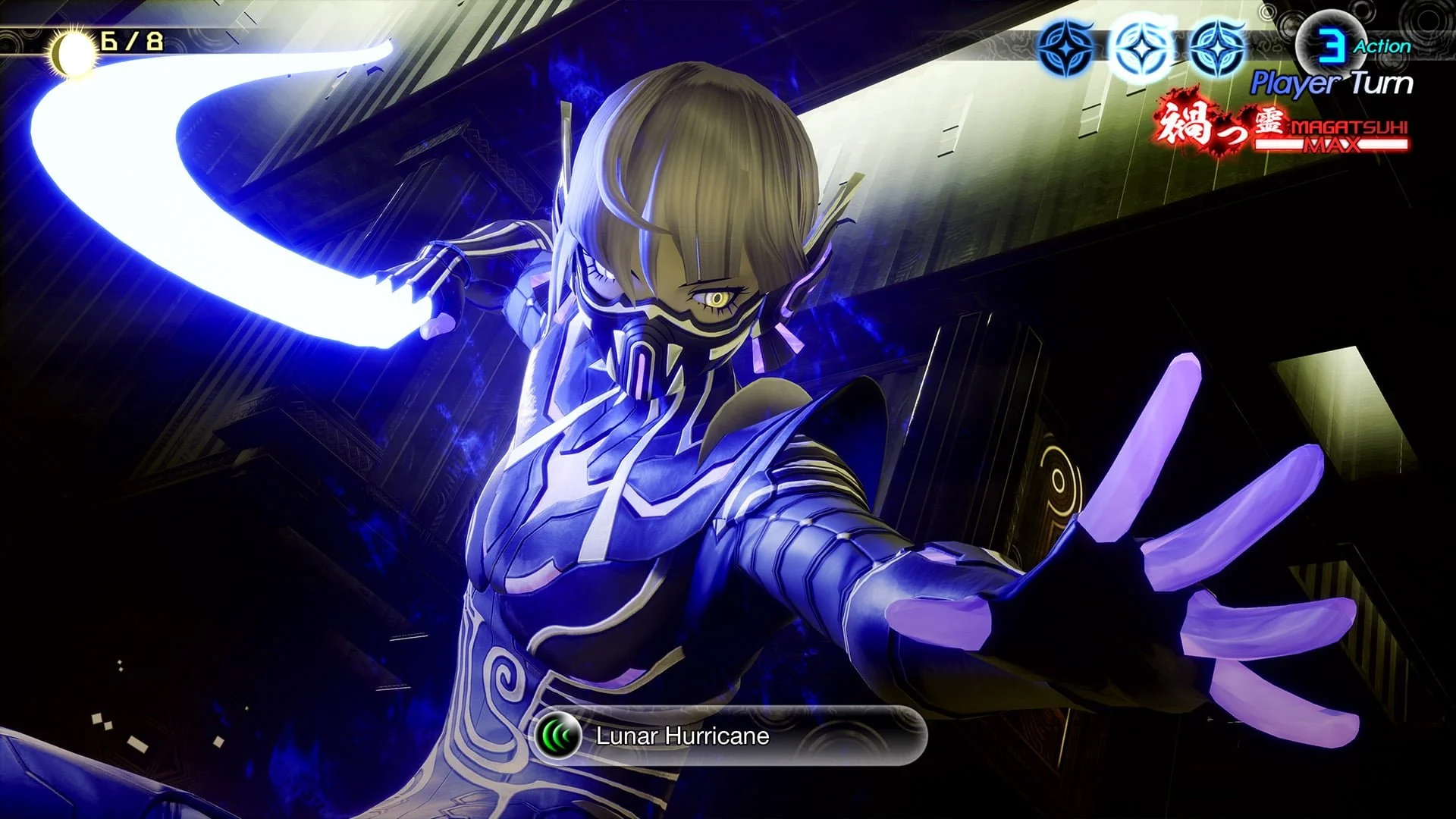
Magatsuhi Skills offer incredible ways for the player to accommodate different situations in battle. Likewise, the Nahobino-exclusive skills only accessible through using Essences make room for some of the strongest skills in the game. Essences are such a great addition to the game that it’s hard to imagine future SMT titles without them. // Image: Atlus
Fusion is as an addictive part of the Shin Megami Tensei experience as it ever has been here before, and the sheer amount of demons to collect in SMT V, boosted by additional demons added in Vengeance, means that players will get to spend hours of their playtime in the World of Shadows. In the beginning of the game, it starts out innocently enough. Fusion is just a means to take your weaker demons and turn them into stronger demons with fewer weaknesses and more skills to use against enemies. As a vehicle to create a party that gets gradually stronger, fusion is satisfying as it is customizable. Demon fusion empowers players to make a party as diverse as they look, giving further credence to the validity of nearly endless party compositions.
In my eyes, SMT V improves upon SMT IV’s implementation of fusion by adopting the lessons learned from the Persona series’ use of fusion. Fusing a demon in Shin Megami Tensei V means that you create a new demon and are able to inherit the skills from the demons used in the fusion, however the created demon must have its original skills. This prevents an issue in SMT IV, which let the player make the created demon’s moveset entirely consist of inherited skills if they chose as such. Much like how fusion works in games like Persona 5, demon fusion in SMT V forces the player to keep a fused demon’s natural skills (they usually have anywhere from 2-5), with the rest of their maximum of eight skill slots being able to be constituted by inherited skills. SMT V forces players to adapt to each demon’s unique moveset to some extent.
Over the course of the game, the player gains access to more Miracles that expand multiple mechanics in the game, from combat mechanics to fusion mechanics. My only criticism of this part of the game is the way it limits how many skills the player has access to. At the beginning of the game, the Nahobino and all demons only have four skill slots available to them, inherently limiting what each party member can do. There are Miracles that expand how many skills every party member can have, but these Miracles are drip-fed to the player throughout the game. This means that the player won’t have access to eight skills for party members and will be unable to fuse robust demons until the game’s final area, which, for me, took about 40 hours to get to. This was the only instance in the game where I felt like the Miracle system limited the fun for the player instead of granting more of it to the player.
This does mean that New Game Plus playthroughs are inherently more interesting since the player can have access to eight skills from the get-go and thus make more interesting party builds throughout the entire game, but such a thing, I feel, shouldn’t be restricted to a New Game Plus playthrough. SMT IV’s App Point system put a similar limitation on how many skills each party member had access to, but that game let the player reach the maximum amount of moves available for each character far quicker than in SMT V. Despite the many improvements that Vengeance makes to the quality-of-life features of Shin Megami Tensei V, I was disappointed to see that this mechanic wasn’t touched in this rerelease.
With all that said, once you have access to more skill slots and have more room to get creative with the active and passive skills you give to demons during fusion, this game reaches incredible heights. While I would only spend a few minutes creating demons at the beginning of the game, late-game fusion sessions turned into 30+ minute affairs where I needed to strategically consider what immunities I could pass on to demons while still making them viable at exploiting enemy weaknesses. Creating unique demons that are offensive or defensive powerhouses is deeply satisfying because it’s often the result of player creativity.
For example, the demon, Naamah, became an oppressive wall for me during the mid-to-late game of SMT V: Vengeance. This demon is normally resistant to fire, ice, force, and electricity, is neutral to light, nulls dark and a few status ailments, but is weak to physical attacks. Through fusing other demons with Null Phys and Null Light from other demon fusions, I was able to give Naamah the Null Phys and Null Light skills upon fusion. This meant that Naamah was either resistant or immune to every type of damage (minus almighty damage, which, again, is unable to be accounted for with resistances). This, in conjunction with powerful offensive skills I gave her, made Naamah an extremely useful asset for some of the game’s more challenging boss fights. It took time to make this monstrosity - but it was my monstrosity, and that’s what made creating this build for this single demon so satisfying.
This process of fusing demons during the late-game is intoxicating and endlessly satisfying. SMT V: Vengeance is truly a game whose process of preparing for and devising strategies for battle is just as fun and satisfying as the battle itself, and the late-game’s greatest challenges are proof of that. The more challenging the battle, there comes an even greater satisfaction in creating a build that effectively outsmarts those very challenges.
Of course, that isn’t to say that smart party composition removes any and all challenge. Shin Megami Tensei V: Vengeance carries on Atlus’ track record of making incredibly difficult games that seldom pull their punches. As a series veteran, I found SMT V to be a comfortable-but-never-overbearing challenge throughout a playthrough on its standard difficulty. The game feels far more balanced overall, but is still prone to the infamous “SMT moments” that have haunted the series since Nocturne. Since Vengeance adds the ability to save anywhere, though, it’s rare to get blindsided by unfair jumps in challenge and be punished by a significant loss of progress. It can still happen, of course, so…save often!
Aside from demon fusion and purchasing Miracles, the other aspect of World of Shadows is another SMT V addition: Essences.
Essences are collectible items that can be used to teach demons skills that are natural skills for other demons. In the case of the Nahobino, this is the only way for him to learn new skills as well as gain affinities to gain elemental resistances, weaknesses, and immunities. Essences are a great addition as they inject yet another aspect of fusion that empowers players to combine strengths from different demons onto a single powerful demon. The game showers the player with Essences for various tasks. From exploring the world and finding treasures containing them, to leveling up a demon multiple times that lets them give it to you, to receiving one after cornering a demon during a battle and negotiating with them, the player will consistently receive Essences that they can use to empower the Nahobino or other demons.
Certain Essences, such as the ones attained from the Aogami Husks scattered throughout each area, teach the Nahobino exclusive abilities only available to them. These Essences give the player complete freedom over how they want to customize the Nahobino. Whether the player wants to focus on giving the Nahobino powerful exclusive abilities or give them passive skills that make them nullify or resistant to every element is entirely up to the player and the mission of their build. I’d be overjoyed to see Essences become series staple moving forward, as they complement the primary demon fusion quite nicely.
Essences are also a common reward in various side quests. The few times I’ve mentioned side quests throughout this review have been in reference to the rewards they give - and that’s pretty representative of their overall presence in the game. Side quests are mostly valuable because of the rewards they give to the player instead of the actual experience of the side quest itself. None of the side quests in SMT V will blow your mind, as none of them do anything that’s particularly revolutionary. Most devolve into being optional boss fights or collecting a certain amount of items. There are a few quests that ask you with picking a side between two demons that ask you to fight the other. While these instances of quests offer short bouts of differing philosophies and alignments clashing against each other, they leave little impact in the long run. I would’ve have loved to see these quests be given more focus and depth. The potential is there to have side content reinforce the differences in alignments seen in the main plot, but SMT V unfortunately underdelivers with its execution of these quests.
Quests are fun for what they are, but they won’t stick with you outside from giving you access to some of the game’s more interesting fights, such as with the previously mentioned Yamata-no-Orochi or the superbosses like Masakado, the Demi-fiend, and Satan.
Vengeance adds a couple new quests throughout the game, though the bulk of new quests come from other either new demons added to the game or from the game’s new area, Shinjuku. Some of these new quests task the player to collect a certain amount of items or complete a certain amount of battles within a moon cycle. Other new quests task the player to do something a lot more interesting: take control of a demon.
These special quests tragically amount to merely talking to various NPCs until the quest is over, but the novelty and fan-service of controlling series-staple demons is a nice diversification of the game’s play styles, and I would have been delighted to see more quests that took stabs at offering different playstyles like this. As is, these quests are a little underwhelming, but they did give us the Nahobeeho, which may now be the objectively best demon in series history.
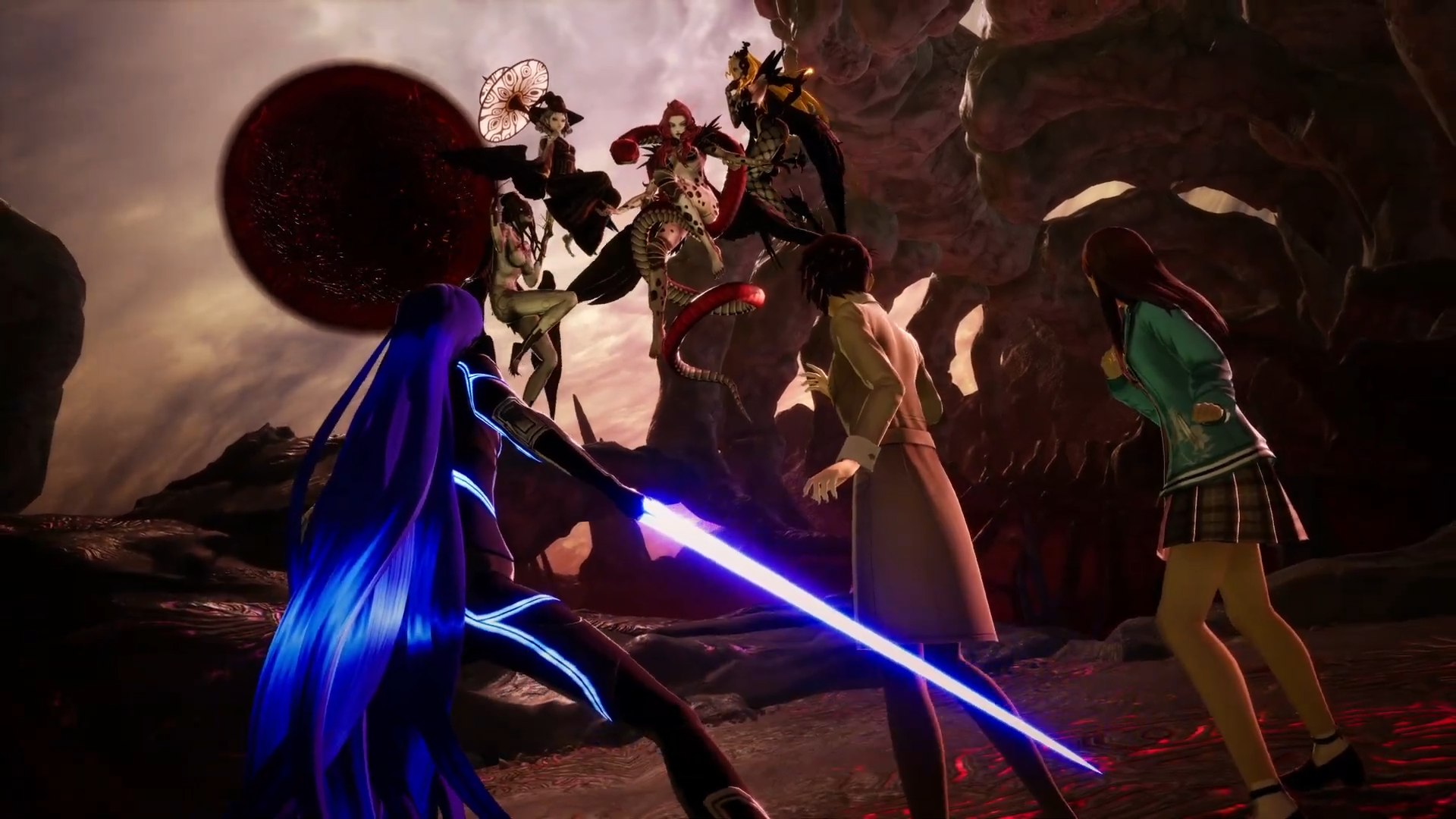
Shin Megami Tensei V: Vengeance’s new story content is interesting and often leads to some of the best boss fights in all of SMT V. Unfortunately, it doesn’t necessarily fix the issue of SMT V’s underwhelming story. Canon of Vengeance could have greatly enhanced the story of SMT V to be the best in the series. As is, though, it’s marginally better than what was offered in the game’s original release. // Image: Atlus
The Vengeance rerelease of Shin Megami Tensei V does a lot to justify players double-dipping from the original Switch-exclusive release. While there are a bunch of new demons to recruit and various quality-of-life features that make the overall play experience more enjoyable, the primary selling point of Vengeance is its new story via Canon of Vengeance. While this alternate take on SMT V’s story offers a lot of cool moments, I still found myself questioning if all this new story content was worth implementing in the game.
When SMT V: Vengeance was first announced, I was under the impression that the Canon of Vengeance was going to be an effective rewrite of the game, and I was…half-right? The Canon of Vengeance is frustratingly inconsistent with how much it alters SMT V’s story. In some respects, it leaves some events to occur exactly as they did before. Like I’ve mentioned previously, the early-game is largely the same and doesn’t change until Yoko is fully introduced a few hours into the game. Some drastic changes occur in the story, such as Sahori being killed off far earlier than in the Canon of Creation, making her conflict non-existent in this alternate take on the story. In its place, we get more focus on the Qadištu, a new set of demon characters that make for a compelling antagonistic force. As cool as they and Yoko are, though, they don’t necessarily solve the issues with SMT V’s plot.
By the time I reached the game’s final dungeon, I found myself questioning if really that much changed in the Canon of Vengeance presentation of SMT V’s story. The start and end of the story feel mostly the same, with details in the middle being different but not transformative in the way the game moves towards its climax. The primary problem with SMT V’s original story is in its presentation and characters. It regularly feels as though major events happen off-screen, with the Nahobino only being present for certain parts of the game’s narrative. Vengeance doesn’t really fix that issue, as the Canon of Vengeance still has instances where events happen off-screen, such as when Abdiel kills the Demon King in one of the dungeons that the player never goes to during the Canon of Vengeance.
I do appreciate that the human characters in SMT V have more agency and room for development in the Canon of Vengeance, but their shifts in character still feel abrupt. We get to spend more time with (and even get to control) characters like Yuzuru Atsuta and Ichiro Dazai, but it feels as though the fates of these two characters still happen quickly, abruptly, and unsatisfyingly. Due to the nature of SMT V’s story, the Nahobino spends the bulk of his journey away from the other human characters, and while that gets partially addressed with Yoko and Tao being regular party members throughout the first half of the Canon of Vengeance, it doesn’t treat all characters with this level of attention.
I got to feel close with Yoko and Tao throughout the journey of SMT V: Vengeance, thanks to regular conversations occurring between these two characters and the Nahobino. They have disagreements on how to settle conflicts in the main scenario and side quests, which reveal who they are as characters. My frustration with this is that SMT V: Vengeance doesn’t do this with all its characters, and the overall narrative suffers as a result in my eyes. There are times in the original SMT V where it feels like things just…happen, and my hope was that SMT V: Vengeance would do a better job at giving the story more coherence, stakes, and rising tension that makes me feel more connecting to the characters and conflict at play. Instead, Vengeance opts to solve the problem of things happening by just having different things happening. It doesn’t fix the issue - it just replaces the issue with a similar, if less egregious one.
Shin Megami Tensei V: Vengeance doesn’t fix the original Shin Megami Tensei V’s biggest issues, and I feel that that is its greatest shortcoming as a rerelease. Especially as a game that commits to offering a completely different route for its narrative, I can’t help but feel underwhelmed that the Canon of Vengeance doesn’t overhaul the original game’s narrative when the pieces are there to make significant, meaningful changes the make the game hit the narrative heights seen in Shin Megami Tensei IV, for instance. My biggest frustration is that alignments still don’t truly feel like they’re represented through the different characters on display. My largest hope for Vengeance was that its alignments and new endings could feel more realized through more well-defined characters that show their worldviews rather than just telling them to the player. Unfortunately, Vengeance just doesn’t do that.
Shin Megami Tensei V: Vengeance’s character writing feels like a step behind that seen in other Atlus releases like Persona 5 Royal, Metaphor: ReFantazio, and even Shin Megami Tensei IV, and that’s frustrating to see so much of the rest of the game feels genuinely progressive, refined, and excellent to play.
I truly hold my gameplay experience of Shin Megami Tensei V: Vengeance with extremely high regard. This game offers some of the best turn-based combat I’ve ever experienced in a game. The game delivers an excellent atmosphere that keeps the uniquely SMT twist of grunginess alive and fresh. There’s so much to like in Shin Megami Tensei V: Vengeance that it makes its few shortcomings stick out even more.
While I do feel underwhelmed by how much more the Canon of Vengeance could have changed, I don’t want that to overshadow my overall thoughts on the game. Despite its shortcomings as a rerelease, I still think that few games reach the addictive, endlessly satisfying, and incredibly atmospheric heights of SMT V: Vengeance. In addition to having excellent exploration, combat, and room for customization and strategy, this game also has an incredible soundtrack that combines trippy synths and hard rock power chords that orchestrate unforgettable tracks that accompany battles. The fight with Mara is as impossible to forget as it is, in part, because of the trippy, weird, but cool vibes of the song that only plays in this fight. Indeed, one of my favorite parts of SMT V is how it would regularly have cool-as-hell songs that only play in one fight and never again. Vengeance doubles down on this by more-than-doubling the amount of fight songs in the game and having most new songs only play in single battles. The soundtrack is bizarre in the best way possible, making various fights have a unique texture to them.
SMT V: Vengeance sounds incredible. It looks better than ever before thanks to the game being available on more powerful hardware. Because of this, the game’s incredible art direction can now be more easily appreciated. The game feels incredible thanks to great controls in the exploration and the incredible atmosphere inherent to the game’s environments and soundscape. More than anything, though SMT V: Vengeance is incredible because of its unbelievably strong RPG systems that make for one of the most addictive gameplay experiences I’ve had in a long time. I’m only as hard on this game as I am because I feel that, with more liberal changes made to its story and questing systems, that Shin Megami Tensei V: Vengeance could have been an all-timer; a candidate for being one of Atlus’ best games of all time.
In a pure gameplay sense, I do feel that Atlus achieved just that. With the quality-of-life features added to the experience, Shin Megami Tensei V: Vengeance truly feels like Atlus’ best game ever developed when playing it. It is one of the few games where I can imagine myself playing it an endless amount of times with different builds and strategies for each future playthrough - and these different playstyles will certainly all be equally valid and exciting to engage in. I think there’s immense value in that, and I truly feel that Shin Megami Tensei V: Vengeance deserves recognition as an incredible amalgamation of everything Atlus has learned throughout the history of not only Shin Megami Tensei but in their entire history of developing RPGs.
It’s imperfect, it has shortcomings with regard to its narrative and overall cohesion, but I can’t deny that Shin Megami Tensei V: Vengeance is a remarkable achievement for Atlus. This game serves as a massive leap forward for the franchise that gives me great hope and enthusiasm for whatever’s next for Shin Megami Tensei. If Atlus takes all the gameplay excellence offered here and improves upon the flaws of the story told in SMT V, then I truly feel that we’re going to see Atlus has the ingredients to make a true, must-play masterpiece. I look forward to that day, because, while they didn’t quite achieve that accolade with Shin Megami Tensei V, I truly think they came close.
Like the Nahobino during the game’s end credits, Atlus finds themselves walking towards an unknown, uncertain future. But in acknowledging every decision they’ve made before and learning every lesson that has preceded this walk towards the future, they can create a new world we’re all excited to see. With further refinement and thought put into the scenario, quest design, and narrative, the future of Shin Megami Tensei is extremely promising. Shin Megami Tensei V: Vengeance, while imperfect, is substantial enough of a steppingstone towards that future that I’m more confident ever that we’ll see that masterpiece-caliber future of Shin Megami Tensei soon.
Final Grade: A-
Thank you very much for reading! What are your thoughts on Shin Megami Tensei V: Vengeance? How do you think it compares to other Shin Megami Tensei titles or other monster-collecting RPGs? Was the Vengeance release justified? As always, join the conversation and let me know what you think in the comments or on Bluesky @DerekExMachina.com!